Whole House Remodel in Altadena
Key Facts
- The January 2025 Eaton Fire destroyed 9,413 structures across 14,000 acres, making it California's second most destructive wildfire.
- As of December 2025, only 23 of nearly 6,000 significantly damaged Altadena properties had completed rebuilding, per tracking research.
- Post-fire rebuild costs run roughly $500 per square foot, leaving typical Altadena homeowners with funding gaps exceeding $140,000.
- Independent testing found 6 of 10 intact, remediated homes still uninhabitable due to elevated lead or asbestos.
- Moving a house onto a fire lot costs about $350 per square foot — roughly half to two-thirds the cost of new construction.
- Pre-1940 homes, common in Altadena, cost about 50% more to renovate, national data shows.
- In Zonda's Cost vs. Value Report, 8 of the top 10 resale-ROI projects are exterior replacements.
Why Remodeling Altadena Homes Is Different Right Now
Remodeling a whole house in Altadena has never been a simple renovation project — and right now, it's unlike anywhere else in Los Angeles. The January 2025 Eaton Fire destroyed 9,413 structures and burned 14,000 acres over 24 days, making it the second most destructive wildfire in California history, per research from Catalyst California. That event reshaped every part of the remodeling conversation here, from budgets to building codes.
Recovery itself has been slow and complicated. As of December 2025, only 23 of nearly 6,000 significantly damaged residential properties had completed rebuilding, and 57% of owner-occupied damaged properties had no permit applications on file, according to the same tracking report. That's not because Altadena homeowners lack commitment — it's because the process is genuinely hard.
Part of the difficulty is structural. Altadena is an unincorporated Los Angeles County community, so permits come through LA County Building & Safety rather than a city planning department, and whole house remodels almost always require permits — structural, plumbing, electrical, and mechanical changes included. Unpermitted work can derail a sale, a refinance, or an insurance claim later.
Then there's the housing stock itself. Many Altadena homes predate 1940, and national data shows pre-1940 homes cost roughly 50% more to renovate. Add fire-recovery realities and the stakes climb:
- Environmental hazards persist even after debris removal — independent testing found 6 of 10 intact, remediated homes remained uninhabitable due to elevated lead or asbestos.
- Properties in high and very high fire-hazard severity zones must establish defensible space and comply with new building codes.
- Rebuild benchmarks around $500 per square foot often exceed insurance coverage, leaving funding gaps of $140,000 or more on a typical home.
Against that backdrop, Altadena homeowners face a defining choice: demolish and start over, or renovate and preserve. The preserve-first instinct runs deep here — one homeowner rebuilding a 1910 Craftsman told the Pasadena Star-News, "The history of the home captivated us. We had to save this house." An LA architecture firm has even begun relocating homes slated for demolition onto Altadena fire lots, calling it "the most sustainable way to rebuild" in an interview with Marketplace.
At Altadena Home Remodeling, we approach every project from that preserve-first perspective — renovate over demolish wherever the structure allows. A well-scoped whole house remodel keeps the character that makes this community what it is, while bringing the home up to current code, safety, and livability standards. Getting the scope right before work begins is the single biggest factor in whether a project stays on budget and gets done once, done right.
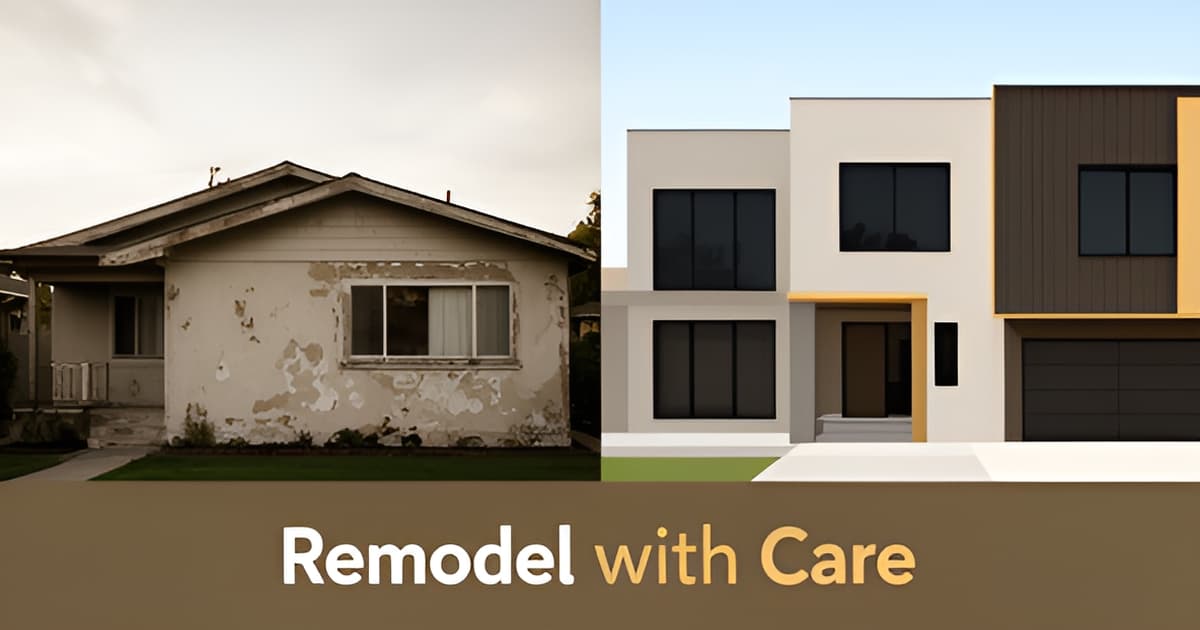
That's why we offer a free remodel-scoping consultation with a before/after concept render — so you can see the path forward before committing to it. Scope it, price it, do it once, do it right.
Renovate, Don't Demolish: The Preserve-First Approach
There's a moment in every Altadena rebuild when the question surfaces: tear down and start over, or save what's standing? For a growing number of homeowners, the answer is clear. "The history of the home captivated us. We had to save this house," one owner told the Pasadena Star-News — a sentiment echoing across streets lined with Craftsman bungalows, Spanish Revival courtyards, and mid-century ranch homes.
The financial case for preserving is stronger than most people realize. Moving a threatened house onto a fire lot runs roughly half to two-thirds the cost of a comparable new build — about $350 per square foot versus $450–$650 for basic new construction, according to Marketplace. The LA architecture firm Omgivning calls relocation "the most sustainable way to rebuild," and its projects include a 3,600-square-foot 1910 Craftsman moved from Los Feliz onto an Altadena lot.
Cost alone doesn't explain the preserve-first momentum, though. Altadena's identity is architectural. A year into post-fire rebuilding, reporting shows new work deliberately spanning Craftsman, Spanish Colonial Revival, and minimalist modern styles — a community choosing continuity over erasure. Habitat for Humanity's rebuild partner likewise aimed for a house "representative of what the community has always been."
The permitting path has also gotten easier for preservation-minded owners. Pre-approved plan catalogs now exist specifically to expedite disaster-recovery permitting, including the Foothill Catalog Foundation's designs in Craftsman, Ranch, Spanish Revival, Tudor, and Mid-Century Modern styles. Architect Cynthia Sigler notes that pre-approval "really gets people that much further in the process" in a system that is otherwise "very long and arduous."
For homeowners weighing renovation against demolition, the decision often comes down to a few practical questions:
- Does the existing structure retain its character-defining features — original millwork, footprint, or period details worth restoring?
- Would a remodel achieve the layout and livability goals at a meaningfully lower cost than new construction?
- Can environmental testing confirm the home is sound, given that 6 of 10 tested remediated homes still showed elevated lead or asbestos?
- Does the property sit in a fire hazard severity zone requiring defensible space and updated code compliance either way?
There's also a return-on-investment angle worth noting. Zonda's Cost vs. Value Report found that interior projects "make the most sense for residents planning on staying in their homes for longer periods of time" — which describes most Altadena rebuilders. For owners committed to staying, whole house remodeling that preserves character while upgrading systems, kitchens, and baths delivers both the life they want and a home that remains recognizably Altadena.
That's the approach we champion at Altadena Home Remodeling: renovate first, demolish only when the structure truly can't be saved. JMB Builders LLC (CSLB #1103479), our featured licensed contractor, brings whole-home remodel and Eaton Fire rebuild experience to that preserve-first philosophy.
If you're deciding whether your Altadena home can be saved and reimagined, request a free remodel-scoping consultation — you'll receive a before/after concept render showing what a preserve-first remodel could look like on your lot.
Budgeting a Whole House Remodel: Real Numbers and Contingency
The scariest number in any Altadena remodel conversation isn't the contractor's quote — it's the gap between what you think your project will cost and what it actually costs when walls come open. Budgeting honestly up front is the difference between a finished project and a stalled one.
Start with a replacement benchmark: post-fire rebuild costs in Altadena have been tracking around $500 per square foot, per data on local rebuilding. That means replacing a 1,500-square-foot house runs roughly $750,000 — while the average Altadena insurance policy in 2023 carried only about $607,000 in coverage, a shortfall of more than $140,000 before temporary housing. That's a rebuild-specific example, not a remodel quote, but it illustrates how quickly local construction numbers outpace assumptions.
For national context — not Altadena pricing — renovation cost data puts average projects at $15–$60 per square foot, with some reaching $150. The same guidance suggests two guardrails worth adopting:
- Keep total renovation costs within roughly 30% of your home's market value to avoid over-improving for the neighborhood.
- Hold a contingency of at least 10% — more if your home predates 1940, since older homes cost about 50% more to renovate.
- Budget for surprises Altadena homes are prone to: lead and asbestos remediation, and fire-hazard-zone code upgrades.
Funding usually comes down to home equity or savings. Nationally, about 54% of homeowners tap home equity loans or HELOCs, roughly 30% pay cash, and about 10% use credit cards — the least advisable route for a six-figure project.
Be honest about ROI, too. Zonda's Cost vs. Value Report finds that 8 of the top 10 resale-value projects are exterior replacements, while large interior remodels are, as Zonda's Clay DeKorne puts it, often "too subjective to deliver the same return." If you're selling soon, prioritize curb appeal. If you're staying — as most Altadena remodelers are — a whole-house project that makes your home right for the next twenty years is the return that matters.
That's the framing Altadena Home Remodeling brings to every scoping conversation: price the real project, not the optimistic one. If you'd like a free remodel-scoping consultation — including a before/after concept render of what your home could become — reach out and we'll put real numbers on your project before you commit to anything.
Permits, Environmental Testing, and Fire-Code Compliance
The paperwork and testing phase is where ambitious Altadena remodels quietly succeed or stall — and post-fire, it has become the single biggest bottleneck in the community's recovery. Getting the permits, environmental testing, and fire-code requirements right before demolition day protects both your budget and your ability to insure or resell the home later.
Because Altadena is an unincorporated community, permits come from LA County Building & Safety, not the state — and permitting guides for the region note that whole house remodels almost always require permits when they touch structural, plumbing, electrical, or mechanical systems. Cosmetic work like painting and flooring typically does not. The same guide offers rough planning ranges: 2–4 weeks for minor interior remodels, 4–8 weeks for structural renovations, and 2–4 months for major renovations and additions — but these are estimates, not commitments, and no one can guarantee a timeline.
Post-fire reality reinforces that caution. Catalyst California's rebuilding tracker found that as of December 2025, only 23 of nearly 6,000 significantly damaged residential properties had fully rebuilt, with 43% of owners having applied for or received permits. Plan for patience, and build permit review into your project schedule rather than treating it as a formality.
Environmental testing deserves equal attention, especially for homes near the burn zone. Independent testing by Eaton Fire Residents United found that 6 of 10 intact, remediated homes still remained uninhabitable due to elevated lead or asbestos — contamination that persists even after official debris removal. Any remodel touching pre-fire materials should budget for professional lead and asbestos testing before walls open.
Fire-code compliance adds a third layer for properties in high and very high fire hazard severity zones, where owners must establish defensible space and meet newer wildfire-resistant building standards. Typical requirements include:
- Defensible space clearing and vegetation management around the structure
- Wildland-urban-interface (WUI) building code standards for roofing, vents, and exterior materials
- Environmental testing for lead and asbestos before disturbing fire-affected materials
- Full permit coverage for structural, plumbing, electrical, and mechanical changes
Skipping permits carries real consequences: unpermitted work can derail a sale, a refinance, or an insurance claim — risks no Altadena homeowner should carry. Altadena Home Remodeling treats permitting, testing, and fire-code review as core scoping items in every consultation, so surprises surface on paper rather than mid-construction. If you're weighing a whole-house remodel, a free scoping session with a before/after concept render can map which of these requirements actually apply to your property before you spend a dollar on construction.
How to Scope Your Remodel and Get Started
Before a single wall comes down, the most important decision in a whole house remodel is knowing why you're doing it. Whether you're rebuilding after the Eaton Fire or renovating a Craftsman you intend to keep for decades, your answer changes everything about scope, budget, and sequencing.
Start by defining your goal. Zonda's 38th annual Cost vs. Value Report found that 8 of the top 10 ROI projects are exterior replacements, with the top three each returning more than 200% of cost — the clear path for sellers. But interior projects "make the most sense for residents planning on staying in their homes for longer periods of time," according to Zonda's Todd Tomalak, which describes most Altadena homeowners committed to staying in the community.
If you're staying, sequence the project so disruptive structural work happens first. A practical order looks like this:
- Environmental testing — independent testing of 50 remediated Altadena homes found 6 of 10 still uninhabitable due to lead or asbestos, so verify the envelope before designing around it
- Structural, electrical, plumbing, and mechanical work — these changes almost always require permits
- Fire-hazard-zone compliance — properties in high or very high severity zones must establish defensible space and meet updated building codes
- Kitchen and bathroom builds, then finishes and exterior restoration last
Because Altadena is an unincorporated LA County community, your permits come through LA County Building & Safety — and patience matters. As of December 2025, only 23 of nearly 6,000 significantly damaged properties had completed rebuilding, so build contingency time and at least 10% budget contingency into your plan, as lender guidance recommends.
Next, choose a licensed contractor. California requires licensure for this scale of work, and verification is simple through the CSLB. JMB Builders LLC (CSLB #1103479) is an Altadena-based licensed general contractor building custom homes, ADUs, and whole-home remodels, including Eaton Fire rebuilds; its work is documented at jmb-builders.com. (Disclosure: this featured placement is paid.) Check license status, insurance, and local references before signing anything.
Finally, move from idea to permit-ready plan with a structured scoping process. Altadena Home Remodeling offers a free remodel-scoping consultation that includes a before/after concept render, so you can see the design direction, understand the permit path, and price the work before committing. One caution we'd echo from the research: no one can guarantee timelines or permit approvals in the current environment — be wary of anyone who does.
Scope it once, price it honestly, and do it right the first time.
Frequently Asked Questions
Do I really need permits for a whole house remodel in Altadena?
How much does it cost to remodel or rebuild a whole house in Altadena after the Eaton Fire?
Is it cheaper to renovate my existing home or demolish and build new?
Do I need lead and asbestos testing before remodeling near the burn zone?
How long do permits take for a whole house remodel in Altadena?
Will a whole house remodel pay off if I'm planning to stay in my home?
Your Altadena Home, Reimagined the Right Way
A whole house remodel in Altadena is unlike anywhere else in Los Angeles. Post-fire rebuild benchmarks around $500 per square foot often exceed insurance coverage, environmental testing has found that 6 of 10 remediated homes still showed elevated lead or asbestos per research from Catalyst California, and LA County permitting takes real patience. Yet the preserve-first path — renovating rather than demolishing — consistently proves both financially sound and true to what makes this community special. The homeowners who succeed are the ones who scope honestly first: define your goal, test before walls open, sequence structural work ahead of finishes, and hold at least a 10% contingency, especially for pre-1940 homes. At Altadena Home Remodeling, we believe getting the scope right before work begins is the single biggest factor in doing it once, done right. If you're weighing whether your home can be saved and reimagined, request a free remodel-scoping consultation with a before/after concept render — so you can see the path forward before committing to it.