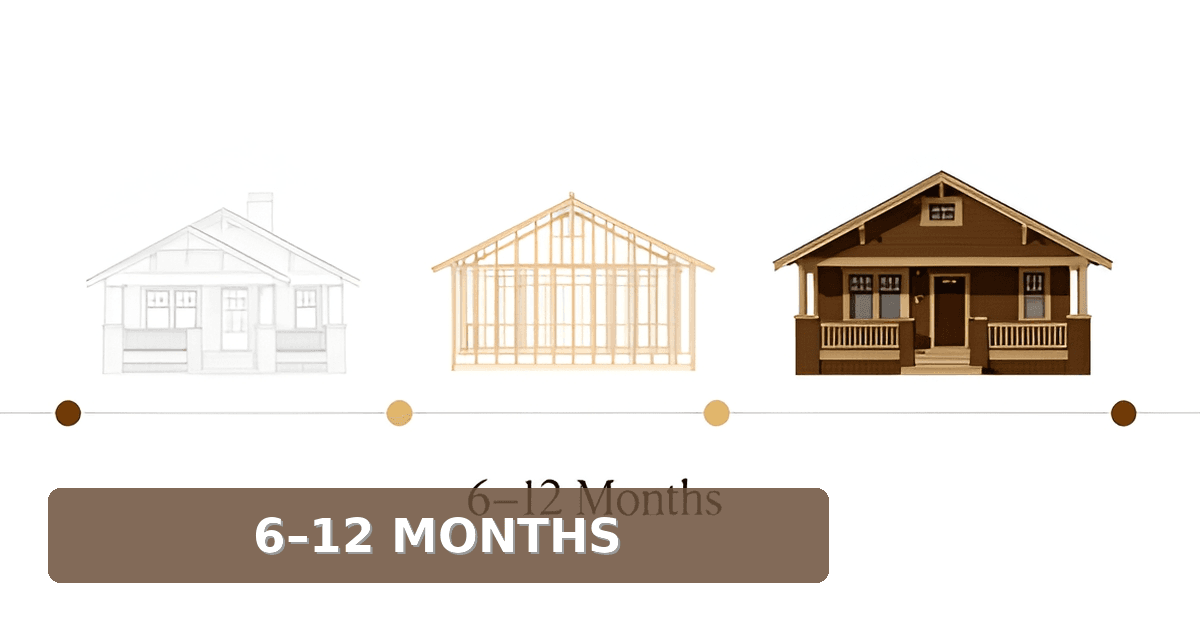
Whole-Home Renovation Timeline in Pasadena
Key Facts
- Most whole-home remodels take six months to a full year from first consultation to move-in, contractor benchmarks show.
- Planning and permitting alone can consume nearly a quarter of a renovation's total timeline — often up to four months, per contractor research.
- Complex LA-area projects like additions and ADUs face a Regular Plan Check of 4–8 months or more, LA permit guidance notes.
- 39% of homeowners exceed their renovation budget due to unexpected costs, industry data finds.
- More than 1 in 5 U.S. tradespeople are over 55, and 2.1 million skilled trades positions could go unfilled by 2030, Pasadena-area reporting estimates.
- Custom cabinetry can take two months or more to deliver and is often the single longest lead-time factor in a remodel, gut-renovation research shows.
- Full gut renovations stretch from four months to a year and a half depending on scope, cost research indicates.
The Real Timeline: Six Months to a Year (and Why It's Longer Than You Think)
Ask a homeowner how long their whole-home remodel will take and you'll hear "three or four months" more often than you'd believe. The data says otherwise: most whole-home remodels run six months to a full year from first consultation to move-in, according to contractor-reported benchmarks. Gut renovations stretch even further — anywhere from four months to a year and a half depending on scope, per gut-renovation cost research.
Why the gap between expectation and reality? Planning and permitting alone can consume nearly a quarter of the total timeline — often up to four months before a single wall comes down. In the LA area, complex projects like additions and ADUs face a Regular Plan Check of four to eight months or more, and as LA permit guidance notes, the city rarely approves complex plans on the first try.
Here's how a typical whole-home renovation unfolds, phase by phase. Treat these as ranges, not promises — Altadena Home Remodeling makes no timeline guarantees, and neither does any honest contractor:
- Discovery and design: 4–8 weeks. Schematic drawings, material selections, and scope decisions — the phase where homeowner indecision most often causes delays.
- Permitting and pre-construction: 4–12 weeks, longer if plans need multiple correction rounds with the building department.
- Demolition: 1–2 weeks — fast, messy, and often revealing. In older homes, finding something unexpected behind the walls is more the rule than the exception.
- Systems — framing, plumbing, electrical, HVAC: 4–8 weeks, with each trade requiring its own inspection.
- Finishes and walkthrough: insulation and drywall (1–3 weeks), then flooring, cabinetry, tile, paint, and trim (4–8 weeks), and final fixtures with a punch list (1–3 weeks).
Two structural realities make these ranges wider in the Pasadena area. First, material lead times: custom cabinetry, specialty tile, and high-end appliances can run two months or more from order to delivery, and custom cabinetry is often the single longest lead-time factor. Second, the skilled-trades shortage hits period homes hardest. More than 1 in 5 tradespeople nationally are over 55, and Pasadena-area reporting estimates 2.1 million skilled trades positions could go unfilled by 2030 — a real constraint for Craftsman-era millwork, plaster repair, and window restoration.
The lesson isn't to rush — it's to plan. A realistic calendar, a 10–30% contingency buffer, and decisions locked in before demo day are what keep a twelve-month project from becoming an eighteen-month one.
Permitting: The Phase That Makes or Breaks Your Schedule
If your whole-home renovation feels like it takes forever to even begin, that's because the front end of the project is often the longest part. Planning, design, and permitting can consume nearly a quarter of your total timeline — often up to four months — before a single wall comes down. According to contractor research on remodel timelines, skipping this groundwork is the fastest way to make a project go sideways.
One important caveat up front: Pasadena doesn't publish its own permit review durations, so the closest available benchmarks come from LA-area permitting data. Treat these as approximations, not promises — no contractor can guarantee a permit date, and anyone who does should raise a red flag.
In the LA area, plan check times fall into three broad categories depending on project complexity:
- Express permits (over-the-counter): same day to 48 hours, for minor work like same-size window replacements, re-roofing, or electrical panel upgrades.
- Counter plan check: 2–6 weeks, typical for kitchen expansions, bathroom remodels with layout changes, or removing non-load-bearing walls.
- Regular plan check: 4–8 months or more, required for additions, ADUs, and new construction, with plans circulating through structural, green building, grading, and sometimes fire departments.
For a whole-home renovation in Altadena — especially one involving an addition, a second story, or layout reconfiguration — expect the regular plan check track. And here's the pattern that makes or breaks schedules: the correction cycle. As LA permitting analysis puts it, the city rarely approves complex plans on the first try. Corrections come back, your designer revises, and you resubmit — with each round costing weeks. Incomplete or inaccurate drawings are the number one reason permit timelines stall, and inexperienced designers may burn through three or four correction rounds before approval.
Whole-home renovations also typically require multiple permit types — building, electrical, plumbing, mechanical, and sometimes grading or fire sprinkler permits — and the LA Times notes that accurate documentation is crucial to preventing delays.
Two local factors can add even more review time. If your home sits in a historic zone or landmark district, expect extra reviews or hearings; hillside properties face similar additional scrutiny. With Pasadena's dense concentration of Craftsman and period homes — and more than 100 designated local landmarks — many Altadena renovations trigger exactly these pathways. That's why Altadena Home Remodeling emphasizes a preserve-first approach: renovating rather than demolishing respects the review process and the character that makes these neighborhoods valuable.
The practical takeaway: build permitting into your schedule as a real phase, not a formality. A clean, code-compliant submission is the fast pass of the construction world — and it starts with a design team that knows what reviewers look for before your plans ever reach the counter.
The Pasadena Factor: Craftsman Homes, Preservation Trades, and Hidden Conditions
In most cities, a renovation timeline is mostly about scope and permits. In Pasadena, it's also about who's left to do the work.
Pasadena's housing stock is unlike most of Southern California's. The city packs more than 100 designated local landmarks and numerous landmark districts into just 23 square miles, and its pre-war neighborhoods — full of Craftsman bungalows, plaster walls, and original wood windows — are central to its identity. That character is worth preserving, but it changes the math on your schedule.
The core problem is a shrinking preservation workforce. According to reporting from Pasadena Now, more than 1 in 5 tradespeople nationally are over 55, and researchers at Jones Lang LaSalle project that 2.1 million skilled trades positions could go unfilled by 2030. The artisans who can restore historic windows, repair plaster, and mill period-appropriate trim are aging out faster than they're being replaced.
The January 2025 Eaton Fire intensified the squeeze. The fire destroyed thousands of structures, including historically significant ones like Janes Village and the Andrew McNally House, and rebuilding them requires exactly the period-appropriate craftsmanship that's hardest to find. When demand for preservation-skilled labor spikes and supply shrinks, schedules stretch — for rebuilds and renovations alike.
Older homes also hide surprises. In pre-war houses, contractors note that finding something unexpected behind the walls is more the rule than the exception: knob-and-tube wiring, galvanized plumbing, unpermitted past work, or framing that doesn't match the drawings. Each discovery can pause work until it's resolved — one reason 39% of homeowners exceed their renovation budget due to unexpected costs.
There's a regulatory layer, too. Homes built before 1978 fall under the EPA Lead Renovation, Repair and Painting Rule, which requires EPA-certified renovators for paid work that disturbs painted surfaces. On a 1910s Craftsman, that applies to nearly every wall, window, and door casing — and it shapes how demolition and prep are sequenced.
This is why we take a preserve-first approach at Altadena Home Remodeling. Renovating a Craftsman thoughtfully — restoring its details rather than scraping it — protects both neighborhood character and long-term value. As Pasadena Heritage Board Chair Michael Robleto puts it, bringing back historical details offers pride and "a financial reward when the day comes to sell," since demand for pre-war properties is constant. Pasadena Heritage (pasadenaheritage.org) also maintains referrals to restoration specialists.
For homeowners weighing a whole-home renovation in Altadena or the surrounding foothill communities, working with contractors experienced in older housing stock matters. JMB Builders LLC (CSLB #1103479), an Altadena-based licensed general contractor and our featured builder through a paid placement, handles whole-home remodels and Eaton Fire rebuilds, with its work documented at jmb-builders.com.
If you're planning a renovation on a pre-war home, scope it before demo day. Book a free remodel-scoping consultation with Altadena Home Remodeling and see a before/after concept render of your home — do it once, do it right.
The Five Things That Delay Renovations (and How to Avoid Each One)
Every renovation delay shares a root cause: a decision that wasn't made early enough. The good news is that the five most common culprits are all preventable — if you know what they are before demolition starts.
The first and most underestimated delay factor is homeowner indecision on finishes. Changing tile, lighting, or cabinetry selections mid-project stalls crews and triggers change orders. Make every finish decision before demo day, not during it.
Second: incomplete permit drawings. Inexperienced designers may need three or four correction rounds with the city, and each resubmission can add weeks. A clean, code-compliant submission is what one LA permitting guide calls the "Fast Pass" of the construction world — accurate documentation is the single best defense against a stalled plan check.
Third, hidden conditions behind walls. In older homes — and Altadena and Pasadena are full of them — finding something unexpected during a gut is more the rule than the exception. You can't eliminate this risk, but you can absorb it financially.
That's where budget reality matters: 39% of homeowners exceed their renovation budget due to unexpected costs. The standard defense is a contingency buffer of 10–30% of your total budget, held in reserve for surprises — not treated as a spending cushion for upgrades.
Fourth, material lead times. Custom cabinetry can take two months or more and is often the longest single factor in a project; specialty tile, imported stone, and high-end appliances run similar timelines. Order long-lead items as soon as selections are locked.
Fifth, inspection backlogs. Every trade requires its own inspection, and city scheduling delays are largely outside your contractor's control. Build buffer time into your schedule rather than assuming immediate approvals.
One more planning item homeowners routinely skip: livability. Whether you can stay in the house depends on how many rooms lose function at once — and whole-house guts are rarely livable, since plumbing, electrical, and HVAC are down simultaneously. For significant remodels, book alternative housing before construction begins.
The pattern across all five is the same: the difference between a project that stays on schedule and one that spirals comes down to how much was actually decided and planned before work started. That's the philosophy behind how we approach scoping at Altadena Home Remodeling — resolve the decisions up front, so the build phase is execution rather than improvisation. For preserve-first guidance on your whole-home project, a free remodel-scoping consultation with a before/after concept render is a practical first step. (Featured builder: JMB Builders LLC, CSLB #1103479 — paid placement.)
ctaText: Scope it, price it, do it once, do it right. Book a free remodel-scoping consultation and see a before/after concept render of your Altadena home before demo day.
socialProofText: Preserve-first renovation guidance for Altadena homeowners, featuring licensed general contractor JMB Builders LLC (CSLB #1103479) — paid placement.
Your Next Step: Scope It Right Before Demo Day
Every renovation timeline you've read about — the 6-to-12-month benchmarks, the permit cycles, the finish phases — bends to one variable more than any other: how completely the project is scoped before the first wall comes down. That's why the most important date in your renovation isn't demo day. It's the day you finish deciding.
Planning, design, and permitting can consume nearly a quarter of a whole-home timeline — often up to four months — and contractors consistently report that skipping this groundwork is the fastest way to make a project go sideways. A proper scoping process front-loads every decision that would otherwise stall crews mid-build.
The biggest payoff is at the permit counter. Incomplete or inaccurate drawings are the number-one reason permit timelines stall in the LA area, and inexperienced designers can face three or four correction rounds, each costing weeks. Accurate, code-compliant documentation from day one is what keeps your plans moving through review instead of circling back.
A disciplined scoping process locks three things in place early:
- Complete, buildable drawings — dimensioned, code-checked, and ready for plan review without correction loops
- Finish selections made before demo — homeowner indecision on materials is the most underestimated delay factor in remodeling, and custom cabinetry alone can carry two-month lead times
- A realistic contingency — 39% of homeowners exceed their renovation budget, and industry data suggests buffers of 10–30% for older homes
This guide features JMB Builders LLC, an Altadena-based licensed general contractor (CSLB #1103479) that builds custom homes, ADUs, and whole-home remodels, including Eaton Fire rebuilds; its work and service areas are documented on jmb-builders.com. Disclosure: JMB Builders LLC is a paid placement in this article, and we present it as one vetted local option rather than an endorsement. Altadena Home Remodeling remains an independent guide, and we make no timeline or permit guarantees for any project.
The whole philosophy here is simple: scope it, price it, do it once, do it right. A renovation of an older Altadena home rewards patience at the front end — especially given the region's shrinking pool of preservation tradespeople — and punishes improvisation at every phase after.
Book a free remodel-scoping consultation and see a before/after concept render of your home before a single wall comes down. You'll leave with a clear scope, a realistic sequence, and finish decisions made on your timeline — not the contractor's.
Frequently Asked Questions
How long does a whole-home renovation actually take?
How long does it take to get a permit for a remodel in the LA area?
What are the biggest causes of renovation delays?
How much contingency should I budget for an older home renovation?
Can I stay in my house during a whole-home renovation?
Why is renovating a Craftsman or historic home in Pasadena harder than a regular remodel?
The Calendar Is the Contract: Plan the Year, Not the Demo
A whole-home renovation in Altadena isn't a three-month project — it's a six-to-twelve-month commitment, and nearly a quarter of that happens before a single wall comes down. The homeowners who finish on schedule share three habits: they lock in finish selections before demo day, they submit clean, code-compliant drawings that survive the permit correction cycle, and they hold a 10–30% contingency for what's hiding behind the plaster — a real concern when 39% of homeowners exceed their renovation budgets on surprises. In a community dense with Craftsman homes and a shrinking pool of preservation tradespeople, patience at the front end isn't a luxury — it's the difference between a twelve-month project and an eighteen-month one. Altadena Home Remodeling exists to help you front-load those decisions: scope it, price it, do it once, do it right. Book a free remodel-scoping consultation and see a before/after concept render of your home — before demo day, not after the delays start.