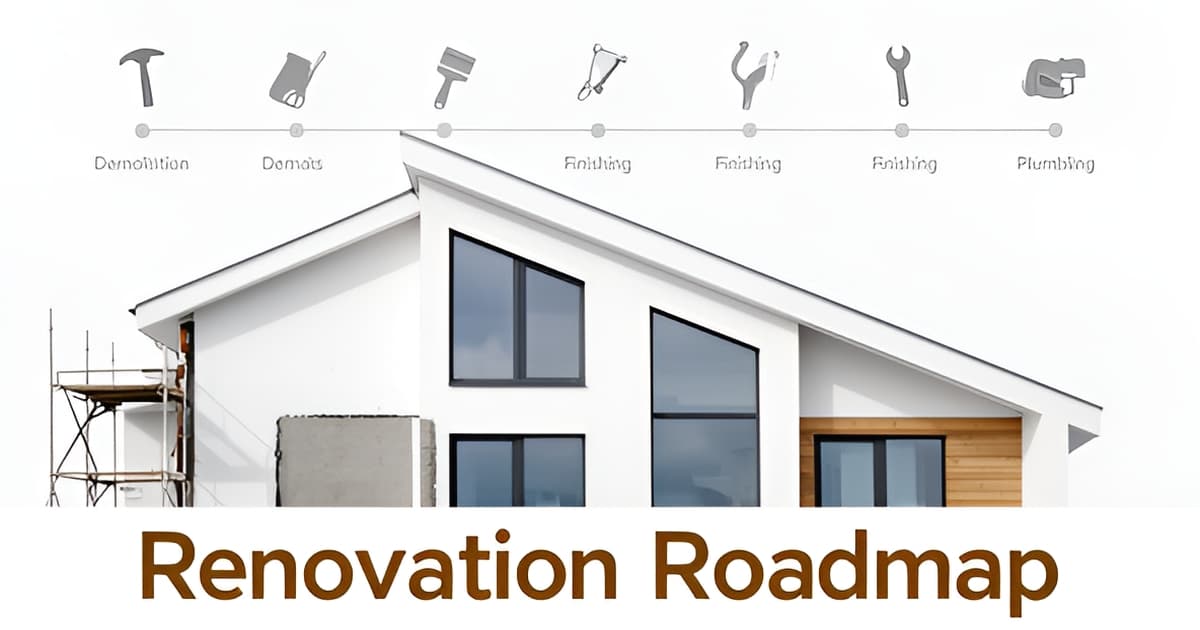
Whole Home Renovation Timeline
Key Facts
- A whole home renovation takes 3–12 months from consultation to final walkthrough, according to practitioner timelines.
- Among 2025 renovators, 44% wanted better schedule tracking and 35% wanted clearer communication from project teams, industry survey data shows.
- Experts recommend padding your renovation budget and timeline by at least 20% to absorb hidden surprises, practitioners advise.
- LA-area permits range from 2 weeks for minor remodels to 4 months for major renovations, regional permitting guides report.
- One year after the Eaton Fire, roughly 2,700 rebuild permit applications were filed and 560 homes were actively under construction, CalMatters reports.
- More than half of remodelers rated whole-house remodels common to very common in 2025, NAHB survey data shows.
- Renovation sequencing should follow a 'top down, outside in' order — envelope first, systems next, cosmetics last, per phased remodel guidance.
Why Renovation Timelines Are So Hard to Pin Down
Ask five contractors how long a whole home renovation takes, and you'll get five different answers — and even the best one will probably be wrong. That's not because contractors are hiding anything; it's because renovation timelines are genuinely unpredictable, and the data proves homeowners feel it.
Among 2025 renovators, 44% wanted better schedule tracking and 35% wanted clearer communication from their project teams, according to industry survey data. Those two complaints top nearly every other pain point in remodeling — and they explain why so many homeowners enter a renovation with anxiety before demolition even begins.
The honest benchmark for a whole home renovation is 3 to 12 months from initial consultation to final walkthrough, though phased projects can stretch over several years. That range comes from practitioner timelines that break the work into six phases: design (4–12 weeks), permitting and material ordering (4–10 weeks), pre-construction (2–4 weeks), demolition and structural work (2–6 weeks), construction (6–20 weeks), and final walkthrough (1–2 weeks).
Here's the catch: those numbers are best-case scenarios. "When renovating, the initial timeline should be considered a best case scenario," notes one industry analysis. Even the most thorough contractors hit unexpected hiccups. That's why experienced designers recommend padding your initial timeline — and budget — by at least 20%.
What actually causes the delays? In practice, five culprits show up again and again:
- Homeowner indecision — delays often come from slow decisions, last-minute changes, or difficulty reaching clients for approvals.
- Mid-project changes — even small modifications, like switching countertop materials after cabinetry is installed, can push completion back by weeks.
- Permitting — LA-area permits run anywhere from 2 weeks for minor interior work to 4 months for major renovations, depending on the jurisdiction.
- Hidden conditions — demolition in older homes routinely reveals water damage, outdated wiring, or code violations that add time.
- Material lead times — product shortages continue to stretch delivery schedules industry-wide.
For Altadena homeowners, several of these risks compound. Much of the community's housing stock is older — including historic and Craftsman-era homes — which means extra time for structural assessment, permitting, and coordination with historic guidelines. And because Altadena is an unincorporated part of LA County, permits are issued by the county rather than a city hall, a detail worth confirming before design begins.
The broader local context matters, too. One year after the Eaton Fire, roughly 2,700 rebuild permit applications had been filed, about 1,200 permits issued, and 560 homes were actively under construction, according to CalMatters reporting — with one longtime local business owner estimating a five-year recovery horizon. Contractor availability itself has become a bottleneck across the community.
None of this means you shouldn't renovate. It means you should plan like a realist. At Altadena Home Remodeling, we encourage homeowners to scope the full project upfront, build in that 20% buffer, and treat the published timeline as a floor rather than a promise — because the single biggest cause of schedule blowouts isn't the house. It's the decisions that weren't made early enough.
The Six Phases of a Whole Home Renovation
Most homeowners hear "renovation" and picture a single number of weeks. In reality, a whole home renovation typically runs 3–12 months from first consultation to final walkthrough, and it unfolds in six distinct phases, each with its own rhythm and risks.
The phase-by-phase framework looks like this: design takes 4–12 weeks, permitting and material ordering 4–10 weeks, pre-construction 2–4 weeks, demolition and structural work 2–6 weeks, construction and installation 6–20 weeks, and the final walkthrough 1–2 weeks, according to a step-by-step remodeling timeline from an experienced design-build contractor.
The order of operations matters as much as the durations. Renovation experts recommend a "top down, outside in" sequence: start with the structural envelope — roofing, siding, windows, and doors — then move to systems like electrical, plumbing, and HVAC, and finish with interiors, per phased whole-house remodel guidance from a historic-home specialist. This preserve-first approach fits Altadena particularly well, where Craftsman-era and mid-century homes reward renovating over demolishing. Protecting the envelope first keeps original character intact while the hidden work happens behind the walls.
And hidden work there will be. Demolition often reveals water damage, outdated wiring, or code violations that add time — a near-certainty in Altadena's older housing stock. As one design firm puts it, "all homes hold secrets — in the walls, under the floors, and elsewhere," and a renovation brings them to light.
For Altadena homeowners, permitting deserves special attention. Because the town sits in unincorporated Los Angeles County, permits are issued by the county rather than a city building department, and LA-area permit timelines range from 2 weeks for minor interior remodels to 4 months for major renovations depending on scope and jurisdiction. That's why we recommend confirming your correct building authority early — before design decisions lock in.
Two practical rules round out the framework. First, treat any initial timeline as a best-case scenario; even the most thorough contractors hit unexpected hiccups, so pad your schedule by at least 20%. Second, minimize mid-project changes — switching countertop materials after cabinetry is installed can push completion back by weeks, and indecision is one of the most common delay drivers.
The payoff for doing it once, in the right sequence, is real: whole-house remodels remain one of the most common project types nationally, with more than half of remodelers rating them common to very common in 2025 industry survey data shows. Altadena Home Remodeling helps homeowners scope the full six-phase journey up front — with a free remodel-scoping consultation that includes a before/after concept render — so the plan you approve is the plan that gets built.
Permitting in Unincorporated LA County: The Altadena Variable
Permits are the timeline variable most Altadena homeowners underestimate — and in an unincorporated community, the first mistake happens before the application is even filed. Building permits in California are issued locally by cities and counties, not the state, so your jurisdiction depends entirely on your exact property location, including unincorporated county areas like much of Altadena, according to LA-area permitting guides.
That distinction matters. Homeowners sometimes start the process with the wrong building department, losing weeks before discovering their property falls under LA County's jurisdiction rather than a neighboring city's. Confirming the correct department early is one of the simplest ways to protect your schedule.
LA-area permitting timelines vary widely by scope:
- Minor interior remodels: roughly 2–4 weeks
- Structural renovations: roughly 4–8 weeks
- Major renovations or additions: 2–4 months, depending on the jurisdiction
These figures come from regional homeowner guides and should be treated as planning estimates, not commitments. No timeline or permit outcome is guaranteed, and practitioners consistently advise padding schedules by at least 20% to absorb review delays and correction requests.
The Eaton Fire adds a layer of local context that no generic timeline accounts for. One year post-fire, LA County's rebuild pipeline showed roughly 2,700 rebuild permit applications, about 1,200 permits issued, and 560 homes actively being rebuilt, according to CalMatters reporting. That volume affects everyone renovating in Altadena, not just fire survivors.
Contractor and architect availability is now a genuine bottleneck. One Altadena homeowner described finding design and build professionals as "basically (another) full-time job," and insurance-driven delays — including multiple claims adjusters and widespread underinsurance — have stretched recovery timelines further. Local business owners estimate a recovery horizon measured in years, not months.
For Altadena Home Remodeling readers planning a whole-home renovation, the practical takeaway is to build this demand reality into your expectations from day one. Secure your permit path and your contractor early, and treat published timelines as best-case scenarios rather than promises.
All at Once or in Phases? Choosing Your Renovation Strategy
Every whole-home renovation eventually confronts the same fork in the road: do you tear through everything in one sustained push, or chip away room by room over a few years? The honest answer, as one design-build firm puts it, is that "there isn't a single right approach" — but there are real trade-offs worth understanding before you commit.
Doing the entire remodel in one project is "way more efficient" by most practitioner accounts. You move out once, endure one stretch of disruption, and mobilize trades a single time. Design consistency comes built in — one plan, one material palette, no risk of Phase 3 clashing with Phase 1.
There's a financial logic too. While the total investment rises with whole-home scope, the per-square-foot cost often decreases when you renovate comprehensively rather than piecemeal. A single 3–12 month project typically beats the alternative: a phased remodel that unfolds over several years, with repeated mobilization costs, contractor availability gaps, and fresh disruption each time.
Phasing exists for good reasons. It spreads costs across years instead of demanding a six-figure sum upfront, and it lets you keep living in the house while work proceeds. For Altadena owners weighing what they can actually afford — especially with insurance timelines in the region moving slowly — that flexibility matters.
The key is sequencing. Experts recommend a "top down, outside in, future forward" order:
- Envelope first — roofing, siding, windows, doors, so weather protection is never compromised
- Systems next — electrical, plumbing, and HVAC before walls close up
- Kitchen early, since it's the most disruptive phase
- Cosmetics last, once the heavy structural questions are settled
Before choosing a strategy, question the premise. Multiple sources agree that full gut renovations are often not needed — or even desirable. Older homes reward preservation, and demolition frequently reveals surprises — water damage, outdated wiring, code violations — that a targeted remodel can address deliberately rather than reactively.
That's the preserve-first philosophy Altadena Home Remodeling brings to every scoping conversation, particularly for the area's Craftsman-era housing stock. The right question isn't "gut or phase?" but "what does this house actually need?"
You can't answer that from a blog post. A free remodel-scoping consultation maps your home's real condition against your budget and timeline — with a before/after concept render — so you decide all-at-once versus phased from evidence, not guesswork. Scope it, price it, do it once, do it right.
Your First Step: Scope It Before You Swing the Hammer
The fastest renovations don't start with a hammer—they start with a decision. Practitioners consistently report that homeowner indecision and mid-project changes are the top delays homeowners bring on themselves, with even small modifications—like switching countertop materials after cabinets are in—pushing completion back by weeks.
Lock in your finishes, layout, and scope before demolition day. Treat your contractor's schedule as a best-case scenario, not a promise: even the most thorough planners hit unexpected hiccups that extend project length. That's why experts recommend padding both budget and timeline by at least 20%—a nine-month estimate becomes eleven in your planning calendar, and your stress level drops accordingly.
Here's how to protect your timeline before work begins:
- Finalize every major decision—materials, layout, fixtures—before permits are pulled, and freeze the scope in writing.
- Build a 20% cushion into the schedule and budget for hidden conditions like outdated wiring or water damage, especially common in older Altadena homes.
- Verify your contractor's license directly through the CSLB and confirm they know LA County's unincorporated permit process, where timelines vary by jurisdiction and scope.
- Start with a realistic scope—sources repeatedly note that full gut renovations are often unnecessary, and preserve-first planning protects both character and calendar.
Vetting matters more than ever in Altadena, where the Eaton Fire recovery has roughly 560 homes actively being rebuilt and finding qualified contractors has been described as "basically another full-time job." A licensed, local builder who already works in your jurisdiction saves weeks of ramp-up.
If you want help scoping before you commit, Altadena Home Remodeling offers a free remodel-scoping consultation that includes a before/after concept render—so you can see the vision and pressure-test the scope before spending a dollar on construction. Our featured builder, JMB Builders LLC (CSLB #1103479, paid placement), is an Altadena-based licensed general contractor building custom homes, ADUs, and whole-home remodels, with work documented at jmb-builders.com.
The promise is simple: scope it, price it, do it once, do it right.
Frequently Asked Questions
How long does a whole home renovation actually take?
What causes renovation timelines to slip the most?
How long do permits take in Altadena, and who issues them?
Is it better to renovate my whole house at once or in phases?
Do I really need to gut my older Altadena home to renovate it?
Why is it so hard to find a contractor in Altadena right now?
The Timeline You Can Trust Is the One You Scope Yourself
A whole home renovation in Altadena realistically runs 3 to 12 months, and the phases that fill that calendar — design, permitting, demolition, construction — are only as predictable as the decisions you make before they begin. Pad your schedule and budget by at least 20%, confirm your LA County permitting path early, and lock in scope and finishes before the first hammer swings. In a community where contractor availability has become a genuine bottleneck and roughly 560 homes are actively being rebuilt one year after the Eaton Fire, according to CalMatters reporting, the homeowners who fare best are the ones who plan like realists and move early. That's exactly why Altadena Home Remodeling starts every project with a free remodel-scoping consultation — including a before/after concept render — so you can pressure-test the scope, timeline, and budget before committing to construction, with preserve-first guidance suited to Altadena's Craftsman-era homes. When you're ready to move from reading to planning, book your scoping consultation and take the first real step: scope it, price it, do it once, do it right.