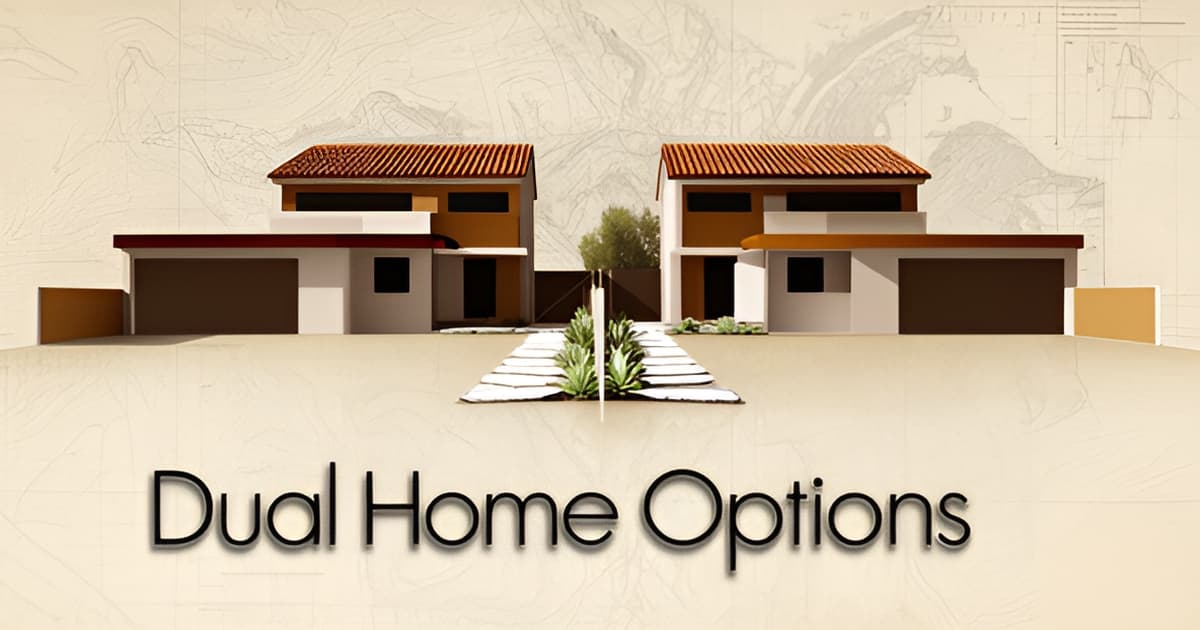
Two Homes on One Lot in California: SB-9, ADUs, and Duplex Options
Key Facts
- A July 2025 executive order lets LA County agencies suspend SB-9 projects in high fire-hazard rebuilding areas, explicitly including Altadena, per Allen Matkins' legal analysis.
- SB-9 lot splits require each new parcel to be at least 1,200 square feet, with the smaller lot no less than 40% of the original, according to CalHDF's guidance.
- Combining SB 9 with ADU law allows up to four total units on a formerly single-family lot, per CalHDF's SB-9 guide.
- SB 450, effective January 1, 2025, deems SB-9 applications approved if cities fail to respond within 60 days, per California YIMBY's legislative analysis.
- AB 1061, effective January 1, 2026, extends SB 9 into historic districts as long as projects don't alter or demolish historic structures, per Allen Matkins.
- SB-9 units skip parking requirements within a half-mile of 15-minute rush-hour bus routes, rail, or BRT, per CalHDF.
- If a lot doesn't qualify for SB 9 — common in fire-affected Altadena — homeowners can still build an ADU in most cases, per CalHDF's guidance.
The Altadena Reality Check: Why "Just Build a Duplex" Isn't So Simple
Most Altadena homeowners exploring two homes on one lot start with the same assumption: SB 9 made duplexes legal statewide, so the path should be straightforward. In Altadena, it isn't — and the reasons matter for how you plan your project.
The most consequential fact is local. In July 2025, Executive Order N-32-25 authorized LA County agencies to restrict or suspend SB-9 projects in high fire-hazard areas undergoing post-fire rebuilding — explicitly naming Altadena alongside Pacific Palisades and Malibu, citing evacuation and wildfire safety concerns.
That order sits on top of an existing limitation: SB 9 itself excludes high fire hazard zones unless mitigation measures are implemented. For Eaton Fire rebuild lots, these two layers create genuine uncertainty about whether an SB-9 duplex or lot split will be approvable at all — and no one should promise otherwise before county rules are confirmed for a specific parcel.
There's also a historic-dimension wrinkle. AB 1061, effective January 1, 2026, extends SB 9 into historic districts, provided duplexes and lot splits don't alter or demolish historic structures. For Altadena's Craftsman-era housing stock, that cuts both ways: it opens a pathway where none existed, but it reinforces a preserve-first logic — the duplex option generally assumes you're not touching a significant structure.
A few practical realities shape the decision for unincorporated LA County lots:
- Altadena is unincorporated, so county rules — not LA City's SB-9 process — apply, and unincorporated lots must lie entirely within a Census-defined urbanized area or urban cluster to qualify.
- A lot split requires each new parcel to be at least 1,200 square feet, with the smaller lot no less than 40% of the original area.
- Owner-occupancy obligations run a minimum of three years, and short-term rentals of SB-9 units are prohibited.
- If a lot doesn't qualify for SB 9, CalHDF notes that in most cases you can still build an ADU — making the ADU path the realistic fallback for many fire-affected properties.
The upshot: "just build a duplex" may be the wrong framing for your lot, and the duplex-versus-home-plus-ADU question deserves evaluation before you commit to either. At Altadena Home Remodeling, our free remodel-scoping consultation — including a before/after concept render — helps you weigh which second-dwelling pathway actually fits your property, your lot's constraints, and your rebuild goals, with no permit or timeline guarantees.
Featured builder: JMB Builders LLC (CSLB #1103479), an Altadena-based licensed general contractor experienced in custom homes, ADUs, whole-home remodels, and Eaton Fire rebuilds. This is a paid placement; JMB's work and service areas are documented at jmb-builders.com.
Your Three Legal Pathways: ADU, SB-9 Duplex, or Urban Lot Split
Most California homeowners don't realize they have three distinct legal routes to a second home — and choosing the wrong one can cost you a year. The California Housing Defens League's SB-9 guidance lays out the decision framework clearly, and it starts with one honest question: do you want two units, two parcels, or just one rental behind the house?
Pathway 1: SB-9 Two-Unit Development. You keep your single lot and build a duplex — two units side by side or stacked. There's no discretionary review; cities must approve these projects ministerially if objective standards are met, as municipalities like El Segundo confirm in their local ordinances. The 2024 SB 450 amendment strengthens this path with a 60-day deemed-approved deadline and HCD enforcement, limiting local overreach that made early projects "physically impossible" in some cities, per California YIMBY's legislative analysis.
Pathway 2: SB-9 Urban Lot Split. You divide your parcel into two legal lots, each with its own home — and each potentially eligible for an ADU on top. The numbers that determine whether your lot fits:
- Each new lot must be at least 1,200 square feet (unless your county allows smaller)
- The smaller lot must be at least 40% of the original — no more than a 40/60 split
- Objective standards that would prevent a unit from reaching 800 square feet don't apply
- Side and rear setbacks are capped at 4 feet, with existing footprints exempt
Parking is often waived entirely: no space is required within a half-mile of a bus route running every 15 minutes at rush hour, near rail or BRT, or within one block of a car-share vehicle.
Pathway 3: ADU or JADU. The simplest route — a detached ADU, or a Junior ADU of up to 500 square feet carved from existing home space. Critically, CalHDF notes that if your lot doesn't qualify for SB 9, "in most cases you will still be able to build an ADU." That matters enormously in Altadena, where Executive Order N-32-25 authorizes LA County agencies to restrict SB-9 projects in high fire-hazard rebuilding areas — including Altadena.
Combined, SB 9 and ADU law allow up to four total units on a formerly single-family lot. Which configuration fits your property depends on lot dimensions, fire-zone status, and your historic home's footprint — exactly what Altadena Home Remodeling's free remodel-scoping consultation evaluates, with a before/after concept render so you can see the second unit before committing to a pathway.
The 2024–2026 Law Changes That Strengthen Your Position
If you've been waiting for the legal tide to turn before adding a second home to your Altadena lot, 2024 through 2026 delivered three upgrades that materially strengthen a homeowner's hand. SB 9 ended single-unit-only zoning in 2021, but many cities "found creative ways to effectively ban" the housing it made possible, according to California YIMBY. The newest laws close those loopholes.
SB 450, effective January 1, 2025, is the biggest fix. Signed September 19, 2024, it prohibits local standards on SB-9 projects that don't apply to the underlying single-family zoning, requires a local response within 60 days — after which applications are deemed approved — and gives the state's HCD real enforcement authority. It also applies SB 9 to charter cities and raises the denial bar to specific public health and safety findings, per Allen Matkins' legal analysis.
AB 1061, effective January 1, 2026, matters even more for Altadena. It extends SB 9 to historic districts, provided the duplex or lot split does not demolish or alter historic structures. That's directly relevant to a community rich in Craftsman and period homes, where a preserve-first approach — adding density around the character you already own — is often the only acceptable one.
ADU law has liberalized in parallel, and the changes compound each other:
- No owner-occupancy requirement for ADUs (AB 976), and none for most Junior ADUs up to 500 sq ft (AB 1154).
- Condo-style separate sale of ADUs in opt-in cities — Los Angeles among them — under AB 1033.
- Every city must offer a pre-approved ADU plan program as of January 1, 2025 (AB 1332).
- AB 130 applies permit-streamlining deadlines to ministerial projects: a 30-day completeness determination and a 60-day decision.
The practical takeaway: projects that once faced "lengthy, costly, and uncertain discretionary review may now qualify for streamlined, ministerial approvals under multiple overlapping statutes," as Allen Matkins puts it. CalHDF's guidance remains the clearest framing — up to four total units on a formerly single-family lot when you combine SB 9 with ADU law — and its advice to evaluate a duplex versus a home-plus-ADU is the decision every lot owner faces first.
One caveat belongs in the same breath, especially post-Eaton Fire: Executive Order N-32-25 authorizes LA County agencies to restrict or suspend SB-9 projects in high fire-hazard rebuilding areas, explicitly including Altadena. Where SB 9 stalls, an ADU usually still works — CalHDF notes that if a lot doesn't qualify for SB 9, "in most cases you will still be able to build an ADU."
Figuring out which pathway fits your specific lot, roofline, and county permitting reality is exactly what Altadena Home Remodeling's free remodel-scoping consultation covers — a before/after concept render for your property, with no permit or timeline promises attached.
Preserve-First Planning: Matching the Pathway to Your Lot and Your Home
Before you sketch a second unit onto your Altadena lot, the honest first step is a self-assessment — because the right pathway depends on your lot size, your home's condition, and rules that changed the legal landscape well before the Eaton Fire changed the neighborhood. CalHDF's core advice is simple: evaluate whether a duplex or a single-family home plus an ADU fits your situation better, since both options carry real advantages and disadvantages depending on your property (California Homebuilding Development Foundation guidance).
Start with the lot math. An SB-9 lot split requires each new parcel to be at least 1,200 square feet, with the smaller lot at no less than 40% of the original area — a 40/60 split maximum. If your lot doesn't clear those thresholds, an ADU alongside your existing home is usually the simpler path, and CalHDF notes that if a lot doesn't qualify for SB 9, in most cases you can still build an ADU (CalHDF's SB-9 guide).
Then check the eligibility fine print, which trips up many unincorporated-area homeowners:
- Unincorporated LA County lots must fall entirely within a Census-defined urbanized area or urban cluster to qualify for SB 9 (per CalHDF).
- SB-9 owners must occupy one unit for a minimum of 3 years, and short-term rentals of SB-9 units are prohibited.
- You cannot split adjacent lots you already own, and an already-split lot cannot be split again.
- Tenant protections bar demolishing or altering affordable, rent-controlled, or recently tenant-occupied housing, with a 15-year lookback for Ellis Act evictions.
For Altadena specifically, one more caveat matters: a July 2025 executive order authorizes LA County agencies to restrict or suspend SB-9 projects in high fire-hazard areas undergoing post-fire rebuilding, explicitly including Altadena (Allen Matkins legal analysis). Verify current county posture before designing around SB 9.
Here's the preserve-first insight: a second dwelling rarely requires replacing what makes your home worth keeping. A duplex conversion or detached ADU can complement a whole-home renovation — restoring a Craftsman's original character while adding a carefully scaled unit behind or beside it. AB 1061, effective January 1, 2026, even extends SB 9 to historic districts, provided projects don't alter or demolish historic structures (per Allen Matkins).
That's the philosophy behind Altadena Home Remodeling's approach: scope the renovation and the second unit together, so one design serves both. A free remodel-scoping consultation — including a before/after concept render — lets you see how a restored home and a new dwelling can share one lot gracefully. JMB Builders LLC (CSLB #1103479), our featured builder, brings Altadena-based experience with custom homes, ADUs, and whole-home remodels, including Eaton Fire rebuilds. Scope it, price it, do it once, do it right.
Your Next Step: Scope It Before You Commit
By the time most homeowners call a designer, they've already picked a pathway — and in Altadena, that early pick is where budgets go to die. Whether an SB-9 duplex, an urban lot split, or a simpler ADU fits your property depends on facts that vary lot by lot, and those facts are cheaper to learn before design work begins than after.
The rules genuinely diverge by route. CalHDF's guidance on SB 9 lays out hard lot-fit numbers: each new lot from a split must be at least 1,200 square feet, the smaller parcel must be at least 40% of the original lot area, and objective standards that would prevent either unit from reaching 800 square feet don't apply. A lot that fails those tests may still comfortably support an ADU or JADU — a fundamentally different project in cost, timeline, and design.
Altadena adds two layers most online calculators ignore. First, this is unincorporated Los Angeles County, so county rules — not LA City's SB-9 review process — govern your parcel. Second, under the July 2025 executive order, LA County agencies may restrict or suspend SB-9 projects in high fire-hazard rebuilding areas, explicitly including Altadena, which is why ADUs often become the realistic second-dwelling path here.
That's why the scoping conversation matters more than the design one. A proper scoping looks at:
- Lot dimensions, split potential, and the 1,200 sq ft / 40-60 thresholds
- Fire-zone status and what it means for SB-9 eligibility on your street
- Whether your existing home — including Craftsman-era structures — should be preserved, expanded, or worked around
- Which configuration (duplex, home + ADU, split + ADU per lot) the lot and county rules actually allow
Altadena Home Remodeling offers a free remodel-scoping consultation with a before/after concept render, so you can see which second-dwelling configuration fits your actual property — not a generic one. We don't promise permits or timelines; county review is outside anyone's control. What you get is a clear-eyed read on which pathway your lot supports, and a plan to do it once, do it right — the way a preserve-first renovation deserves.
Ready to find out what your lot can hold? Book your free scoping consultation and see the before/after concept render for your Altadena property.
Featured builder: JMB Builders LLC (CSLB #1103479), an Altadena-based licensed general contractor building custom homes, ADUs, and whole-home remodels, including Eaton Fire rebuilds. Paid placement, disclosed.
Frequently Asked Questions
Can I build a duplex on my Altadena lot under SB 9?
What are the lot size requirements for an SB-9 urban lot split?
If my lot doesn't qualify for SB 9, can I still add a second home?
How many units can I legally have on one single-family lot in California?
Do I have to live on the property if I build an SB-9 duplex or lot split?
I own a Craftsman home in a historic district — can I still add a second unit?
The Lot You Have Decides the Home You Can Build
Two homes on one lot is legally possible across California — but in Altadena, the pathway your lot supports is the real question. SB-9 duplexes and urban lot splits can yield up to four total units when combined with ADU law, and the 2024–2026 reforms (SB 450's 60-day deemed-approval deadline, AB 1061's historic-district extension) strengthen a homeowner's hand considerably. Yet Executive Order N-32-25 lets LA County restrict SB-9 projects in high fire-hazard rebuilding areas including Altadena, which is why an ADU is often the realistic second dwelling here. The smart move isn't picking a pathway first — it's learning what your specific lot allows before spending on design. That's exactly what Altadena Home Remodeling's free remodel-scoping consultation provides: a clear-eyed read on lot dimensions, fire-zone status, and whether your Craftsman should be preserved and expanded, paired with a before/after concept render so you can see the configuration before committing. No permit or timeline promises — just facts about your property. Ready to find out what your lot can hold? Book your free scoping consultation and take the first step to do it once, do it right.