SB-9 Urban Lot Split in Los Angeles: Process and Costs
Key Facts
- An SB-9 lot split in California typically costs $40,000–$70,000 in planning fees, per engineering cost breakdowns.
- Los Angeles City is the state's toughest SB-9 jurisdiction, with approval timelines stretching to roughly 18 months, per statewide analysis.
- Net value increases from an SB-9 lot split alone reportedly range from $250,000 to over $1,000,000 across most of Southern California, according to brokerage data.
- SB-9 allows up to 4 units per parcel when combining lot split and duplex provisions — not the 8 units often claimed online, per legal analysis.
- An SB-9 lot split does not trigger Prop 13 reassessment; only per-parcel assessments of $200–$1,000 per year apply, per tax guidance.
- Mortgage conflicts block only about 2% of SB-9 lot split projects, per statewide data.
- The most expensive SB-9 mistake is sequencing — paying for design before a feasibility review confirms the parcel qualifies, per engineering guidance.
Why LA Homeowners Get SB-9 Lot Splits Wrong — And Pay For It
Most homeowners who lose money on an SB-9 lot split don't lose it on the split itself — they lose it on what they paid for before confirming the split was ever possible. As engineering guidance on SB-9 costs puts it, the most expensive version of an SB-9 project is often the one where money is spent in the wrong order, such as paying for design work before feasibility is confirmed.
The confusion starts with the law itself. SB-9 contains two separate provisions: an urban lot split (dividing one parcel into two) and a duplex provision (adding a second unit without splitting). Brokerage analysis of the law notes that combining them yields up to four units — not the eight units floating around online, a myth built on stacking ADUs in ways that don't apply in single-family zones. Homeowners who plan around eight units design projects the law will never approve.
Then there's the jurisdiction problem. Los Angeles City is described as the most challenging SB-9 jurisdiction in the state, with approval timelines reaching roughly 18 months from contract to recorded parcel — the long end of the 10–18 month statewide range. The city maintains its own dedicated SB-9 program page covering eligibility, renter protections, and procedures, so expectations need to be set for LA's process specifically, not a generic California one.
Common mistakes that quietly kill projects or inflate budgets include:
- Treating SB-9's lot split and duplex provisions as interchangeable, then overestimating unit count
- Paying for design before a feasibility review confirms the parcel qualifies
- Ignoring LA-specific site constraints — hillside conditions, access, lot layout — that should be checked early
- Overlooking deal killers like pools or accessory structures sitting on the proposed split line
The economics only work for properties that clear a threshold — one engineering firm's rule of thumb puts it around $600,000 in pre-split property value. Below that, the $40,000–$70,000 planning range can outweigh the return. When the math does work, the upside is real: net value increases from a lot split alone reportedly range from $250,000 to over $1,000,000 across most of Southern California.
That's why Altadena Home Remodeling approaches these projects feasibility-first. Before any design dollars go out the door, the site factors that drive LA-area costs — slope, drainage, access, utilities, existing structures — need honest evaluation. For homeowners weighing a lot split alongside a whole-home remodel, the smartest first step is a scoping consultation that puts the sequence in the right order: confirm eligibility, then design, then build. As the cheapest mistake is the one you catch early, that first conversation is where the real savings happen.
What an SB-9 Lot Split Actually Costs in Los Angeles
If you're picturing an SB-9 lot split as a cheap paperwork exercise, the real numbers will reset your expectations — but so will the payoff. Planning-stage costs in California run roughly $40,000 to $70,000, according to one engineering firm's published cost breakdown, with simpler properties starting near the low end and full-service projects typically landing at $60,000–$70,000.
That range covers the entire path from feasibility to a recorded parcel. A related analysis of SB-9 costs and timelines describes one firm's all-in fixed fee of $50,000–$70,000, structured in milestones, that bundles the following:
- Feasibility review, boundary survey, and parcel mapping
- Civil engineering and agency review fees (city or county)
- Project management through approval
- Legal fees and recording
Just as important is what the $40,000–$70,000 planning range does not include: construction of a new home or ADU, major utility extensions, unusual grading or remediation, lender and title work, taxes, or financing. Those sit outside the split itself and can dwarf the planning budget.
Set against the upside, the math often works. For the right property, net value increases from a lot split alone reportedly range from $250,000 to over $1,000,000 across most of Southern California, and one client sold a newly recorded lot for $1,000,000 within two weeks of parcel creation. The same analysis puts the rough economic threshold at about $600,000 in pre-split property value — below that, the fees rarely justify themselves.
Three fears stop homeowners prematurely, and the data pushes back on all of them. The split itself does not trigger a Prop 13 reassessment; only per-parcel assessments of $200–$1,000 per year apply, with reassessment occurring only when a parcel changes title. Lender conflicts affect only about 2% of projects, with the lender conversation typically needed only if you sell one parcel. And tenants are a restriction on demolition, not on subdivision.
One caveat deserves emphasis: nearly all of these figures come from a single engineering firm's marketing content, not from an official LA City fee schedule or independent market data. Los Angeles City is widely described as the state's most challenging SB-9 jurisdiction, with approval timelines stretching to roughly 18 months, so treat any quote as an estimate until your specific site has been evaluated.
The costliest mistake is sequencing — paying for design before confirming the lot is even eligible. That's the same discipline we apply at Altadena Home Remodeling when scoping whole-home renovations: resolve site constraints like slope, access, utilities, and existing structures before committing budget. If you're weighing a lot split alongside a remodel or rebuild, a free scoping consultation with a before/after concept render is a low-cost way to catch the expensive problems early.
The Lot Split Process: Eligibility Checks Before You Spend a Dollar
The most expensive SB-9 project is often the one where money gets spent in the wrong order. Before you pay an architect for a single drawing, run the eligibility checks — the cheapest mistake is the one you catch early, before design fees, surveys, or city filings pile up.
Start with the four statutory gates. Your parcel must sit in single-family zoning, fall within an urban cluster area designation, have access to a street or alley, and satisfy the 40/60 rule — the smaller resulting parcel must be at least 40% of the original lot size. Notably, there is no minimum lot size under the state framework, which surprises many owners of smaller LA parcels.
In Los Angeles specifically, local site conditions matter as much as state law. Per engineering guidance on SB-9 costs, hillside conditions, access, and lot layout should be checked early — Los Angeles City is described as the most challenging jurisdiction in the state, with approval timelines running up to roughly 18 months.
Then screen for the common deal killers before committing funds:
- Pools or accessory structures on the split portion — these generally must be demolished unless you're building a dwelling unit there.
- Septic systems — a new parcel needs its own septic design, which can complicate or kill marginal sites.
- Tenant-occupied demolition limits — if a tenant occupied the property within the last three years, demolition is capped at 25% of the residential structure. The restriction targets demolition, not the subdivision itself, so tenants alone rarely kill a split.
A few fears deserve early deflation. The split itself does not trigger Prop 13 reassessment — only per-parcel assessments of roughly $200–$1,000 per year apply, with reassessment occurring only when a parcel changes title. And mortgage conflicts affect only about 2% of projects, according to the same statewide SB-9 analysis.
The right sequence is a focused feasibility review first, then design. If you're weighing a lot split alongside a whole-home renovation of an older Altadena property, that's exactly the kind of scoping conversation worth having early — site slope, access, utilities, and existing structures drive both the split's feasibility and your remodel plan. Altadena Home Remodeling offers a free remodel-scoping consultation with a before/after concept render, and no timeline or permit outcomes are guaranteed.
Splitting the Lot, Then Building: A Renovate-First Strategy for Altadena Homes
For many Altadena homeowners, an SB-9 lot split isn't just about creating a second parcel — it's the first step in a larger plan: keep the family home, remodel it or rebuild on the retained lot, and unlock the value sitting in the backyard. That sequencing matters, because the order you spend money in can make or break the project.
One engineering firm that handles these splits statewide puts it bluntly: the most expensive SB-9 project is often the one where a homeowner pays for design before confirming feasibility. The cheapest mistake is the one you catch early. For Altadena residents — many of whom are already planning Eaton Fire rebuilds or gut renovations — that advice cuts both ways: scope the split and the remodel together, not separately.
Altadena sits in unincorporated Los Angeles County, not LA City, so the permitting path differs from the city's notoriously difficult process. LA City is described as the most challenging jurisdiction in the state, with approvals stretching to roughly 18 months. County review follows its own fee structure and objective standards, and hillside conditions, access, drainage, and utility availability should all be checked early — the same factors that drive cost across the LA area.
Before committing to a split-plus-remodel strategy, evaluate your site constraints upfront:
- Slope, drainage, and access — hillside and irregular lots complicate both the split and any new construction
- Existing improvements — pools and accessory structures on the split portion must typically be demolished unless replaced with a dwelling unit
- Utilities and septic — a new parcel needs its own utility connections or septic design
- How the retained parcel will work — setbacks, access, and layout for your remodel or rebuild after the split
The planning side of a split generally runs $40,000 to $70,000, covering feasibility, survey, mapping, engineering, agency review, and recordation — but not construction, utility extensions, or grading. Pairing that with a whole-home remodel means budgeting for two projects that share a site, so catching conflicts early (a new driveway alignment, a septic field where you planned an addition) saves real money.
This is exactly why Altadena Home Remodeling recommends a scoping-first approach. Our free remodel-scoping consultation includes a before/after concept render that evaluates your site's constraints — slope, access, utilities, existing structures — before you commit to either the split or the renovation. It's the same feasibility logic the SB-9 process demands, applied to the home you'll live in. Scope it, price it, do it once, do it right.
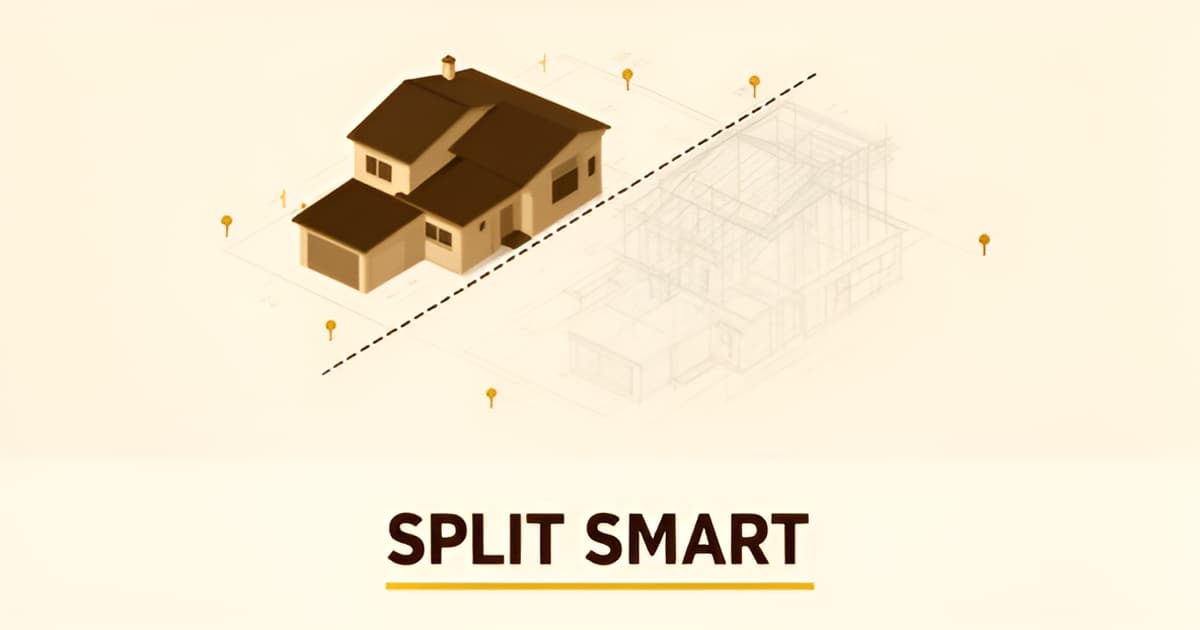
Split Smart: The Order of Operations That Decides Whether SB-9 Pays Off
An SB-9 lot split in Los Angeles is neither a paperwork formality nor a guaranteed windfall — it's a sequence-dependent project where the order you spend money in matters more than almost anything else. The planning side runs roughly $40,000–$70,000, LA City approvals can stretch toward 18 months, and the economics typically require around $600,000 in pre-split property value. But for the right parcel, the upside is substantial: net value increases from a lot split alone reportedly range from $250,000 to over $1,000,000 across most of Southern California, per statewide SB-9 analysis. Your next step is simple: confirm eligibility before spending a design dollar. Check zoning, the 40/60 rule, and site constraints like slope, access, utilities, and any structures sitting on the split line. If you're weighing a split alongside a whole-home remodel of your Altadena property, Altadena Home Remodeling offers a free scoping consultation with a before/after concept render — scope it, price it, do it once, do it right.