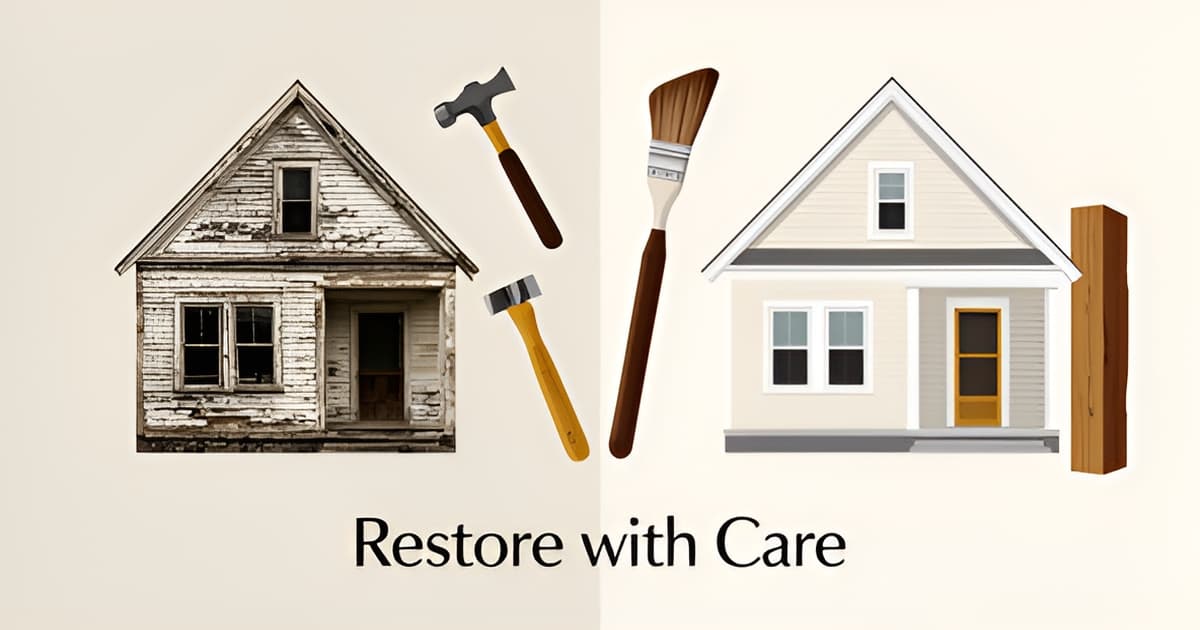
Restoring a Historic Home: Cost Drivers and Where to Splurge
Key Facts
- Historic renovation runs 25–40% above a standard remodel, reaching roughly $475 per square foot according to architect Neil Stevenson.
- Labor — not materials — is the real premium, since custom millwork must fit out-of-plumb, century-old framing per restoration contractors.
- Smart budgets allocate 30–40% to the exterior envelope, 25–35% to systems, and just 20–30% to interior finishes per a 2026 cost guide.
- A $2,000 structural inspection can prevent a $50,000 surprise discovered mid-project according to restoration guidance.
- Improper Portland cement repointing fails in about 10 years, versus 50 years for compatible lime-mortar work per preservation practitioners.
- Historic projects need a 15–20% contingency — and at least 25% for older or poorly maintained homes per contractor guidance.
- The federal Secretary of the Interior's Standards endorse "limited and sensitive upgrading" of mechanical, electrical, and plumbing systems per the National Park Service.
Why Historic Restoration Costs 25–40% More (And Where That Money Actually Goes)
If you've priced out a remodel of a modern home and a remodel of a century-old Craftsman, you already know the sticker shock is real. Historic renovation consistently runs 25–40% above a standard remodel of the same size, and at the high end can approach $475 per square foot — comparable to building new, according to architect Neil Stevenson.
Here's what surprises most homeowners: that premium isn't about marble countertops or designer fixtures. It's driven by three unglamorous categories — structure, systems, and skilled labor. Foundation problems are often the largest single variable, and in pre-1960s homes, wiring, plumbing, and framing frequently fall below modern safety standards. Touch one system and code compliance can cascade across the whole house.
Labor, not materials, is the real cost swing. In a standard remodel, budget splits roughly evenly between materials and labor. In historic work, the balance tilts heavily toward labor, because custom millwork has to fit out-of-plumb, century-old framing — and period-appropriate materials demand craftspeople to install them. As architectural historian Kristopher King puts it, "There are a lot of things that require craft, and craft is what is expensive today."
The biggest budget risk, though, is what you can't see until the walls open: hidden scope like knob-and-tube wiring, corroded galvanized plumbing, termite damage, and unpermitted DIY work. That's why a contingency is non-negotiable — practitioners recommend 15–20% of budget for most historic projects, and at least 25% for older or poorly maintained homes, versus roughly 10% for modern renovations.
So where does the money actually go? A sensible allocation looks like this:
- Exterior envelope: 30–40% of budget
- Systems upgrades (electrical, plumbing, HVAC): 25–35%
- Interior finishes: 20–30%, phased last
There's a reassuring insight buried in the cost data: most of a home's character lives in the finished materials — trim, doors, woodwork — not in the guts of the house. You can modernize systems without touching historic charm, which is exactly the preserve-first approach we champion at Altadena Home Remodeling. The federal Secretary of the Interior's standards endorse this same structure-first philosophy, permitting "limited and sensitive upgrading" of mechanical, electrical, and plumbing systems.
For Altadena homeowners working through LA County's unincorporated permit process, the practical takeaway is to scope before you commit. A free scoping consultation with a before/after concept render — with work performed by licensed contractors like JMB Builders LLC (CSLB #1103479) — costs you nothing now and can prevent a five-figure surprise later. No timeline or permit outcomes can be guaranteed, but knowing your hidden scope early is the difference between a phased restoration and a budget crisis.
The Splurge/Defer Framework: Structure and Systems First, Character Second, Cosmetics Last
The single most useful budgeting insight in historic restoration is counterintuitive: the parts of the house that make it special are the last ones you should spend on. Contractors and preservation guidance converge on the same sequence — structure and systems first, character-defining elements second, cosmetics last. The federal Secretary of the Interior's Standards reinforce this, explicitly endorsing "limited and sensitive upgrading" of mechanical, electrical, and plumbing systems within preservation projects, while weighing each project's economic and technical feasibility.
The numbers back the hierarchy. Budget-allocation guidance for historic projects puts the exterior envelope at 30–40% of the budget and systems upgrades — wiring, plumbing, HVAC — at another 25–35%, leaving just 20–30% for interior finishes. Foundation issues are described as the largest variable in restoration cost, and HVAC is often the single biggest challenge in old homes that lack wall cavity space for ductwork; high-velocity AC systems run roughly twice the cost of traditional units.
The key insight that makes this framework work: character lives in the finished materials, not the guts of the house. As one restoration contractor puts it, most of what makes a historic home feel historic is the trim, the doors, and the woodwork — not the wiring behind the plaster. That means you can modernize systems completely without sacrificing an ounce of charm, and it means the splurge dollars belong on the elements everyone sees and touches:
- Original paneling, stairways, and fireplaces
- Crown molding, trim, and mantels
- Historic windows — restored by a craftsperson at $150–300 per window, or rebuilt wavy-glass units at $1,000 or more
- Original doors and millwork fitted into out-of-plumb, century-old framing
That last point matters because labor, not materials, is the real premium in historic work. While a standard remodel splits roughly evenly between materials and labor, historic renovation swings heavily toward labor — custom millwork must fit irregular old framing, and installation demands highly skilled craftspeople. "There are a lot of things that require craft, and craft is what is expensive today," as architectural historian Kristopher King puts it.
There's also a warning baked into this framework: poor work with incompatible materials can actively reduce value. Rigid Portland cement repointing on soft stone foundations accelerates decay — improper repointing fails in about 10 years versus 50 years for lime-mortar work done correctly. Buyers of historic homes penalize sloppy or inappropriate work harshly, sometimes leaving a property worth less than one left untouched in original condition.
For Altadena homeowners weighing a restore-first approach on a Craftsman or period home, this framework is the operating logic we apply at Altadena Home Remodeling: spend where the house fails, splurge where the house shines, defer the paint and fixtures. A free scoping consultation with a before/after concept render — with work led by JMB Builders LLC (CSLB #1103479) — is the practical first step to mapping your own splurge/defer plan.
Phasing, Permits, and Protecting Your Budget in Altadena
A historic restoration doesn't have to happen all at once. The smartest Altadena homeowners phase the work — envelope first, then systems, then interior finishes — spreading costs across years while living safely in the home. One 2026 cost guide suggests allocating roughly 30–40% of budget to the exterior envelope, 25–35% to systems, and 20–30% to interior finishes.
Phasing also creates opportunities you can't buy back later. While walls are open, adding blocking for future modifications — grab bars, TV mounts, a future remodel — costs almost nothing, according to restoration contractors. The same principle applies to roughing in conduit or plumbing stubs for upgrades you might defer a decade.
Because Altadena sits in unincorporated Los Angeles County, permit planning matters before you phase anything. The good news: most interior work doesn't require historic review, while exterior changes visible from the street may. Nationally, historic district review typically adds 4–8 weeks to a timeline, and full certificate-of-appropriateness processes can stretch 2–4 months — so build that lag into your schedule rather than discovering it mid-project.
Cost offsets are worth investigating before you finalize the budget. Income-producing certified historic structures may qualify for a 20% federal Rehabilitation Tax Credit on qualified rehabilitation expenses, and your State Historic Preservation Office can point you toward additional incentives. These programs won't fund a project, but they can meaningfully soften the 25–40% premium that historic work typically carries over a standard remodel.
Finally, be skeptical of the cheapest bid. As preservation practitioners note, the lowest bid rarely delivers the best outcome on historic work — improper repointing can fail in about 10 years versus 50 for compatible materials like lime mortar. Buyers of historic homes penalize poor workmanship harshly, sometimes leaving a property worth less than if it had been left alone.
At Altadena Home Remodeling, we recommend starting with a free scoping consultation, including a before/after concept render, so each phase is scoped, priced, and sequenced correctly the first time. Featured contractor JMB Builders LLC (CSLB #1103479) brings licensed whole-home remodel and Eaton Fire rebuild experience to Altadena projects — though timelines and permit outcomes always depend on county review, and no one can guarantee either.
Your First Step: Scope It Before You Commit
The cheapest mistake in historic restoration is falling in love with a house before you know what's hiding behind its walls. Knob-and-tube wiring, corroded galvanized plumbing, termite damage, and unpermitted DIY work rarely announce themselves until demolition begins — and by then, the budget is already committed.
The math on early investigation is lopsided. An expert pre-purchase walkthrough typically runs $200–$500, while a full structural assessment costs around $2,000 — and either one can prevent a $50,000 surprise discovered mid-project. As architectural historian Kristopher King puts it, "Sometimes having someone who knows what they're looking at on site for an hour is going to save you thousands in the long run."
Foundation cracks deserve special scrutiny before you panic or overpay. Restoration guidance is blunt on this point: never assume a cracked foundation is catastrophic, because many historic homes have cracks that have been stable for 50 years or more. Distinguishing active settlement from stable settlement could mean a $3,000 monitoring plan instead of $30,000 in stabilization work.
Before committing to any budget or timeline, get answers to the questions that drive cost:
- Is the foundation structurally sound, and is any settlement active or stable?
- What condition are the wiring, plumbing, and HVAC systems in — and will touching one trigger code-compliance upgrades to others?
- Is there evidence of hidden water damage, termite activity, or hazardous materials like lead paint or asbestos?
- Which character-defining elements — trim, millwork, windows, mantels — are original and worth preserving?
This is the preserve-first philosophy in practice: renovate once, do it right, and spend your money where it actually protects the house. The National Park Service's preservation standards explicitly endorse "limited and sensitive upgrading" of mechanical, electrical, and plumbing systems, and recommend consulting preservation professionals early in any project. Federal guidance and contractor experience converge on the same message — structure and systems before cosmetics.
For Altadena homeowners, that first step doesn't have to be a $2,000 commitment. Altadena Home Remodeling offers a free remodel-scoping consultation with a before/after concept render, so you can see what's possible before pricing what's necessary. For larger scope, the consultation can connect you with JMB Builders LLC (CSLB #1103479), an Altadena-based licensed general contractor whose custom home, ADU, and whole-home remodel work — including Eaton Fire rebuilds — is documented at jmb-builders.com.
A few hundred dollars of expert eyes on site, or a free scoping session, is the smallest line item in your entire restoration budget — and the one most likely to save you five figures.
Frequently Asked Questions
How much more does it cost to restore a historic home versus a regular remodel?
How big should my contingency budget be for a historic restoration?
Should I spend my budget on the foundation and systems first, or on restoring the charming details?
Is a cracked foundation in my old house always a disaster?
Can bad restoration work actually lower my home's value?
Is it worth paying a professional to inspect an old home before I start budgeting?
Restore Once, Restore Right: Your Historic Home Deserves a Plan, Not a Gamble
Restoring a historic home isn't about spending more — it's about spending in the right order. The evidence is consistent: structure and systems first, character-defining elements like trim, millwork, and windows second, cosmetics last. Since most of a home's charm lives in the finished materials, you can modernize wiring, plumbing, and HVAC without sacrificing an ounce of period character. But hidden scope is the real budget risk, which is why a 15–25% contingency is non-negotiable and why a full structural assessment before committing to any budget can turn a $50,000 surprise into a planned line item. Poor work with incompatible materials can actually reduce value, so choose craftspeople who understand old homes. Your next step is simple: scope before you commit. Altadena Home Remodeling offers a free scoping consultation with a before/after concept render, and can connect you with licensed contractor JMB Builders LLC (CSLB #1103479) for larger projects. See what's possible before pricing what's necessary — it costs nothing now and can save you five figures later.