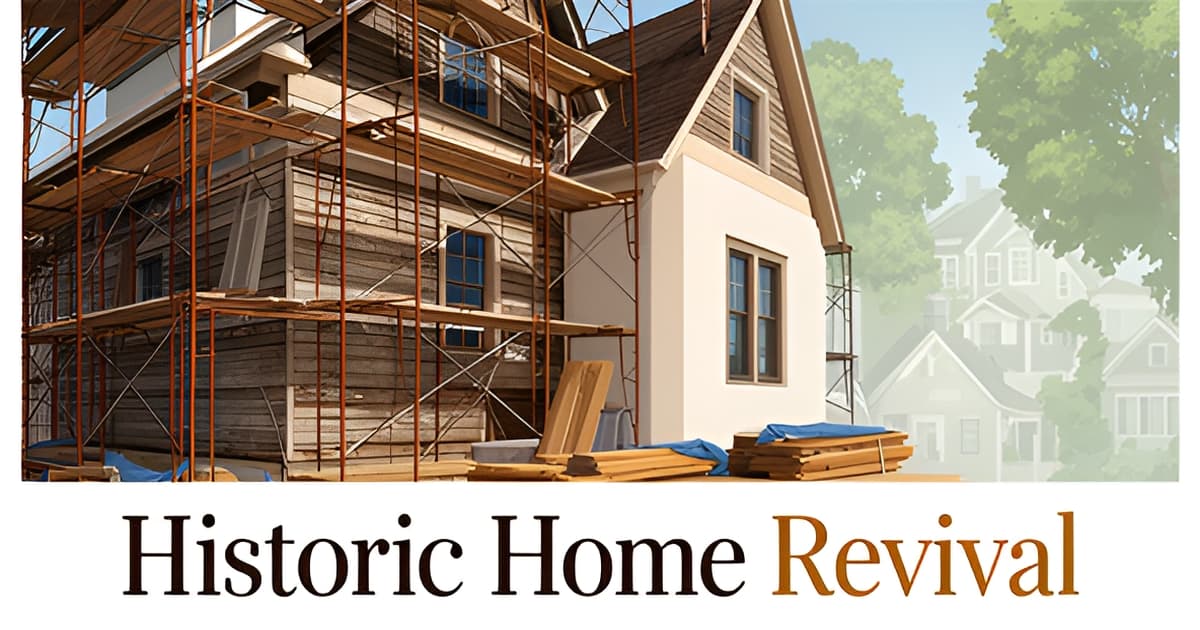
Remodeling a Historic Home in Altadena: Costs and Review Rules
Key Facts
- Altadena's first historic district — the Historic Highlands, covering 77 parcels — took effect July 9, 2026, amending Title 22 of the L.A. County Code, per the County's official announcement.
- Rebuilding in Altadena runs roughly $500 per square foot, meaning a 1,500 sq ft home costs $750,000 — over $140,000 above average 2023 insurance coverage, rebuilding research shows.
- Only one of nine toured Altadena households had insurance fully covering rebuild costs, leaving an average uninsured gap of $309,400, a UCLA study found.
- Relocating a historic home to a fire-affected lot costs about $350 per square foot versus $450–$650 for new construction — and takes roughly half the time, local reporting estimates.
- The Eaton Fire destroyed 9,413 structures across 14,000 acres, including hundreds of Craftsman homes by Louis B. Easton and Greene and Greene, Pasadena Heritage documents.
- Testing of 50 intact, remediated Altadena homes found 6 in 10 still uninhabitable due to elevated lead or asbestos, rebuilding research reveals.
- Preservation experts recommend holding a 10–20% cash reserve for historic renovation surprises — one surviving window sash can serve as the template for every missing one, renovation guidance notes.
Altadena's New Landmark Review Rules: What Changed and Who's Affected
For decades, an Altadena homeowner could remodel a Craftsman bungalow with nothing more than the standard LA County permit process. As of July 9, 2026, that changed for 77 properties overnight.
The L.A. County Board of Supervisors approved the Historic Highlands Historic District on June 9, 2026, making it Altadena's first formally designated historic district. According to the County's official announcement, the designation covers 77 parcels of predominantly early-20th-century single-family residences and took effect thirty days later. More than half of the affected owners supported the designation, and the process moved through the Historical Landmarks and Records Commission, the Regional Planning Commission, and County Counsel review before final approval.
The legal mechanism matters for anyone planning a remodel: the district amends Title 22 of the L.A. County Code — the County's planning and zoning ordinance. That means remodels within the district now fall under County planning and zoning review under guidelines designed to protect "defining architectural features while continuing to allow appropriate property improvements." Supervisor Kathryn Barger called it "the final step necessary to preserve the Historic Highlands' unique character and architectural heritage for future generations."
What does "protecting defining architectural features" actually mean in practice? The district's defining styles — Craftsman, Spanish Colonial Revival, Tudor, and other 1920s period styles — establish the character a remodel must respect. For homeowners in the district, that likely translates into closer scrutiny of the elements that make these homes distinctive:
- Facade-facing changes on Craftsman homes — original siding, rafter tails, and window patterns
- Stucco detailing, clay tile roofs, and arched openings on Spanish Colonial Revival houses
- Steep rooflines, decorative half-timbering, and masonry on Tudor-style residences
- Additions and second stories visible from the street, where period character is most legible
The timing is significant. The Eaton Fire destroyed hundreds of Altadena Craftsman homes, including works by Louis B. Easton and Greene and Greene, as Pasadena Heritage documents — and preservationists note that original Craftsman-era materials are "now unusual or unavailable." The new district formalizes protection for what survived.
Here's the honest caveat: the County has not yet published detailed day-to-day review procedures, design guidelines, or fee schedules specific to Historic Highlands remodels. What's certain is that owners of the 77 parcels now face a review layer their neighbors two streets over don't — and any remodel scoping conversation should start by confirming whether a property falls inside the district.
What a Historic Remodel Really Costs in Altadena
Budget honesty is rare in Altadena remodeling conversations, but the numbers here deserve a hard look before anyone signs a contract. Post-Eaton Fire cost data gives homeowners a realistic baseline — and it's higher than most expect.
According to rebuilding research from Catalyst California, the working cost assumption for rebuilding in Altadena is roughly $500 per square foot. A 1,500-square-foot home at that rate totals $750,000 — while average local insurance coverage sat at just $607,000 in 2023, a shortfall exceeding $140,000 before temporary housing costs.
New construction runs even higher. reporting on Altadena's rebuilding market estimates $450–$650 per square foot for new builds, compared with about $350 per square foot to relocate an existing historic structure to a fire-affected lot.
For a home that survived, the math shifts but stays demanding. Older houses carry hidden conditions that surprise even careful planners, which is why preservation experts recommend holding a 10–20% cash reserve for surprises — a figure that matches general renovation data showing projects routinely exceed budgets by that margin.
The insurance picture compounds the challenge. A UCLA study of Altadena households found that only one of nine toured households had insurance fully covering rebuild costs; the rest averaged about 73% coverage, leaving an average uninsured gap of $309,400 before any aid.
For a historic remodel, that gap matters in two ways:
- Renovation budgets must absorb both visible scope and hidden conditions — lead, asbestos, and aging systems are documented obstacles in Altadena's older housing stock.
- Funding mixes (insurance, savings, aid) rarely cover a full $500/sq ft rebuild, so scope decisions carry real financial weight.
- Preserve-first renovation often costs less than demolition-plus-new-build at $450–$650/sq ft, making restoration a financially rational choice, not just an aesthetic one.
One honest caveat: Altadena has not yet published historic-specific permit fees or a quantified "landmark premium" for designated remodels. The Historic Highlands framework only took effect July 9, 2026, so no reliable local fee schedule exists yet. Any contractor quoting a firm historic-review premium is guessing.
That's why Altadena Home Remodeling scopes every project against the real cost environment before design work begins — no timeline or permit guarantees, just grounded numbers. If you want your budget built on Altadena's actual figures rather than national averages, book a free remodel-scoping consultation and get a before/after concept render for your home.
Materials Matching: How to Preserve Character Without Chasing Unobtainable Originals
The last intact window sash in your 1915 Craftsman may be the most valuable scrap of wood in your house. That single surviving piece can serve as a template for every sash that's missing — a practice preservationists call replication from surviving clues, and one that turns fragments into a full restoration plan.
As Gabrielle Begue of MacRostie Historic Advisors explains in renovation guidance, "If there's one historic window sash remaining in the whole house, we can conclude that the rest of the house originally did have matching sashes and those can be replicated." In Altadena, where the Eaton Fire destroyed hundreds of Craftsman homes — including works by Louis B. Easton and Greene and Greene, per Pasadena Heritage — surviving originals have become even scarcer. The organization notes that original Craftsman-era materials are "now unusual or unavailable," which makes chasing period-perfect originals a losing game.
Replication, not scavenging, is the professional answer. Josh Wiener of SilverLinings describes fabricating plaster moldings as "carbon copies" that conceal modern air conditioning, and even distressing new mahogany with chains so it reads as original. The craft matters more than the provenance of the lumber.
The deeper question — raised directly by Pasadena Heritage amid Altadena's rebuilding — is whether a house built to modern codes with modern materials can still be a "Craftsman" at all. Is the style defined by its details, or by the philosophy behind them? The "stewardship" camp holds that owners shouldn't treat the home as a shrine to the past; the strict-replication camp wants carbon copies wherever possible. Most successful remodels land somewhere in between:
- Replicate visible character elements — sash profiles, trim, moldings — from surviving clues, even when materials are modern underneath.
- Conceal modern systems (HVAC, insulation, wiring) behind historically detailed surfaces rather than sacrificing character for comfort.
- Reserve the budget for what defines the house, and accept honest substitutes where originals are simply unobtainable.
- Keep a 10–20% cash reserve for surprises, as NerdWallet recommends for historic work — old walls hide conditions new builds don't.
Designer Victoria Sass frames the mindset well: this is simply your chapter in the story of your house. Balancing conservation with modern living, as Begue puts it, means weighing "practical needs, budget, and what's required for modern living" — not achieving museum perfection.
If your Altadena home has surviving clues worth building from, Altadena Home Remodeling offers a free remodel-scoping consultation with a before/after concept render — a practical first step toward matching what remains.
Your Remodel Path: From Designation Check to Scoping Your Project
A Craftsman in Altadena can hide a century of surprises behind its cladding — so the smartest remodel starts with a checklist, not a sledgehammer. Here is the sequence we recommend before anyone draws a wall.
Step one: check your designation status. The L.A. County Board of Supervisors approved Altadena's first historic district — the Historic Highlands — on June 9, 2026, effective July 9, 2026, covering 77 parcels of predominantly early-20th-century homes. If your lot falls inside it, your remodel falls under amended Title 22 County review with guidelines protecting "defining architectural features." Confirm your parcel before finalizing any design.
Step two: budget with a real cushion. NerdWallet recommends a 10–20% cash reserve for historic renovation surprises, and general renovation data shows projects routinely exceed budgets by 10–20% or more. In Altadena's post-fire cost environment — where rebuild assumptions run about $500 per square foot — a thin contingency is not a plan.
Step three: plan for fire-zone rules and hidden hazards. New fire hazard severity zones finalized between April 2024 and March 2025 impose defensible space and wildland-urban interface requirements on owners in high and very high zones. And do not assume an intact home is a clean home: testing of 50 intact, remediated homes found 6 in 10 still uninhabitable due to elevated lead or asbestos. Test first, then scope.
Your pre-construction path in short:
- Confirm whether your parcel sits in the Historic Highlands district
- Set a 10–20% contingency reserve before pricing finishes
- Map defensible space and WUI requirements for your fire zone
- Test for lead and asbestos before opening any walls
Scope it once, price it right. Altadena Home Remodeling offers a free remodel-scoping consultation that walks your property through each of these steps and includes a before/after concept render, so you can see the preserve-first vision before committing. We make no timeline or permit guarantees — every project moves at the County's pace.
Our featured builder, JMB Builders LLC (CSLB #1103479, a disclosed paid placement), is an Altadena-based licensed general contractor building custom homes, ADUs, and whole-home remodels, including Eaton Fire rebuilds; its portfolio is documented at jmb-builders.com. Book your scoping session and start your renovation with answers, not assumptions.
Considering All Preservation Options: Renovation vs. Relocation
Not every historic home in Altadena can be saved in place — and the Eaton Fire aftermath has produced a creative middle path that deserves honest attention. If your lot sits empty, relocation may be worth weighing. If your home still stands, renovation remains the preserve-first default.
Since the fire, architecture firm Omgivning has been moving houses slated for demolition elsewhere in LA County onto fire-affected lots in Altadena and Pacific Palisades, including homes that are historic in character but not formally designated landmarks. The program builds new code-compliant foundations, updates systems, and makes what the firm calls "sensitive adaptations" so each house retains its original character while becoming safe and livable again.
The economics are compelling. According to local reporting, relocation runs roughly $350 per square foot versus $450–$650 per square foot for new construction, and takes about half the time. Three relocations are complete, six more are in progress, and roughly 250 people sit on a waiting list. One fire survivor described the appeal plainly: relocation offered "a lot more house for not a lot more money."
For owners of standing homes, though, the calculus is different. Relocation answers the problem of an empty lot; it does nothing for a salvageable Craftsman or Spanish Colonial Revival house that still holds its original woodwork, plaster, and character. And with original Craftsman-era materials described by Pasadena Heritage as "now unusual or unavailable," what stands on your property is often irreplaceable in a way a relocated house cannot match.
When weighing your options, consider:
- Structural condition: a standing home with sound bones is almost always cheaper and faster to renovate than to replace.
- Historic fabric: original materials that survive the fire cannot be repurchased at any price per square foot.
- District status: if your parcel falls within the new Historic Highlands Historic District, review rules will shape what any path looks like.
- Budget reality: with rebuild costs near $500 per square foot and typical insurance gaps exceeding $140,000, honest scoping matters more than optimistic estimates.
The right answer is property-specific, and it rarely reveals itself without a real walkthrough. A free remodel-scoping consultation with Altadena Home Remodeling looks at your home's condition, your lot, and your budget side by side — and includes a before/after concept render so you can see what renovation in place could deliver before committing to any path. Scope it, price it, and do it once, do it right.
Frequently Asked Questions
Do I need historic review approval to remodel my home in Altadena?
How much does it cost to remodel or rebuild a historic home in Altadena?
How much extra should I budget for surprises in an old Craftsman?
Can I match the original windows and trim if the originals are gone?
Will my insurance cover a full historic remodel or rebuild?
Is it cheaper to renovate my standing home or relocate/build new?
Your Altadena Historic Home Deserves a Plan, Not a Guess
Remodeling a historic home in Altadena now means navigating three realities at once: the new Historic Highlands review layer for 77 parcels, a post-fire cost environment where rebuilds run near $500 per square foot, and original Craftsman-era materials that can't simply be repurchased. The good news is that preservation is often the financially rational path — renovating a sound home typically beats demolition-plus-new-build at $450–$650 per square foot, and replication from surviving clues lets you restore character without chasing unobtainable originals. Before any design work begins, confirm your district status, hold a 10–20% contingency, and test for hidden hazards. Altadena Home Remodeling offers a free remodel-scoping consultation with a before/after concept render, so your project starts with grounded numbers and answers — not assumptions. Scope it, price it, and do it once, do it right.