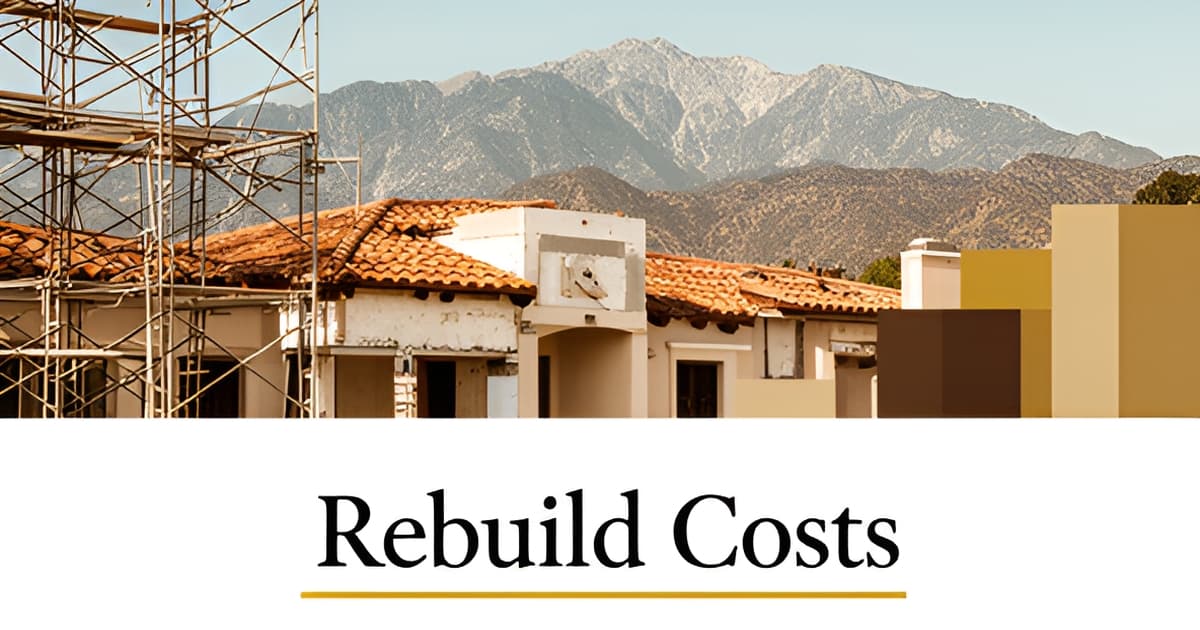
Rebuilding a 1,666 Sq Ft 1928 Home in Altadena: Cost Today
Key Facts
- Rebuilding a 1,666 sq ft Altadena home costs $750,000–$1.25M in hard construction at 2026 rates of $450–$750/SF, per industry contractor estimates.
- Soft costs like debris removal, permits, and temporary housing add 40–60% on top of the base construction contract.
- Pre-construction work alone — hazmat remediation, soil testing, engineering — consumes $75,000–$200,000 before a foundation is even poured.
- 62% of 2025 LA fire survivors reported being underinsured, while another 33% didn't yet know where they stood.
- Average Altadena homes carried $607,000 in 2023 coverage — over $140,000 short of modeled rebuild costs, Catalyst California found.
- Only 23 of nearly 6,000 significantly damaged Altadena properties had completed rebuilding as of December 2025.
- LA County's like-for-like pathway allows footprint changes up to 10% or 200 sq ft — whichever is greater — with expedited review targets.
What It Actually Costs to Rebuild a 1,666 Sq Ft Home in Altadena
Here's the direct answer first: rebuilding a 1,666 sq ft home in Altadena at 2026 rates runs roughly $750,000 to $1.25M in hard construction costs, based on current custom-rebuild rates of $450–$750 per square foot. Then soft costs — debris removal, hazmat remediation, engineering, permits, temporary housing — commonly add another 40–60% on top of the base construction contract, according to industry cost tracking.
Why the wide range? Because a single number is misleading. Two homes of identical size can land hundreds of thousands of dollars apart once site conditions, structural scope, and finish level are factored in. As one contractor put it, no honest price can be given without reviewing the property itself.
Different benchmarks also measure different things:
- A $500/SF benchmark from Catalyst California models a 1,500 sq ft rebuild at $750,000 — a planning figure, not a bid.
- Owner-reported estimates put Eaton-area mid-market code-compliant rebuilds at roughly $570/SF, with high-end Palisades builds near $800/SF.
- Contractor estimates of $450–$750/SF for Altadena custom rebuilds typically include architecture, engineering, and permits — but exclude soft costs like temporary housing.
If you're planning to rebuild your 1,666 sq ft home, the practical takeaway is to budget the full picture, not just the construction contract. Pre-construction phases alone — debris removal, soil testing, permits — can consume $75,000 to $200,000 before a foundation is poured. Add a 24-month rebuild at LA-market temporary housing rates and you're looking at another $60,000 to $120,000 out of pocket. A 10–15% contingency is standard, and post-disaster demand surges can push contractor and material costs up 20–40% within months.
Insurance adds another layer of urgency to getting these numbers right. The average Altadena home carried $607,000 in coverage in 2023 — well short of what a like-for-like rebuild costs today. A United Policyholders survey found 62% of 2025 LA fire survivors reported being underinsured, and another 33% didn't yet know where they stood.
At Altadena Home Remodeling, we help homeowners scope the complete budget — hard costs, soft costs, and contingency — before design work begins, so the number you plan around is the number you actually build to.
ctaText: Get a free remodel-scoping consultation with a before/after concept render — scope it, price it, and plan your Altadena rebuild with the full budget in view.
socialProofText: Rebuild guidance from Altadena Home Remodeling, featuring licensed general contractor JMB Builders LLC (CSLB #1103479), documented at jmb-builders.com.
The Like-for-Like Pathway: Recreating a 1928 Footprint the Smart Way
For owners of a fire-damaged 1928 home in Altadena, LA County's like-for-like rebuild pathway is the single most important regulatory lever available. It allows you to recreate your home's original footprint — same size, location, and use — while making modifications up to 10% or 200 square feet, whichever is greater, to floor area, height, or footprint. A different interior floor plan or even a somewhat smaller house still qualifies.
The practical benefits are significant. Qualifying like-for-like plans receive an expedited initial review target of 10 business days from Regional Planning, with rechecks at 5 business days. Perhaps more valuable for a 1928-era home on a modest lot: staying within the prior footprint means avoiding current Community Standards District requirements, including modern setback rules that could otherwise shrink or reposition the house.
But it's critical to understand what the pathway does and doesn't do. As contractors working in the Eaton Fire area note, the like-for-like route is best understood as a way to simplify part of the process — not a discount on the build itself. Code, materials, labor, and site costs still apply in full.
That means current wildfire codes apply to your recreated 1928 home just as they would to any new build:
- Chapter 7A requirements: Class A roofing, ember-resistant vents, non-combustible siding, and tempered dual-pane windows
- The new WUI Code (Title 24, Part 7), effective January 1, 2026, including fire sprinklers in High Fire Hazard Severity Zones
- Defensible space and revised fire hazard severity zone requirements
These requirements add real money. A 2025 Headwaters Economics/IBHS study found WUI code provisions added $13,070 to a 1,750 sq ft Altadena model home versus traditional construction — and at 2026 Altadena rebuild rates of roughly $450–$750 per square foot, a 1,666 sq ft like-for-like rebuild still lands in the ~$750,000–$1.25M hard-cost range before soft costs.
Modifications beyond the 10%/200 sq ft threshold trigger additional planning review, extending both timeline and cost. That's why, at Altadena Home Remodeling, we encourage owners to lock in their footprint decisions early — deciding whether that expanded kitchen or second bathroom fits within the allowance before plans are drawn. For a preserve-first approach to a 1928 home, working with an experienced contractor like JMB Builders LLC (CSLB #1103479) during a free remodel-scoping consultation — complete with a before/after concept render — can help you test whether your vision fits the pathway before you commit to a plan set.
The like-for-like pathway rewards discipline: stay within your original envelope, and you gain speed and flexibility on placement. Step outside it, and you're back into full planning review under current standards.
ctaText: Scope your like-for-like rebuild with a free consultation and before/after concept render — get a real number for your 1928 footprint, not a generic per-square-foot guess.
socialProofText: Altadena Home Remodeling connects owners with licensed local builders like JMB Builders LLC (CSLB #1103479), who are actively rebuilding Eaton Fire–damaged homes in Altadena.
Why Today's Rebuild Costs More Than the Original 1928 Build: Codes, Soft Costs, and Demand Surge
A 1928 builder worked with dimensional lumber, a hand-mixed foundation, and essentially no permitting bureaucracy. Rebuilding that same 1,666 sq ft footprint today means navigating wildfire codes, hazmat remediation, and a regional labor market stretched across three disaster zones — and every one of those line items is priced in.
Wildfire codes didn't exist in 1928. Chapter 7A requirements — Class A roofing, ember-resistant vents, non-combustible siding, tempered dual-pane glazing — apply across most of Altadena's fire-affected Very High Fire Hazard Severity Zone, and the new Title 24 Part 7 WUI code adds fire sprinklers and stricter material standards starting January 1, 2026. A Headwaters Economics/IBHS study of a 1,750 sq ft Altadena model home found these requirements added $13,070 versus traditional construction, with the IBHS Wildfire Prepared Home Plus standard adding $15,242 — a premium that can reduce destruction risk by up to 43%.
Soft costs are the bigger surprise for most owners. Pre-construction phases — debris removal, hazmat remediation, soil testing, engineering, and permits — commonly consume $75,000–$200,000 before framing begins, and soft costs routinely add 40–60% on top of the base construction contract. Temporary housing alone can run $60,000–$120,000 over a 24-month rebuild at LA-market rental rates.
The hidden costs pile up further:
- Demand surge: post-disaster contractor and material costs spike 20–40% and can persist 12+ months, turning a $400/SF plan into a $550–$600/SF reality.
- Lead contamination: 68% of significantly damaged multifamily homes in West Altadena sit in high-lead areas, and testing found remediated homes still uninhabitable.
- Conditional foundation reuse: a visible foundation proves nothing — reuse requires testing and forensic analysis, and soil disturbed deeper than 12 inches may trigger a compaction report.
Contractors are blunt about the math: "Budget only for construction, and you'll run out of money mid-project." Two identically sized homes can land hundreds of thousands of dollars apart once site conditions, structural scope, and finish level are factored in.
None of this means the rebuild is unwise — it means the budget must be built honestly from the start. Altadena Home Remodeling's scoping consultations exist precisely because no honest number is possible without reviewing the property, and our free consultation includes a before/after concept render so you can see the finished home before committing a dollar. Scope it, price it, do it once, do it right.
Insurance Gaps and Budget Reality: Planning for the Full Bill
For many Altadena homeowners, the hardest part of rebuilding isn't construction — it's discovering the insurance check won't cover it. The gap between what policies pay and what rebuilds actually cost has become the defining financial challenge of this recovery.
The numbers tell a stark story. The average Altadena home carried about $607,000 in coverage in 2023, according to Catalyst California's tracking research — yet a 1,500 sq ft rebuild modeled at $500/SF already exceeds $750,000, a shortfall of more than $140,000 before temporary housing. And that's before soft costs, which can add 40–60% on top of the base construction contract.
The problem is widespread, not anecdotal. A United Policyholders survey found that 62% of 2025 LA fire survivors reported being underinsured — and another 33% didn't yet know whether they were. Many Altadena homeowners are finding their policy limits fall short of actual 2026 rebuild costs, which run $450–$750/SF for custom work.
Before committing to design work or signing a builder's contract, verify three things with your carrier and your contractor:
- Dwelling limits — confirm your coverage reflects current per-SF rebuild costs, not your home's purchase price or pre-fire market value.
- Extended replacement cost — this endorsement can cover cost overruns beyond your base limit, which matter in a demand-surge market where estimates have jumped 20–40%.
- Ordinance or law coverage — rebuilding to current Chapter 7A wildfire codes, fire sprinkler requirements, and LA County standards costs more than your 1928 home ever did to build.
Budgeting only for construction is the most common and most expensive mistake. As contractors in the recovery note, "budget only for construction, and you'll run out of money mid-project." Pre-construction work alone — debris removal, hazmat remediation, soil testing, engineering, permits — commonly consumes $75,000–$200,000 before framing begins, and temporary housing over a 24-month rebuild can add $60,000–$120,000 out of pocket.
Plan a contingency of 10–15% at minimum, and 20–30% if you're rebuilding during peak demand surge. Two homes of identical size can land hundreds of thousands of dollars apart once site conditions, structural scope, and finish level are factored in.
This is exactly why Altadena Home Remodeling starts every project with a free remodel-scoping consultation, including a before/after concept render — because no honest budget exists without reviewing your specific property first. Featured builder JMB Builders LLC (CSLB #1103479), an Altadena-based licensed general contractor with documented Eaton Fire rebuild experience, brings that same property-specific rigor to scoping and pricing. Verify your coverage, stress-test your budget, and only then start drawing plans.
Your Next Step: Scoping the Rebuild With Real Numbers
The public cost ranges for rebuilding a 1,666 sq ft 1928 home — roughly $750,000 to $1.25M in hard construction costs — are only useful once they're applied to your specific lot, footprint, and finish level. Sources are blunt on this point: no honest number exists without reviewing the property, and two homes of identical size can land hundreds of thousands of dollars apart once site conditions and structural scope are factored in.
Timing matters too. A realistic rebuild runs 15 to 26 months by industry estimates, with some projects stretching to 36 months from lot clearance to occupancy. Before any permit is issued, both debris-removal phases and site clearance must be complete, and a visible foundation doesn't prove it can be reused — testing and forensic analysis are required, and soil disturbed deeper than 12 inches may trigger a compaction report.
A professional scoping consultation closes the gap between wide public ranges and an address-specific budget. At Altadena Home Remodeling, a free remodel-scoping consultation includes a before/after concept render and walks through the variables that move your number most:
- Whether your plan stays within the like-for-like threshold of 10% or 200 square feet (whichever is greater), which secures expedited review
- Current wildfire code requirements — Chapter 7A and the new WUI Code effective January 1, 2026 — which a study found added about $13,070 to a comparable Altadena model home
- Soft costs that regularly add 40–60% on top of the base construction contract, including temporary housing that can run $60,000–$120,000 over 24 months
- Your insurance position — 62% of 2025 LA fire survivors reported being underinsured, so verifying dwelling limits before design work is essential
For readers who want a licensed local builder to carry the scoping forward, we feature JMB Builders LLC (CSLB #1103479), an Altadena-based general contractor whose work on custom homes, ADUs, and Eaton Fire rebuilds is documented on jmb-builders.com. This is a disclosed paid placement; the consultation itself remains free and carries no obligation.
One caution as you move forward: even accelerated permitting is a target, not a promise. LA County publishes a 10-business-day review target for qualifying like-for-like plans, yet as of December 2025 only 23 of nearly 6,000 significantly damaged properties had completed rebuilding. No contractor or guide — including this one — can guarantee a timeline or permit outcome. What a scoped, property-specific budget can do is replace guesswork with a plan built around your actual 1928 footprint, your lot's conditions, and your coverage.
Frequently Asked Questions
How much does it cost to rebuild a 1,666 sq ft home in Altadena after the Eaton Fire?
Can I rebuild my 1928 house with the same footprint, and does that save money?
Why does rebuilding cost so much more than the original 1928 construction?
What hidden costs should I budget for beyond the construction contract?
Will my insurance cover the full cost of rebuilding?
How long does an Altadena rebuild actually take from fire to move-in?
From Guesswork to Ground Truth: Turning a Wide Cost Range Into Your Number
Rebuilding your 1,666 sq ft 1928 home in Altadena isn't a single number — it's a stack of decisions. Hard costs of roughly $750,000 to $1.25M are only the starting point: soft costs can add 40–60% on top, the like-for-like pathway rewards staying within your original footprint, and wildfire codes bring your 1928 house into 2026 reality whether you like it or not. Add in the insurance gap — 62% of 2025 LA fire survivors reported being underinsured — and the case for honest budgeting becomes impossible to ignore. The homeowners who rebuild successfully aren't the ones with the best guesses; they're the ones who scoped their specific lot, verified their coverage, and planned the full bill before drawing a single plan. That's exactly what a scoping consultation is for: sit down with your footprint, your site conditions, and your numbers, and walk out with a before/after concept render and a budget built around your actual property — not a generic per-square-figure. Scope it, price it, do it once, do it right. Your first step costs nothing: request a free remodel-scoping consultation and see what your rebuild really looks like.