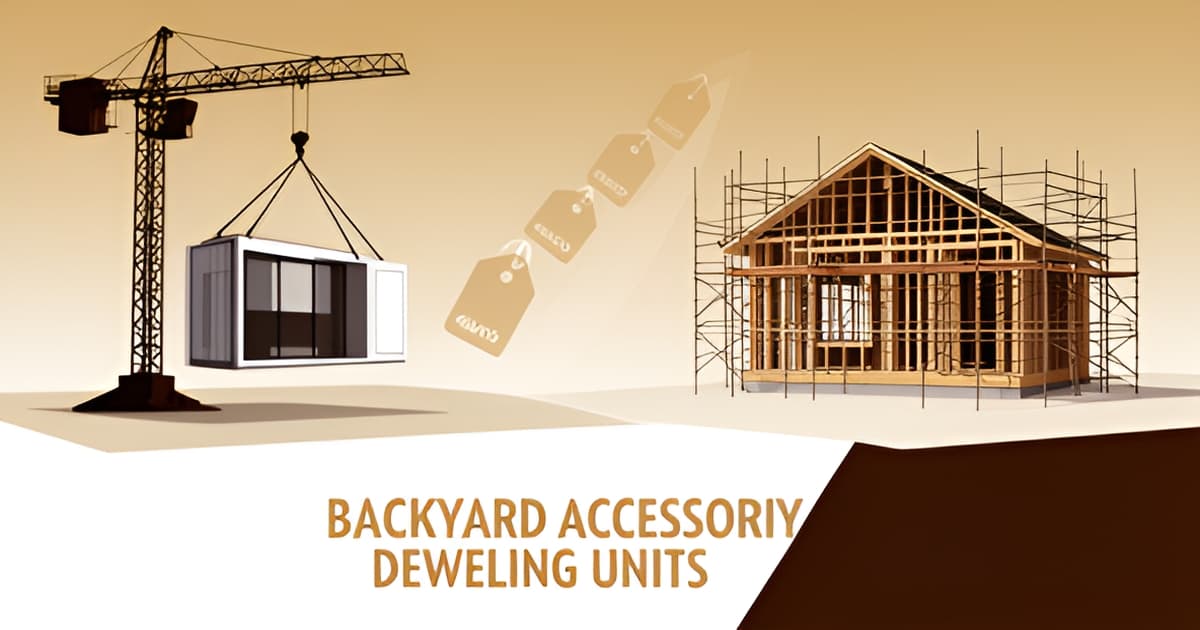
Prefab ADU Cost in California vs. Site-Built: True Total Comparison
Key Facts
- A San Jose couple quoted $175K 'all-in' for a prefab ADU paid over $230K, according to LiveLarge's pricing review.
- Prefab ADU total installed costs in California run $120,000–$350,000, with the base unit just $80,000–$180,000, per Burnett Construction's breakdown.
- Perpetual Homes' $123,000–$170,000 catalog prices land in the mid-$200,000s once site work and fees are added, TheRenology found.
- No prefab ADU company offers two-story models because factory and transport constraints make it impossible, Cali-ADU reports.
- Prefab ADUs in LA complete in 3.5–7 months, with on-site installation measured in days, per LADU's analysis.
- The California Construction Cost Index rose 44% from January 2021 to December 2025, according to SnapADU.
- A real 550 sq ft site-built ADU in North Hills cost $259,000, with plumbing and electrical eating 23% of the budget, per Cali-ADU's line-item breakdown.
The $50K–$100K Quote Gap: Why Advertised Prefab Prices Mislead
A San Jose couple was quoted $175,000 "all-in" for their prefab ADU. The final bill came to more than $230,000 — a gap of over $55,000, according to a detailed review of real prefab pricing in California. They are not outliers.
Consider Perpetual Homes, a popular prefab dealer. Its catalog lists units at $123,000–$170,000, described as "home only." Once a raised foundation, standard utilities, $9,500 in planning, and a $20,000 city fee allowance are added, the installed price lands in the mid-$200,000s, per TheRenology's analysis. That's $80,000–$100,000+ beyond the sticker price.
The pattern is structural, not accidental. The advertised unit price is only part of the true installed cost, which typically runs $120,000–$350,000 in California. The base unit — $80,000–$180,000 — is just one line item. Site work, foundation, utilities, permits, and crane installation fill out the rest.
Why can't prefab companies just quote an honest all-in number? Because the biggest costs depend on your specific lot. As LiveLarge puts it, "there's no such thing as a universal 'all-in' price — especially not before someone sees your lot." The same unit can cost tens of thousands more on a sloped or hard-to-access property than on a flat lot with good access.
Common exclusions from prefab quotes include:
- Utility trenching for electrical, water, and sewer connections
- Demolition and removal of existing structures
- Crane setup, especially where tight access or overhead wires require specialized lifts
- Permit fees, surveys, and plan-check costs
- Slope and soil grading on uneven lots
These exclusions matter more in Altadena than in many markets. Hillside lots, narrow access, and older utility infrastructure — common in our Craftsman neighborhoods — push site work toward the high end of every range. Add LA County's permitting requirements, and the gap widens further.
The takeaway: treat any prefab quote that isn't based on a site review as a rough guess, not a price. If a builder hasn't walked your property, they're estimating blind. Demand a written, fully loaded quote covering site work, utilities, permits, and delivery before comparing options.
At Altadena Home Remodeling, we scope ADU projects from the ground up — your lot, your utilities, your permit context — so the number you see is the number you pay. A free scoping consultation with a before/after concept render is the honest starting point the prefab catalogs don't offer.
Side-by-Side: What Prefab and Site-Built ADUs Really Cost Installed
Strip away the marketing, and prefab and site-built ADUs in California land in surprisingly similar territory once everything is installed. The sticker price on the unit tells you almost nothing about the final bill.
Prefab quotes look deceptively lean because they typically cover only the factory-built structure. According to a detailed installed-cost breakdown, a base prefab unit runs $80,000–$180,000 — but the site work around it adds up fast:
- Site prep: $15,000–$50,000
- Foundation: $10,000–$40,000
- Utility connections: $10,000–$35,000
- Permits: $8,000–$25,000
- Delivery and crane installation: $5,000–$15,000
Stack those line items onto the unit price and total installed costs reach roughly $120,000–$350,000. Real-world examples confirm the pattern: one San Jose couple quoted $175K "all-in" paid over $230K, and Perpetual Homes' $123,000–$170,000 catalog prices become "mid $200,000s" once site work, fees, and allowances are included, per TheRenology's review.
Site-built pricing is more transparent because the builder owns every line item. A real 550 sq ft detached ADU in North Hills cost $259,000 on an ideal flat lot, with framing at $29,000, plumbing at $34,500, electrical at $25,500, and foundation at $23,500. Plumbing and electrical alone consumed roughly 23% of the budget. Add city permit and plan-check fees of $3,000–$6,000, and the picture is complete.
Here's the uncomfortable truth for shoppers comparing the two paths: typical detached ADUs — prefab or stick-built — land around $300K+ turnkey in Southern California. SnapADU's San Diego benchmarks put a 500 sq ft unit at $300K all-in and a 750 sq ft two-bedroom at $350K, which aligns closely with what LA-area site-built projects actually cost.
What separates a $260K project from a $400K one isn't the construction method — it's the lot. As SnapADU puts it, sitework is "the most variable part of the cost to build an ADU"; the same unit can cost tens of thousands more on a challenging property than on a flat lot with good access. Utility trenching distance, slope grading, crane access, and overhead wires are the swing factors.
That matters acutely in Altadena, where hillside topography, narrow driveways, and Eaton Fire rebuild conditions make site work the dominant cost driver. A prefab unit that cranes in cleanly on a flat San Fernando Valley lot may need specialized lifts — or may be impractical entirely — on a constrained hillside parcel. Site conditions, not the unit, determine your real budget.
This is why we recommend Altadena homeowners get a site-reviewed, fully loaded scoping estimate before committing to any construction path. At Altadena Home Remodeling, our free remodel-scoping consultation includes a before/after concept render, so you can see both the design and an honest cost picture grounded in your actual lot — not a catalog price that leaves $50K–$100K unaccounted for.
Featured builder: JMB Builders LLC (CSLB #1103479), an Altadena-based licensed general contractor building custom homes, ADUs, and whole-home remodels, including Eaton Fire rebuilds. Paid placement.
Where Prefab Wins, Where It Doesn't: Size, Stories, and Speed
Prefab vendors and site-built builders disagree about almost everything except one thing: the honest answer depends on your lot, your size, and your timeline. Here's what each side claims — and where those claims hold up.
Prefab manufacturers advertise real savings. Mesocore claims prefab delivers 10–25% cost savings over traditional construction, while LADU cites savings of up to 30%. But site-built builders push back hard: SnapADU, a site-built firm, says smaller prefab units can save money, yet "larger and two-story ADUs are often a wash when comparing prefab vs. stick-built." Vendor bias runs in both directions here, so treat both claims as marketing-informed perspectives, not settled fact.
One claim isn't debatable. According to Cali-ADU, no prefab ADU company offers two-story models — factory and transport constraints make it impossible (Cali-ADU's cost guide). Site-built two-story ADUs can deliver 840 sq ft on a 448 sq ft footprint, which matters enormously on Altadena's smaller hillside lots where maximizing footprint is rarely an option.
Prefab's most defensible advantage is timeline, not price. Many LA projects complete in 3.5–7 months, with on-site installation measured in days, because factory fabrication happens while foundation and utility work proceeds in parallel (LADU's installation analysis). Burnett Construction confirms permitting timelines stay similar, but total completion often comes sooner for prefab (Burnett's cost breakdown).
SnapADU warns that "the exact same unit could cost tens of thousands more to build on a challenging property than on a flat lot with good access" (SnapADU's cost guide). Altadena's typical lot profile stacks several challenges at once:
- Sloped terrain: hillside grades require foundation and grading work that prefab quotes routinely exclude
- Tight access: narrow driveways and overhead wires force specialized crane setups, adding $5,000–$15,000 in delivery and installation costs
- Craftsman aesthetic matching: standard factory finishes rarely match historic facades, stonework, or period details that Altadena neighborhoods expect
- Split responsibility: prefab dealers aren't general contractors, so homeowners manage site work separately — losing single-point cost control
LiveLarge puts it bluntly: "Most of the real costs in prefab ADU construction come from your site conditions, not the prefab unit itself" (LiveLarge's prefab pricing investigation). On a flat, open lot with flexible aesthetics, prefab's speed and small-unit savings are real. On a sloped Altadena lot with a 1920s Craftsman to match, the calculus shifts toward site-built — where a licensed GC like JMB Builders LLC (CSLB #1103479), the featured builder at Altadena Home Remodeling, controls grading, utilities, and finish-matching under one contract.
ctaText: Prefab quotes hide $50K–$100K in site work, crane fees, and trenching — and Altadena's slopes make it worse. Scope your ADU once, price it right, and do it right: book your free remodel-scoping consultation with a before/after concept render from Altadena Home Remodeling today.
socialProofText: Altadena Home Remodeling is an independent, preserve-first renovation guide covering whole-home remodels, additions, second stories, and ADUs across LA County's unincorporated foothills — featuring JMB Builders LLC (CSLB #1103479), an Altadena-based licensed general contractor documented at jmb-builders.com. Timelines and permits vary by project; no guarantees are made.
How to Get a Real Number: Demanding a Site-Reviewed, All-In Quote
The most expensive ADU number you'll ever see is the one that changes after construction starts. A San Jose couple was quoted $175,000 "all-in" and ended up paying more than $230,000 — a gap of over $55,000 that appeared in trenching, crane fees, and permits no one had walked the lot to price (LiveLarge reports).
The rule is simple: if a builder hasn't reviewed your property, they're guessing. There is no universal all-in price before someone sees your lot — utility connection points alone are "one of the most unpredictable cost categories," per Burnett Construction. Distance from your electrical, water, and sewer hookups can swing the budget by tens of thousands, and every lot is different (Cali-ADU notes).
Before you sign anything, demand a written, site-reviewed quote that covers:
- Utility trenching — measured distance to existing hookups, not a flat allowance
- Crane access — tight side yards or overhead wires can force specialized lifts
- Permit fees and surveys — LA County unincorporated properties carry their own fee schedules
- Site prep, foundation, grading, and any demolition or removal
Watch closely for the dealer-vs-GC split. Some prefab companies are dealers, not general contractors — your contract covers the box, and you must hire a separate licensed contractor for foundations, utilities, and sitework. TheRenology found one dealer listing three different starting prices on its own site, with the all-in estimate adding a foundation, utilities, $9,500 of planning, and a $20,000 city fee allowance on top of a $123,000–$170,000 home-only price. When responsibility is split, no one owns the total.
Timing matters as much as scoping. The California Construction Cost Index rose 44% from January 2021 to December 2025, meaning a $300,000 ADU then would cost roughly $430,000 in 2026. LA County's median ADU valuation climbed from about $74,000 in 2018 to around $200,000 — a 170% increase (per LA County permitting records). Waiting for prices to fall hasn't worked; scoping once and pricing right is the cheaper path.
For Altadena homeowners — especially on hillside lots or navigating Eaton Fire rebuild decisions — Altadena Home Remodeling offers a free remodel-scoping consultation with a before/after concept render, so your ADU or addition is priced against real site conditions from day one. Scope it once, price it right, and do it right.
The Altadena Approach: One Licensed GC, One Scope, No Gap
The $55,000 gap between one San Jose couple's "all-in" prefab quote and their final $230,000 bill traces back to a structural problem: no single party owned the whole project. When a dealer sells the unit and a separate contractor handles the site, the most expensive line items — trenching, crane access, utility distances — fall into the seam between them.
That seam is where budgets break. LiveLarge, documenting real California prefab pricing, reports seeing "all-in" estimates that left out $50K+ in site work, and notes bluntly that "if a builder hasn't reviewed your property, they're guessing". TheRenology's review of Perpetual Homes found the same split-responsibility pattern: the dealer sells the home, but buyers must engage their own licensed contractor for everything the unit touches — and the company's own site listed three different starting prices, prompting the advice to demand a written all-in quote (review here).
One licensed GC, one scope means the same party who prices your foundation also owns the utility trench, the crane path (or the decision to skip the crane entirely), and the interior finishes. There's no gap because there's no handoff. Burnett Construction's breakdown shows why this matters: utility connections alone run $10,000–$35,000 and are "one of the most unpredictable cost categories," while site prep adds $15,000–$50,000 depending on soil and access (cost breakdown). A contractor who walks your lot before quoting can price those variables instead of discovering them.
For Altadena specifically, this matters more than in flat-lot suburbs. Hillside grades, mature tree canopies, overhead wires, and Craftsman-era streetscapes all push site work toward the high end of those ranges. And for Eaton Fire rebuilds, the site work isn't an add-on — it's often the majority of the project.
What a single-scope GC engagement should include:
- A lot walk before any number is written — slope, access, and utility distances priced, not assumed
- One written, fully-loaded quote covering site prep, utilities, permits, and finishes — no dealer/contractor seam
- A licensed general contractor (CSLB license verifiable) who carries the full scope under one contract
- Honest framing on prefab vs. site-built for your specific lot, including two-story options prefab can't deliver per Cali-ADU's reporting
In Altadena, JMB Builders LLC (CSLB #1103479) is the local example of this model — a licensed general contractor building ADUs, custom homes, and Eaton Fire rebuilds with site work, utilities, and finishes under one scope, documented at jmb-builders.com. (Disclosure: JMB is a paid featured builder.) No timeline or permit guarantees — just a fully-loaded number you can hold one party to.
If you're weighing an ADU or rebuild, Altadena Home Remodeling offers a free remodel-scoping consultation with a before/after concept render, so you can see the project and price it once, honestly, before committing.
Frequently Asked Questions
Why do prefab ADU quotes come in so much lower than the final bill?
Is a prefab ADU actually cheaper than building one on-site?
What does a prefab ADU really cost all-in in California?
Can I get a two-story prefab ADU for my small lot?
What should I demand from a builder before signing an ADU contract?
Should I wait for ADU construction costs to come down?
The Real Price Is Written on Your Lot — Not in the Catalog
The numbers tell a consistent story: prefab ADUs in California typically cost $120,000–$350,000 fully installed, not the $80,000–$180,000 sticker price, because site prep, foundations, utility trenching, permits, and crane installation add $50K–$100K+ that catalog quotes leave out. Site-built projects land in similar territory — around $300K+ turnkey for a typical detached unit — because the deciding factor isn't the construction method, it's the lot. That's especially true in Altadena, where hillside grades, tight access, and Craftsman-era streetscapes push site work toward the high end of every range, and where prefab's structural limits (no two-story models, split dealer/contractor responsibility) matter most. The California Construction Cost Index rose 44% from January 2021 to December 2025, so waiting for prices to fall has only gotten more expensive. Your next step is simple: demand a written, site-reviewed, fully loaded quote before comparing anything. Altadena Home Remodeling offers a free remodel-scoping consultation with a before/after concept render, so your ADU is priced against your actual lot — scope it once, price it right, do it right.