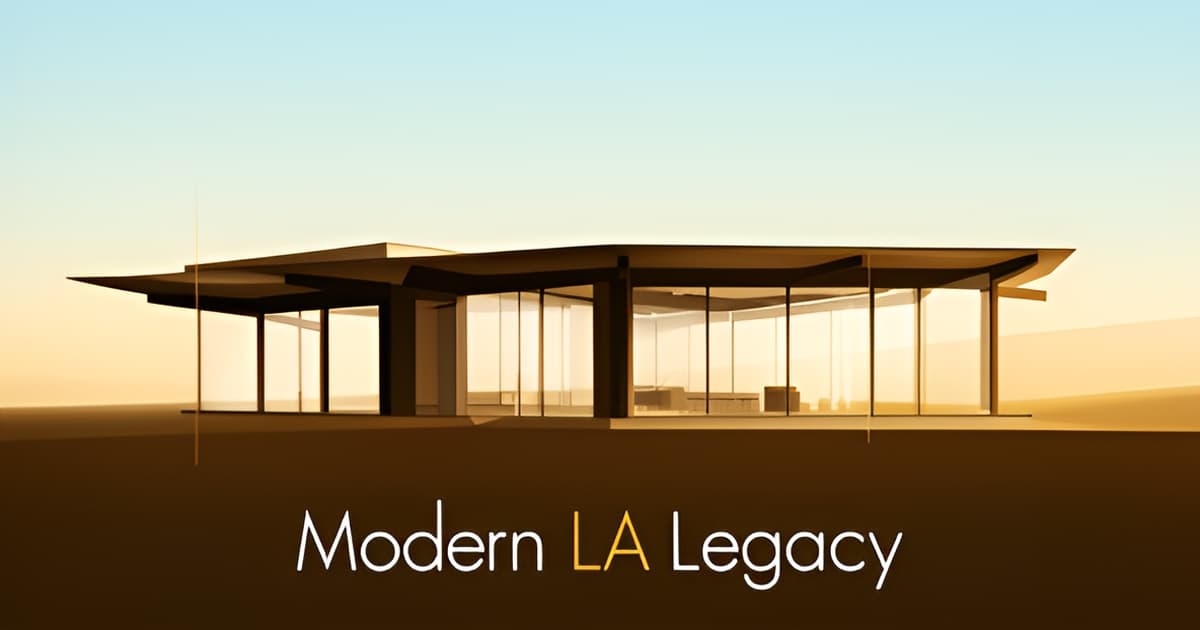
Mid-Century Modern Home Building in Los Angeles: Key Features
Key Facts
- Ten Los Angeles Case Study Houses joined the National Register of Historic Places in 2013, cementing LA's mid-century legacy.
- The Case Study House Program, launched in January 1945 by John Entenza, produced 25 built experimental homes across Los Angeles and its foothill communities.
- Most mid-century homes were built between 1945 and 1970, meaning today's stock is 50–80 years old.
- Full window replacement with slim aluminum or fiberglass frames runs $20,000–$75,000 or more.
- Flat roof replacement costs $15,000–$45,000, with specialized drainage work adding another $3,000–$10,000.
- Wood paneling refinishing runs $3,000–$10,000 — far less than undoing a bad paint job later.
- Renovation experts warn that a builder who suggests painting natural wood "might not be the right fit".
- Large-format glazing runs $75–$150 per square foot, with custom curved or odd sizes adding 20–40%.
Why Altadena Is Mid-Century Modern Country — and Why These Homes Demand a Specialist
Altadena sits at the heart of one of architecture's most celebrated experiments. The Case Study House Program, launched in January 1945 by John Entenza through Arts & Architecture magazine, produced 25 built experimental homes across Los Angeles — and surviving examples are documented in Altadena, Pasadena, and neighborhoods across LA, from Pacific Palisades to La Cañada Flintridge. Ten of these houses joined the National Register of Historic Places in 2013, cementing the region's status as mid-century modern country.
That legacy comes with responsibility. Most mid-century modern homes were built between 1945 and 1970, meaning today's stock is 50–80 years old and facing serious renovation decisions. Their post-and-beam frames freed interiors from heavy walls, enabling the open plans, walls of glass, and flat roofs that define the style — features that generic remodelers routinely misunderstand or erase.
The stakes are concrete. Renovation experts warn that painting over natural wood, stone, or brick is one of the most common and damaging mistakes, destroying the "honesty of materials" that gives these homes their warmth and value. As one expert bluntly puts it, a builder who suggests painting natural wood "might not be the right fit."
What a specialist protects — and what a generalist often loses:
- Walls of glass and their slim sightlines — original single-pane glazing should be upgraded with slim aluminum or fiberglass frames that copy the thin lines of the originals, not chunky vinyl replacements.
- Clerestory windows and horizontal rooflines that establish the home's rhythm and light.
- Flat roofs, which need specialized membrane systems and drainage — not bulky attic vents that break the clean profile.
- Natural wood paneling, which experts recommend cleaning, sealing, and refinishing rather than painting.
These homes "require more than cosmetic updates," as one design-build expert notes — they call for historical awareness and architectural fluency. In an unincorporated LA County community like Altadena, that fluency extends to navigating the local permit process thoughtfully, without assuming any fixed timeline.
At Altadena Home Remodeling, we take a preserve-first stance: renovate over demolish, scope before you swing a hammer. Our featured builder, JMB Builders LLC (CSLB #1103479), is an Altadena-based licensed general contractor whose whole-home remodel and custom work is documented at jmb-builders.com — a paid placement we disclose because local fluency matters here.
If your post-and-beam home is ready for its next chapter, book a free remodel-scoping consultation. We'll walk the property with you and follow up with a before/after concept render — so you can scope it, price it, and do it once, right.
The Five Defining Features of a True Mid-Century Modern Build
Step inside a true mid-century modern home and the walls seem to disappear — that's not an accident, it's engineering. The style that bloomed across Los Angeles between 1945 and 1970 was built on a structural revolution, and the Case Study House Program (1945–1966) proved each innovation in real homes you can still visit today.
Post-and-beam construction is the backbone. According to historical analysis of the Case Study program, these frameworks — adapted from wartime industrial techniques — made homes "light in appearance yet structurally robust" and freed interiors from heavy load-bearing walls. Pierre Koenig's 1959 Case Study House #21 demonstrated that prefabricated steel construction could deliver both economy and quiet elegance.
Once walls stopped holding up the roof, open floor plans became possible. The Case Study Houses defined what we now call California modernism: open plans, steel framing, courtyards, and a deliberate relationship between indoor and outdoor space, as LA architectural historians document. Rooms flow into one another instead of boxing families into compartments.
Floor-to-ceiling glazing then dissolves the boundary entirely. Walls of glass "opened wide vistas and dissolved the boundary between inside and out, perfectly suited to California's benign climate." The Eames House (CSH #8, completed 1949 in Pacific Palisades) filled its steel frame with transparent, translucent, and colored panels — a modern painting translated into architecture.
Flat or low-pitched rooflines complete the silhouette. These horizontal planes keep the profile clean, though they demand modern drainage and insulation solutions when renovated.
Finally, there's honesty of materials: instead of hiding steel, concrete, or plywood, architects celebrated them. Case Study House #1 combined concrete block, plywood panels, and industrial glass with a flat roof and direct garden connections. As Mies van der Rohe put it, "God is in the details" — every piece of wood matters.
For Altadena homeowners, this heritage is local. Surviving Case Study Houses sit in Altadena, Pasadena, and La Cañada Flintridge, and ten LA examples joined the National Register of Historic Places in 2013. That's why Altadena Home Remodeling approaches these homes preserve-first:
- Clean, seal, and refinish natural wood rather than paint over it
- Replace single-pane glass with slim aluminum or fiberglass frames that copy the original thin sightlines
- Keep rooflines clean — no bulky vents or visible mechanicals
- Vet builders for specific post-war home experience; one expert warns that a builder who suggests painting natural wood "might not be the right fit"
If your Altadena home has these bones, scope it, price it, and renovate it once, the right way — book a free remodel-scoping consultation with a before/after concept render, or talk to featured builder JMB Builders LLC (CSLB #1103479), an Altadena-based licensed general contractor experienced in whole-home remodels and Eaton Fire rebuilds.
The Preserve-First Remodel Approach: Upgrade Without Erasing
The best mid-century modern remodels don't erase the original design — they upgrade what's hidden and preserve what's visible. That philosophy, often called a preserve-first approach, is what separates a renovation that honors your home's character from one that strips it away.
Start with glazing. Original single-pane glass is notoriously energy-inefficient, but the fix isn't bulky modern windows. Both renovation guides recommend replacing single-pane units with energy-efficient glass in slim aluminum or fiberglass frames that copy the thin lines of the first windows, protecting the original sightlines and the indoor-outdoor connection that defines the style. Expect full window replacement to run $20,000–$75,000+ depending on scope.
Next, resist the urge to paint. One of the most common mid-century renovation mistakes is covering natural wood, stone, or brick with paint. Experts recommend cleaning, sealing, and refinishing these surfaces instead, which preserves the texture, warmth, and value that make the style work. Wood paneling refinishing typically runs $3,000–$10,000, and masonry preservation $5,000–$15,000 — far less than the cost of undoing a bad paint job later.
Flat and low-pitched roofs deserve special attention. Replacement is an opportunity to bring drainage and insulation up to current standards using membrane systems like TPO or PVC, paired with properly sized scuppers or internal drains. Flat roof replacement generally costs $15,000–$45,000, with drainage work adding $3,000–$10,000. It's also the ideal moment to add skylights without disturbing dark wood ceilings — and to avoid bulky attic vents or visible mechanicals that break the clean roofline.
For indoor-outdoor flow, modern upgrades like folding glass wall systems, full-height sliders, and matching indoor-outdoor flooring can dramatically open the home while staying true to the original vision. Large-format glazing runs $75–$150 per square foot, with custom sizes adding 20–40%.
Finally, use one simple test when vetting builders. Ask how they'd handle your original walnut paneling or brick hearth. Per renovation experts, a builder who suggests painting natural wood "might not be the right fit." Look instead for specific post-war experience: flat roofs, large glass walls, clerestory windows, and natural wood finishes. And get at least three bids.
This preserve-first mindset is exactly how we approach mid-century work at Altadena Home Remodeling — renovate over demolish, upgrade without erasing. If you're weighing a remodel on a post-and-beam or mid-century home in Altadena, a free scoping consultation with a before/after concept render is a low-commitment way to see what's possible. Featured builder JMB Builders LLC (CSLB #1103479) brings licensed, local experience to whole-home remodels and rebuilds.
What MCM Work Actually Costs: Budget Ranges to Scope Realistically
Mid-century modern homes carry renovation price tags that surprise owners who expect "simple" cosmetic work. These houses are 50–80 years old, and their signature features — walls of glass, flat roofs, post-and-beam framing — cost more to restore properly than to replace crudely.
Start with the published estimates, but treat them as planning anchors, not quotes. Two renovation guides align closely on the big-ticket items: full window replacement runs $20,000–$75,000 or more, and kitchens with flat-panel walnut or oak cabinets and quartz counters land between $70,000 and $150,000.
The MCM-specific line items look like this:
- Full window replacement (slim aluminum or fiberglass frames): $20,000–$75,000+
- Large-format glazing: $75–$150 per square foot, with custom curved or odd sizes adding 20–40%
- Flat roof replacement: $15,000–$45,000, plus $3,000–$10,000 for drainage work
- Wood paneling refinishing: $3,000–$10,000
Two caveats matter here. First, these figures are vendor estimates, not market studies — they come from renovation firms with services to sell, and published guidance doesn't break out Los Angeles pricing specifically. LA labor rates and permit requirements typically push costs toward the upper end of any national range.
Second, the low bid is usually the expensive one. Replacing single-pane glass with chunky vinyl frames costs less upfront but destroys the slim sightlines that define the style. The preserve-first approach — slim aluminum or fiberglass frames that copy the original thin lines — costs more per window and protects the home's value. As one renovation guide bluntly puts it, a builder who suggests painting natural wood might not be the right fit.
This is where the "do it once, do it right" philosophy earns its keep. A $3,000 paint job over walnut paneling that later needs $10,000 in stripping and refinishing is not savings. A cheap roof patch that fails to address drainage means paying for the same roof twice.
Altadena Home Remodeling approaches MCM scoping exactly this way: price the whole system, not the symptom. If you're weighing a mid-century renovation in Altadena or the surrounding foothills, a free remodel-scoping consultation — including a before/after concept render — can show what your home's sightlines, roofline, and woodwork should look like when the work is done correctly, before you spend a dollar on construction.
How to Choose Your MCM Builder and Scope the Project Right
The difference between a remodel that honors your mid-century home and one that erases it often comes down to who holds the hammer. Post-war houses demand what one design-build principal calls "a process rooted in historical awareness, architectural fluency, and practical problem-solving" — not just general contracting chops.
So vet for specificity. Ask candidates about flat roofs, large glass walls, clerestory windows, and natural wood finishes — the four experience markers that renovation experts say separate qualified post-war builders from the rest. One vetting test is remarkably simple: a builder who suggests painting over your natural wood, stone, or brick "might not be the right fit." The correct answer is cleaning, sealing, and refinishing — preserving the texture and warmth that define the style.
- Flat roof expertise: membrane systems (TPO/PVC), scuppers or internal drains, and code-compliant insulation — without bulky vents disrupting the roofline
- Glazing fluency: slim-profile aluminum or fiberglass frames that copy the thin lines of the original windows while improving thermal performance
- Wood knowledge: refinishing over replacement, with paneling restoration typically running $3,000–$10,000
- Post-and-beam comfort: open-plan structural work that respects walls of glass and clerestory sightlines
Get at least three bids — the same expert guidance is emphatic on this point. Compare not just price but how each contractor talks about your home's defining features. Budget context helps: published vendor estimates put full window replacement at $20,000–$75,000+, large-format glazing at $75–$150 per square foot, flat roof replacement at $15,000–$45,000, and whole kitchen remodels at $70,000–$150,000. Treat these as starting ranges, not quotes.
Before you scope anything, consider living in the home first. Experts advise waiting months before renovating so you understand how the light moves and how the space actually functions. Mies van der Rohe's dictum that "God is in the details" applies — every piece of wood and stone matters to the overall look, and you'll notice which details matter most to you only after seasons pass.
When you're ready to move forward, look locally. Altadena sits on the Case Study House map — surviving examples are documented in Altadena and Pasadena, and ten LA Case Study Houses joined the National Register of Historic Places in 2013. For readers in the area, JMB Builders LLC (CSLB #1103479), an Altadena-based licensed general contractor building custom homes, ADUs, and whole-home remodels — including Eaton Fire rebuilds — is a featured builder here at Altadena Home Remodeling (disclosed paid placement), with its work and service areas documented at jmb-builders.com.
The right first step is a free remodel-scoping consultation with a before/after concept render — so you can see how your sightlines, rooflines, and natural finishes are preserved before committing to the full project. Scope it, price it, do it once, do it right. Note that no timeline or permit outcomes can be guaranteed, especially in LA County unincorporated areas like Altadena — which is exactly why careful scoping up front matters.
ctaText: Get a free remodel-scoping consultation with a before/after concept render — see how your mid-century home's sightlines, flat rooflines, and natural wood finishes are preserved before you commit.
socialProofText: Featured builder JMB Builders LLC (CSLB #1103479) is an Altadena-based licensed general contractor with documented custom home, ADU, and whole-home remodel work — including Eaton Fire rebuilds — viewable at jmb-builders.com. (Disclosed paid placement.)
Frequently Asked Questions
What are the defining features of a true mid-century modern home?
Why is Altadena considered mid-century modern country?
Should I paint over the original wood paneling in my mid-century home?
How do I replace old single-pane windows without ruining the look of my mid-century home?
What does it actually cost to renovate a mid-century modern home?
How do I pick the right builder for a mid-century modern remodel?
Do It Once, Do It Right: Your Mid-Century Home's Next Chapter
Your Altadena home is part of a living architectural legacy — one where post-and-beam frames, walls of glass, and honest materials were proven by the Case Study House Program, and where ten LA examples earned a place on the National Register of Historic Places in 2013. But these 50–80-year-old homes reward careful stewardship: slim-profile glazing that preserves original sightlines, refinished rather than painted wood, and flat-roof systems that keep the clean profile intact. The builder you choose matters as much as the plan — ask specifically about flat roofs, clerestory windows, and natural wood finishes, get at least three bids, and be wary of anyone who reaches for a paint can. That preserve-first mindset is exactly how Altadena Home Remodeling approaches mid-century work: scope the whole system, not the symptom, and renovate rather than demolish. If you're ready to see what's possible, start with a free remodel-scoping consultation — we'll walk the property with you and follow up with a before/after concept render showing how your sightlines, rooflines, and woodwork can be protected before you spend a dollar on construction. Scope it, price it, and do it once, the right way.