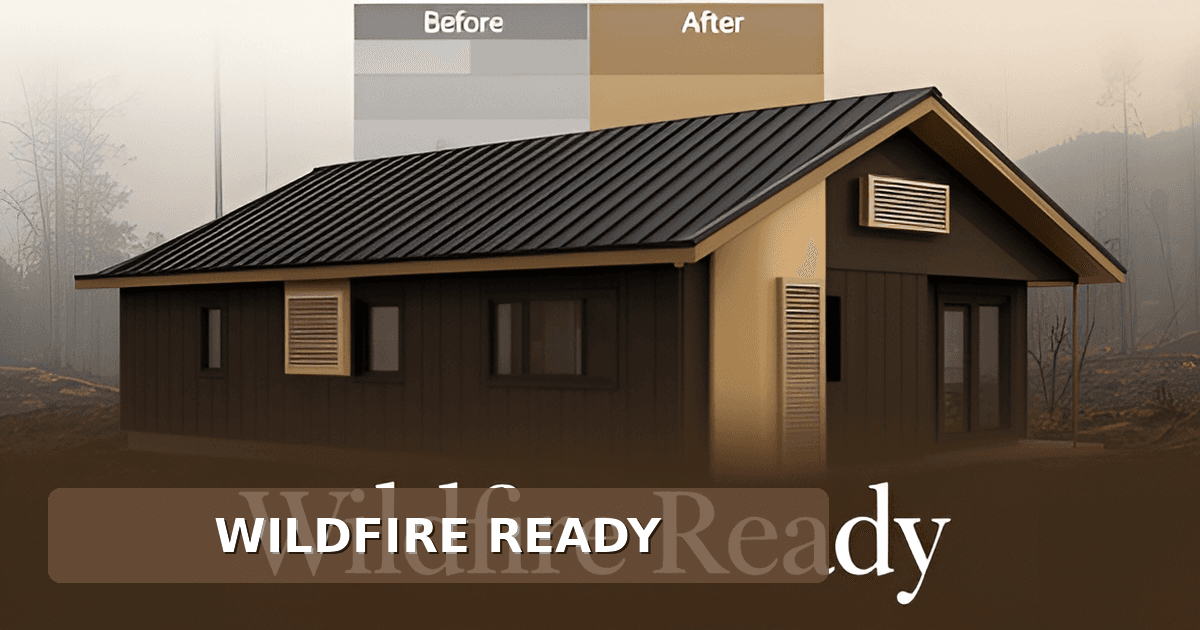
LA County Fire WUI Requirements for Altadena Rebuilding
Key Facts
- Wildfire-resistant construction adds under 10% to costs—about $30,000 on a 2,000 sq ft home—according to Headwaters Economics research.
- Every $1 spent on wildfire-resistant rebuilding saves roughly $210 in avoided future losses, the analysis estimates.
- Rebuilding to wildfire-resistant standards can cut home losses by up to 43%, research shows.
- The Eaton Fire destroyed 9,414 structures across 14,021 acres—the second most destructive wildfire in California history—per rebuild analyses.
- Embers, which can travel over a mile by wind, are the leading cause of building ignition, LA County guidance notes.
- Of the 155-day median rebuild permit timeline, roughly 122 days are applicant-side delays—only 32 are county review, rebuild data shows.
- Eaton-area rebuilds may increase floor area, height, or footprint by up to 10% or 200 square feet, whichever is greater, under County rules.
Altadena Rebuilds Run Through LA County — and the Rules Changed in 2026
Before you order a single window or sketch a floor plan, one fact determines everything about your Altadena rebuild: your permits do not go to Pasadena. Altadena is unincorporated Los Angeles County, which means every rebuild permit, fee waiver, and fire-zone requirement flows through LA County Public Works and Regional Planning — a distinction one rebuild guide calls the single most important thing an Eaton Fire survivor needs to understand (Goldenline Construction's Altadena rebuild guide).
The rules themselves changed mid-recovery. Effective January 1, 2026, the California Wildland-Urban Interface Code (CWUIC, Title 24 Part 7) replaced CBC Chapter 7A for buildings in Very High and High Fire Hazard Severity Zones — and LA County has adopted it. CAL FIRE updated its Fire Hazard Severity Zone maps for LA County on March 24, 2025, and state law required the County to adopt them within 120 days. The practical result: exterior hardening standards like Class A roofing, ember-resistant vents, and tempered-glass windows are now mandatory code, not suggestions.
Here is where most homeowners get confused. Executive Order N-29-25 suspended some 2026 code updates — including rooftop solar and battery requirements and the 2025 California Building Standards Code — for Eaton and Palisades fire rebuilds (LA County's rebuild policy page). But the suspension does not waive fire-hardening. WUI exterior requirements still apply per local enforcement, so a rebuild plan that assumes "the codes were suspended" will stall at plan check.
A few facts frame the stakes:
- The Eaton Fire destroyed 9,414 structures and damaged 1,074 across 14,021 acres — the second most destructive wildfire in California history.
- Embers, the leading cause of building ignition, can travel more than a mile by wind, which is why hardened exteriors matter even away from the fire line (LA County's resilient rebuilding guidance).
- Wildfire-resistant construction adds less than 10% to costs — roughly $30,000 on a 2,000 sq ft home — and California insurance law requires code-upgrade coverage in full replacement policies (Headwaters Economics research).
For Altadena Home Remodeling, this jurisdictional reality shapes how we scope every project — whether a whole-home renovation, a Craftsman restoration, or a rebuild addition. The County also allows like-for-like rebuilds to increase floor area, height, or footprint by up to 10% or 200 square feet, whichever is greater, giving homeowners real design flexibility within the new fire code. The rebuilding rules are demanding, but they are knowable — and a code-ready plan set is the fastest path through them.
The CWUIC Requirements Your Rebuild Must Meet: Roof, Walls, Vents, and Windows
When the Eaton Fire destroyed more than 9,400 structures, most homes didn't burn from a wall of flame — they ignited from wind-blown embers, which can travel more than a mile ahead of a fire. That's why LA County's rebuild requirements focus on the four places embers attack first: the roof, the walls, the vents, and the windows.
Under the California Wildland-Urban Interface Code (CWUIC), adopted by LA County for Very High and High Fire Hazard Severity Zones, your rebuild must meet these core standards:
- Class A roofing tested to ASTM E108 or UL 790 (§504.2) — asphalt fiberglass composition shingles, standing seam metal, clay, or concrete tile all qualify.
- Ember-resistant vents listed by the State Fire Marshal or tested to ASTM E2886, with metal mesh between 1/16" and 1/8" (§504.10) on all exterior vent openings.
- Noncombustible or ignition-resistant exterior walls (§504.5.2), including noncombustible, ignition-resistant-labeled, or fire-retardant-treated wood siding.
- Fire-rated windows (§504.8): multilayered glazed panels with tempered glass, glass block, or 20-minute fire-rated glazing.
Windows deserve special attention because they're often the failure point that lets embers into the house. LA County's resilient rebuilding guidance states plainly that "noncombustible metal framed windows are the best choice," recommending double- or triple-paned tempered glass, with fire shutters or metal mesh screening as added options.
A note on the code suspension you may have read about: Executive Order N-29-25 does suspend certain 2026 code updates for Eaton Fire rebuilds, but WUI exterior hardening requirements still apply under local enforcement. Don't plan around skipping them.
The hardening standards also extend beyond the structure itself. California law under PRC §4291 requires 100 feet of defensible space around your home — a "lean, clean, green" Zone 1 within 30 feet and fuel reduction out to 100 feet. The County also encourages Zone 0 practices now, even though formal enforcement is still pending: removing vegetation and mulch within 5 feet of the structure and installing at least 6 inches of noncombustible base material at exterior walls.
The cost is more manageable than most homeowners expect. According to Headwaters Economics research, wildfire-resistant construction adds less than 10% to building costs — roughly $30,000 on a 2,000-square-foot home — and California Insurance Code § 10103 requires insurers offering full replacement policies to cover code upgrades up to 10% of dwelling coverage. Rebuilding to these standards can reduce home losses by up to 43%.
At Altadena Home Remodeling, we help homeowners translate these requirements into a complete, code-ready scope before plans are ever drawn — because with roughly 122 of the 155-day median permit timeline attributable to applicant-side delays, preparation is your biggest schedule lever.
ctaText: Scope your fire-hardened rebuild with a free consultation — including a before/after concept render of your rebuilt home.
socialProofText: Featured builder: JMB Builders LLC (CSLB #1103479), an Altadena-based licensed general contractor specializing in Eaton Fire rebuilds, custom homes, and whole-home remodels — paid placement, disclosed.
What Fire-Hardening Actually Costs — and Why Insurance May Cover It
The most common objection Altadena homeowners raise about fire-hardened rebuilding is cost. The research says otherwise: wildfire-resistant construction adds less than 10% to a typical build — roughly $30,000 on a 2,000-square-foot home — according to Headwaters Economics.
That figure buys real protection. The same analysis found that rebuilding to wildfire-resistant standards reduces home losses by up to 43%, and estimates that every $1 spent on resistant construction saves about $210 in avoided future losses. Headwaters characterizes it as "a highly cost-effective strategy that can significantly reduce future economic losses... while adding relatively little to construction costs."
Insurance may cover most of it. California Insurance Code § 10103 requires insurers offering full replacement policies to include code-upgrade coverage — up to 10% of the dwelling coverage value. For many insured Eaton Fire survivors rebuilding within mapped fire hazard zones, that means the gap between standard and hardened construction may cost little to nothing out of pocket.
The numbers bear this out at scale. Rebuilding all homes destroyed in the January 2025 LA fires to wildfire-resistant standards would cost roughly $345 million total, but with mandated code-upgrade coverage, the homeowner share drops closer to $147 million.
A few caveats worth knowing:
- Only about 60% of the roughly 11,500 homes destroyed in the LA fires fall within mapped Chapter 7A areas — homes outside those zones may not get insurer-paid above-code upgrades.
- Code-upgrade coverage applies to full replacement policies; actual payouts depend on your specific policy language.
- Headwaters notes that the least affluent residents benefit least from these protections, since coverage depends on holding a qualifying policy.
For Altadena homeowners weighing whether to harden beyond minimum CWUIC requirements, the financial case is unusually strong: modest incremental cost, substantial risk reduction, and a state-mandated insurance mechanism that shifts much of the burden to carriers. The practical first step is scoping the rebuild correctly — understanding what the code requires, what your policy covers, and where the upgrades fit into the overall design. Altadena Home Remodeling helps homeowners do exactly that, pairing a free remodel-scoping consultation with a before/after concept render so you can price the hardened scope once and build it right the first time.
Your Rebuild Path: Like-for-Like Rules, the 10%/200 Sq Ft Allowance, and Permit Timelines
Rebuilding after the Eaton Fire comes with a genuinely useful trade: you can put your home back largely as it stood, without re-litigating today's zoning — but the building itself must meet today's codes. Understanding where that line falls is the difference between a smooth plan check and months of revisions.
Like-for-like rebuilds skip current zoning — setbacks, density, and other land-use rules that might otherwise block a rebuild — but they must still comply with current Building, Fire, and Health & Safety Codes, per the County's rebuild guidance. That includes WUI exterior hardening, which remains in force even though Executive Order N-29-25 suspends rooftop solar requirements and the 2025 Building Standards Code for fire rebuilds, per County policy interpretations.
The allowance for growing your home is modest but real. Eaton-area homeowners may increase floor area, height, or footprint by up to 10% or 200 square feet, whichever is greater. For a 1,400-square-foot Altadena bungalow, that's roughly 140 square feet — enough for a modest kitchen expansion or a mudroom, not a second story. Homeowners designing to that limit should also note that Altadena's zip codes (91001 and 91003) fall in Climate Zone 9, which sets the Energy Code envelope and fenestration standards your plans must reflect.
Three practical rules shape the permit path:
- Fee waivers and refunds apply to owner-occupants only — trusts qualify, but LLCs and corporations do not.
- A Self-Certification Pilot lets qualified licensed architects and engineers bypass county plan review, with 20% random audits.
- The County commits to a 10-business-day first review for rebuild plans.
The timeline math surprises most homeowners. The median permit timeline runs 155 days, but only about 32 of those days are county review — roughly 122 days are applicant-side delays: incomplete plans, unresolved design decisions, and revision cycles. As one analysis puts it, the fastest thing in the rebuild equation is the government.
That makes a code-ready, well-scoped plan set the single biggest schedule lever you control. A set that anticipates CWUIC requirements — Class A roofing, ember-resistant venting, tempered or fire-rated glazing, noncombustible siding — moves through review in weeks, not seasons. Altadena Home Remodeling helps Eaton-area homeowners scope exactly this: a complete, code-ready plan priced to build once, built right, with a free scoping consultation and a before/after concept render to make the decisions early — when they're cheapest.
Scoping It Right the First Time: Preserve-First Planning for Altadena Homes
The fastest part of the Altadena rebuild equation isn't the county — it's you. With a median permit timeline of 155 days, roughly 122 of those days are applicant-side delays, meaning a disciplined, code-ready plan set is your single biggest schedule lever, according to rebuild analyses.
Scoping means mapping CWUIC requirements into your drawings before submission — not discovering them in a correction letter. Windows are the clearest example. CWUIC §504.8 calls for multilayered glazed panels with tempered glass, glass block, or 20-minute fire-rated glazing, while LA County guidance describes noncombustible metal-framed windows as "the best choice." For a Craftsman home, that's a design conversation, not a compromise: divided-lite tempered glazing, wood-clad frames over metal, and fire shutters or metal mesh screening can preserve historic rhythm while meeting code.
A preserve-first scoping phase should lock in these decisions early:
- Glazing and fenestration — tempered, multilayered panels sized to match original window proportions, factoring in Climate Zone 9 envelope standards for Altadena's 91001 and 91003 zip codes.
- Venting — ember-resistant vents listed by the State Fire Marshal or tested to ASTM E2886, with 1/16"–1/8" mesh, integrated into eave and crawlspace details from day one.
- Defensible space — 100 feet under PRC §4291, plus a Zone 0 design (noncombustible cover within 5 feet, 6+ inches of noncombustible wall base) that's prudent now even before formal enforcement.
- Like-for-like sizing — remember you can expand footprint, floor area, or height by up to 10% or 200 square feet, whichever is greater.
One nuance deserves emphasis: Executive Order N-29-25 suspends some 2026 code updates for Eaton Fire rebuilds, but LA County's recovery guidance and local enforcement confirm WUI exterior hardening still applies. Budget accordingly — wildfire-resistant construction adds under 10% to costs, roughly $30,000 for a 2,000-square-foot home, and Headwaters Economics research notes California insurance law requires code-upgrade coverage in full replacement policies.
This is exactly why Altadena Home Remodeling offers a free remodel-scoping consultation with a before/after concept render — you see how hardened materials and defensible-space design sit against your home's original character before committing a dollar to the plan set. For execution, our featured builder is JMB Builders LLC (CSLB #1103479; disclosed paid placement), an Altadena-based licensed general contractor whose custom home, ADU, and whole-home remodel work — including Eaton Fire rebuilds — is documented on jmb-builders.com. Scope it, price it, do it once, do it right.
Frequently Asked Questions
Do I submit my Altadena rebuild permits to the City of Pasadena?
Did the executive order suspend fire-hardening requirements for my rebuild?
What fire-hardening materials does my Altadena rebuild have to use?
How much extra does wildfire-resistant construction cost?
Will my insurance pay for code-upgrade fire hardening?
How long does the Altadena rebuild permit process actually take?
Build It Once, Build It Fire-Hardened: Your Next Move
Rebuilding in Altadena comes down to three realities: your permits run through LA County, the CWUIC fire-hardening standards apply even where other 2026 codes were suspended, and the biggest delay in the process is applicant-side preparation — not county review. The financial math is on your side: wildfire-resistant construction adds under 10% to costs, reduces home losses by up to 43%, and every $1 spent saves roughly $210 in avoided future losses, with California insurance law requiring code-upgrade coverage in full replacement policies. Your practical next steps: confirm your parcel's fire hazard zone, review your policy's code-upgrade coverage, and lock in glazing, venting, and siding decisions early — ideally within your 10%/200 sq ft expansion allowance. A code-ready plan set moves through review in weeks, not seasons. Altadena Home Remodeling offers a free remodel-scoping consultation with a before/after concept render, so you can see how hardened materials preserve your home's character before committing to plans. Scope it, price it, do it once, do it right.