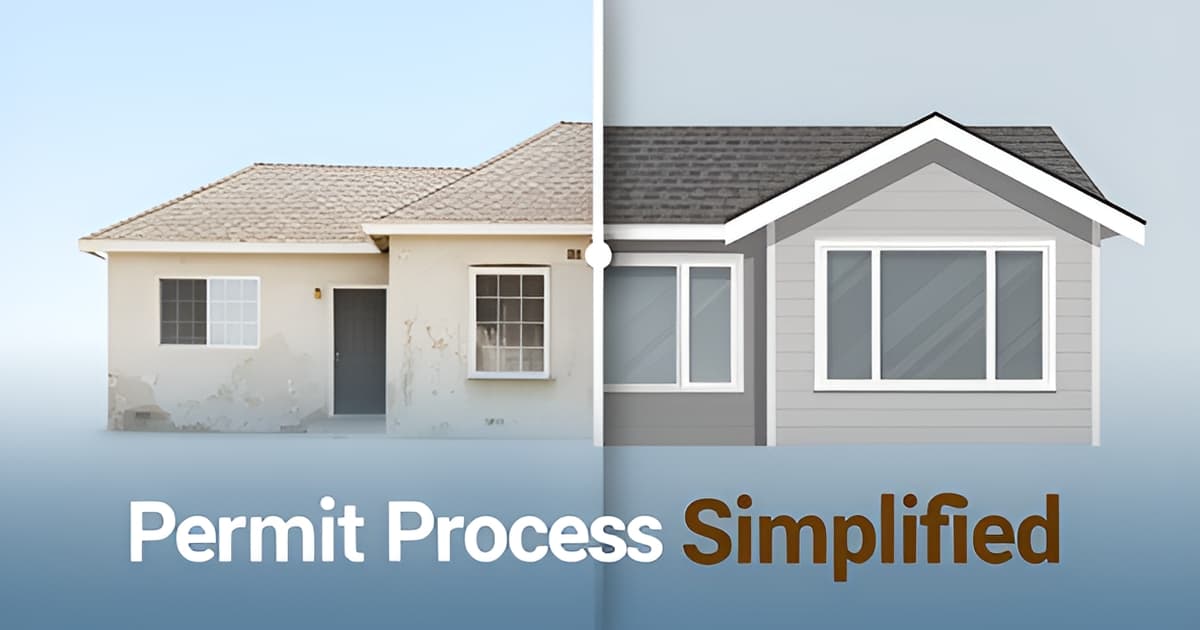
LA County Building Permit for Altadena: Application Checklist
Key Facts
- Altadena permits go through LA County Public Works — not LADBS — because Altadena is unincorporated County territory, per permit process research.
- Altadena projects follow County Title 26 and Title 22 codes, not the City's LAMC — the single biggest resubmittal risk, industry sources warn.
- Complete LA County applications get a first review within 10 business days, with subsequent reviews in 5, per the County's recovery portal.
- Eaton Fire area like-for-like rebuilds may grow up to 200 square feet or 10%, whichever is greater, per LA County recovery rules.
- Owners who both owned and occupied their home before January 7, 2025 qualify for a rebuild fee waiver, per the County's recovery portal.
- County permits expire if work hasn't started within 12 months or pauses over 180 days; extensions cost up to 25% of the permit fee, per LA County Building and Safety.
- Eligible Eaton Fire R-1 homes in unincorporated Altadena can get AI zoning pre-screening via the County's eCheck pilot before filing.
Why Altadena Permits Go Through LA County, Not LADBS
The most common — and most expensive — mistake Altadena homeowners make is walking into the wrong permit office. Because Altadena is unincorporated Los Angeles County territory, building permits run through LA County Public Works' Building and Safety Division, not the Los Angeles Department of Building and Safety. Calling LADBS about an Altadena property means calling the wrong agency entirely, and LADBS itself confirms its permits apply only within the City of Los Angeles.
The jurisdiction problem goes deeper than the office location. County projects are governed by an entirely separate code structure: Title 26 for building and Title 22 for planning and zoning — not the City's LAMC. Preparing plans against LAMC provisions is one of the costliest mistakes in the process, since it can force significant rework before the County even accepts a submittal for plan check.
Jurisdiction isn't determined by mailing address or ZIP code, either. It's verified parcel by parcel, so homeowners should confirm their parcel's status through LA County Regional Planning's zoning information system or the Assessor's parcel viewer before assembling anything. With roughly one million County residents living in unincorporated territory and 88 incorporated cities in LA County, assumptions about "which LA" applies are frequently wrong.
The January 2025 Eaton Fire reshaped the process in Altadena's favor. The County created One-Stop Permit Centers that co-locate Building and Safety, Regional Planning, Fire, and Public Health reviews in a single intake, and in August 2025 it implemented a Unified Permit to reduce the number of applications per rebuild project. Complete applications now receive a first review within 10 business days, with subsequent reviews within 5.
The review sequence still matters for scoping your project:
- Regional Planning confirms zoning conformance under Title 22 before plan check begins
- Building and Safety reviews plans under Title 26
- LA County Fire reviews access, fire flow, and fire-resistive construction — critical in Altadena's Very High Fire Hazard Severity Zone
- Public Health reviews properties on septic systems
- Permits issue, inspections follow, and the project closes with a Certificate of Occupancy
At Altadena Home Remodeling, we treat this jurisdictional reality as step one of any scoping conversation, because a kitchen remodel, addition, or Eaton Fire rebuild designed for the County's Title 26 process from day one avoids the resubmittal cycle that stalls so many projects. Whether you're pursuing a like-for-like rebuild or a renovation that changes the footprint, understanding which agency — and which code — governs your parcel shapes every decision that follows, from plan set preparation to review timelines.
The Core Application Checklist: Documents, Forms, and Who Can Apply
The difference between a permit application that clears first review in 10 business days and one that stalls for weeks often comes down to a single factor: whether the submittal package arrives complete and code-conforming on the first pass. For Altadena properties, that means assembling exactly what LA County Public Works expects — and nothing prepared for the wrong jurisdiction.
Per the County's official recovery portal, the core submittal is straightforward: architectural plans plus the correct application form. Which form depends on how you file.
- In-person filing: architectural plans plus the completed In-Person Application Form, submitted at the One-Stop Permit Centers in Altadena or Calabasas.
- Online filing via EPIC-LA: architectural plans plus the completed Supplemental Form. First-time users must register before submitting applications, paying fees, or receiving plans-filed reports, per the EPIC-LA portal. Once accepted, your Base Application (RPAP number) converts to the appropriate case type with an RPPL plan number.
Not everyone can sign the application. According to the LA County Building and Safety permits page, only three categories qualify: a licensed contractor (per CSLB), the property owner in certain cases, or an authorized agent. If you're a homeowner planning a whole-home remodel or Eaton Fire rebuild and working with a general contractor, the contractor typically pulls the permit — but the owner-occupied path matters for the fee waiver below.
The County offers a significant benefit for fire-affected homeowners: a fee waiver for owners who both owned and lived in the property before January 7, 2025 and are rebuilding single-family homes in unincorporated LA County, per the recovery portal. If you meet that occupancy test, confirm eligibility at intake rather than assuming it applies.
Two things the research doesn't cover — and any article claiming otherwise should be read cautiously. No source provides an itemized drawing-sheet checklist (specific plot plan requirements or sheet-by-sheet lists), and no official fee schedule with dollar amounts is available in these materials. County staff review submitted materials and may request additional information before review proceeds, so expect the plan-set specifics to be confirmed at pre-submittal or intake.
Because the package lives or dies on completeness, most Altadena homeowners benefit from scoping the project before assembling it — which is where a preserve-first remodel approach pays off. Altadena Home Remodeling offers a free remodel-scoping consultation with a before/after concept render, so you can define the work once and submit it right the first time.
Like-for-Like Rules: The Fastest Path Through Review
For Eaton Fire rebuilds in Altadena, the difference between a fast permit and a months-long review often comes down to a few hundred square feet. Staying within the County's like-for-like tolerance keeps your project on the streamlined path — and exempts it from current zoning rules that could otherwise force a redesign.
Under the County's recovery rules, a like-for-like rebuild means replacing the destroyed structure with the same size, location, and purpose. The floor area, size, height, or footprint may not increase by more than 10% — and in the Eaton Fire area specifically, floor area may increase by up to 200 square feet or 10%, whichever is greater. On septic-system properties, the bedroom count must remain unchanged to qualify.
The payoff for staying within that tolerance is significant. Like-for-like rebuilds are exempt from the current Zoning Code, though they must still comply with current Building, Fire, and Health/Safety Codes. They also preserve the County's commitment to a first review within 10 business days for complete applications, with subsequent reviews turned around in 5 business days.
Exceed the tolerance, and the project becomes non-like-for-like — which can trigger additional entitlement reviews, including:
- Oak Tree Permit, if the expansion encroaches on protected native trees
- Variance, to deviate from current zoning standards
- Conditional Use Permit, which may require CEQA review
- Certificate of Compliance or Administrative Housing Permit under SB-9 provisions
The County's own guidance is worth noting: if your project turns out to be non-like-for-like, County staff will let you know, and you can choose to redesign the project to be like-for-like before spending more time and money. That decision point is exactly where careful scoping pays off — at Altadena Home Remodeling, our preserve-first approach to whole-home renovations starts with understanding what the like-for-like envelope allows before committing to a larger footprint.
One practical step for eligible homeowners: LA County's eCheck AI pilot lets applicants in R-1 zones in unincorporated Altadena upload drawings for AI screening before filing, flagging potential zoning issues that can reduce back-and-forth during review. Combined with a well-scoped design, it's one of the simplest ways to protect that 10-business-day first-review commitment.
Before You File: Pre-Screening, Review Sequence, and Resubmittal Triggers
The fastest permit approvals in Altadena rarely go to the most experienced applicants — they go to the most complete ones. Before you file, two things matter most: screening your design for zoning problems and understanding exactly how the County will review your package.
Start with eCheck AI pre-screening. For eligible properties — single-family homes impacted by the Eaton Fire in R-1 zones in unincorporated Altadena — LA County's eCheck AI Pilot, run with Archistar, lets you upload drawings for AI screening before you file. According to the County's recovery portal, this flags potential zoning compliance issues and can reduce comments and back-and-forth during review. For a free remodel-scoping consultation with a before/after concept render, Altadena Home Remodeling can help you pressure-test a design before it ever reaches County staff.
Next, understand the review sequence your application will move through. In unincorporated territory, permit process research describes the order as: Regional Planning zoning conformance under Title 22, then Building and Safety plan check under Title 26, then LA County Fire review — critical in Altadena's Very High Fire Hazard Severity Zone — and Public Health review if your property is on septic. Each stop can return comments, so a weak link anywhere in the chain costs weeks.
The most common resubmittal triggers are predictable:
- Plans prepared against the wrong code — County projects follow Title 26 and Title 22, not the City's LAMC, and this is the single biggest resubmittal risk.
- Oak or protected native trees on the site — the County requires applicants to check for them, and an Oak Tree Permit may be needed.
- Grading tied to a building permit — rough grade approval must come before the building permit is issued.
- Scope creep beyond like-for-like — exceeding the 10% (or 200 SF) tolerance can trigger additional permits such as a Variance, Conditional Use Permit, or SB-9 Certificate of Compliance.
That last point deserves emphasis. A like-for-like rebuild — same size, location, and purpose, with floor area increasing no more than 10% (or up to 200 SF in the Eaton Fire area, whichever is greater) — is exempt from current Zoning Code requirements and reviewed within 10 business days. The County itself advises that if your project is non-like-for-like, staff will explain the process and you can choose to redesign before spending more time and money.
Ultimately, completeness is the real speed factor. The County commits to a first review within 10 business days for complete applications, but staff will pause and request additional information if the package arrives with gaps. As one industry source puts it, the determining factor in how fast a submittal moves isn't the office it walks into — it's whether the plan set arrives complete and code-conforming on the first pass. JMB Builders LLC (CSLB #1103479), an Altadena-based licensed general contractor experienced in Eaton Fire rebuilds, scopes projects with these County requirements in mind from day one.
Scoping Your Altadena Remodel the Right Way
Every remodel decision you make before drafting begins — whether you bump out a wall, add square footage, or keep the footprint untouched — determines which permit path your Altadena project travels. In unincorporated LA County, that difference can mean a 10-business-day first review or a months-long process stacked with additional discretionary permits.
The key threshold is the County's like-for-like standard. According to the County's official recovery portal, a like-for-like rebuild must match the destroyed structure's size, location, and purpose, with no more than a 10% increase in floor area, size, height, or footprint — and in the Eaton Fire area, floor area may increase by up to 200 square feet or 10%, whichever is greater. Projects that stay within that tolerance are exempt from the current Zoning Code and remain on the streamlined review track. Step beyond it, and your project may require an Administrative Housing Permit, a Variance, an Oak Tree Permit, or even a Conditional Use Permit that can trigger CEQA review.
That's why scoping should come before plan drafting, not after. Consider what each scope decision sets in motion:
- Staying within the like-for-like tolerance preserves the zoning exemption and the faster review commitment. Expanding footprint or height may add discretionary permits and extended review time.Adding bedrooms on a septic-system property can affect like-for-like eligibility, since bedroom count must remain unchanged.Any grading tied to the building permit requires rough grade approval before the building permit is issued.Oak or protected native trees on the lot must be identified before plans are finalized.
Timeline expectations deserve honest framing. Industry estimates from a permit expediting firm suggest a like-for-like rebuild through a One-Stop Permit Center can move in as little as 2–6 weeks, while a rebuild with changes may take 10–20 weeks — though these are professional estimates, not official County figures or guarantees. The County's own commitment is more concrete: first review within 10 business days for complete applications, and subsequent reviews within 5 business days. The determining factor, as permit professionals put it, is whether the plan set arrives complete and code-conforming on the first pass — not which office it walks into.
Timing also works in reverse: permits expire. Under County rules, a permit lapses if work hasn't started within 12 months of issuance, or if work pauses for more than 180 days. Extensions of 180 days are possible for a fee of up to 25% of the permit fee, but an expired permit means a new application, new plan check, and new fees. Scoping realistically — and building in schedule buffer — protects the investment you make in permitting.
This is where a professional scoping consultation pays for itself. At Altadena Home Remodeling, our free remodel-scoping consultation includes a before/after concept render, so you can see exactly what your scope implies — like-for-like restoration versus an addition — before committing to a plan set. The goal is a complete first-pass submittal: architectural plans prepared against County Title 26 and Title 22 (not the City's LAMC), the correct application form for your filing channel, and no surprises that force a redesign. As the County itself advises, if your project turns out to be non-like-for-like, staff will walk you through the process — and you can choose to redesign before spending more time and money.
For Altadena homeowners ready to scope their renovation with permit strategy built in, Featured builder JMB Builders LLC (CSLB #1103479), an Altadena-based licensed general contractor, brings documented local experience across whole-home remodels and Eaton Fire rebuilds.
Scope it once, permit it right. Request your free remodel-scoping consultation with a before/after concept render today.
Frequently Asked Questions
Do I get my Altadena building permit from LADBS?
What code should my plans follow for an Altadena remodel or rebuild?
What documents do I need to submit with my LA County permit application?
How much bigger can my Eaton Fire rebuild be and still qualify as like-for-like?
How long does the permit review take in Altadena?
Are there fee waivers for Eaton Fire rebuilds?
Can I get my plans checked before submitting?
Permit It Once: Your Altadena Checklist, Simplified
Navigating an Altadena building permit comes down to three fundamentals: confirming your parcel runs through LA County Public Works (never LADBS), preparing plans against Title 26 and Title 22 rather than the City's LAMC, and keeping your scope within the like-for-like tolerance — no more than a 10% increase, or 200 square feet in the Eaton Fire area, whichever is greater. Do those three things, and your complete application earns a first review within 10 business days under the County's post-fire commitments. Miss them, and you risk resubmittal cycles, discretionary permits, and months of avoidable delay. Your next steps: verify your parcel's jurisdiction, screen your design with eCheck AI if eligible, and confirm the fee waiver if you owned and occupied your home before January 7, 2025. Altadena Home Remodeling's free remodel-scoping consultation — with a before/after concept render — helps you define your scope once and submit it right the first time. Scope it once, permit it right: request your consultation today.