Home Inspections in Altadena, CA: What Inspectors Flag Most
Key Facts
- Knob-and-tube wiring was the standard from the 1880s through the 1940s, and homes with it can lose 10–15% of their value per electrical industry cost data.
- U.S. homes over 50 years old grew from 30% to 37% of owner-occupied stock between 2009 and 2019 according to NAHB analysis of Census data.
- Opening lath-and-plaster walls adds 25–30% to rewire costs, and plaster repair runs $80–$200 per square foot per industry pricing.
- Early foundation repairs cost $500–$2,000, but undetected problems climb to $10,000–$30,000 or more per foundation inspection guidance.
- California structural engineer evaluations run $800–$1,500 — the most expensive region in the country per regional pricing data.
- Electrical distribution systems spark roughly 46,000 home fires annually, causing 440 deaths and $434 million in losses per fire safety data.
- A whole-home knob-and-tube rewire costs $12,000–$36,600 nationally, but bundling with a gut renovation cuts the incremental price per national cost figures.
Why Older Altadena Homes Trigger Era-Specific Inspection Flags
Walk down almost any block in Altadena and you'll pass homes built before 1940 alongside mid-century ranches — and that housing stock is exactly why local inspection reports read differently than they do in newer cities. Inspection findings are largely age-related: homes from certain eras contain materials from those eras and building techniques no longer used, meaning inspectors can often predict what they'll flag before they open the attic hatch.
The pattern shows up nationally, too. The share of owner-occupied U.S. homes more than 50 years old climbed from 30% in 2009 to 37% in 2019, according to NAHB analysis of Census data — so inspectors everywhere are encountering era-specific materials more often, not less.
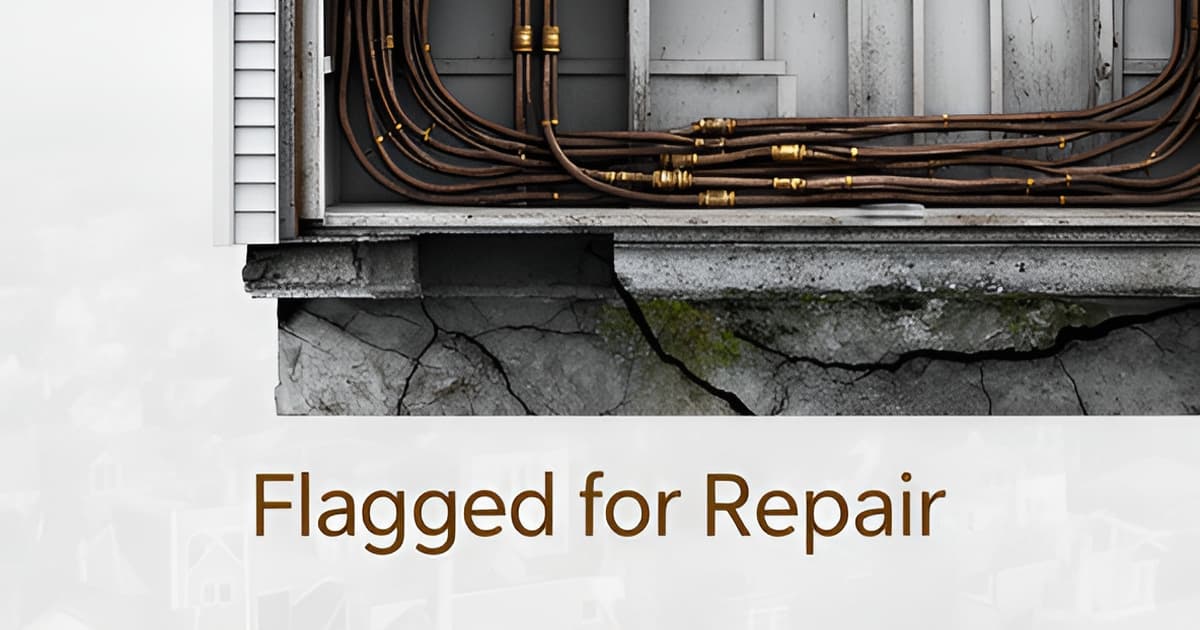
On pre-1940s homes like many of Altadena's Craftsman-period houses, the flagship finding is knob-and-tube wiring, the standard installation method from the 1880s through the 1940s. As InterNACHI notes, it isn't inherently dangerous — hazards come from age, improper modifications, and insulation enveloping the wires — but inspectors routinely find taped connections, amateur splices, and brittle insulation. The consequences ripple outward: many insurers refuse coverage or charge higher premiums, FHA and VA underwriting generally requires remediation before closing, and affected homes may see values drop 10–15%.
Mid-century homes trigger a different set of flags, and they rarely arrive alone:
- Galvanized supply pipes and aging sewer lines prone to corrosion, leaks, or root intrusion
- Lead-based paint in pre-1978 homes, plus lead-contaminated soil near the foundation
- Asbestos in insulation or flooring materials
- Mixed-era electrical — it's not unusual to find components from multiple decades in one home, some energized, some partially energized
What makes these findings challenging is that they compound rather than exist in isolation. A rewire means opening lath-and-plaster walls, which adds 25–30% to the cost. A remodel done decades ago may have removed a supporting wall, compromising the original framing — as one inspector put it, "it all acts as a system." And a general inspector's "possible foundation concern" note typically triggers a referral to a licensed structural engineer, since generalists aren't trained to catch the subtle warning signs specialists spot immediately.
This is why Altadena Home Remodeling treats an inspection report as the starting point for whole-home renovation scoping rather than a punch list of disconnected repairs. When wiring, plumbing, structure, and hazardous materials all surface at once — as they usually do on homes this age — the findings need to be scoped together, priced together, and addressed once, in the right order.
Knob-and-Tube Wiring: The Flag That Blocks Insurance and Financing
On a pre-1940s Altadena home, few words in an inspection report carry more weight than "knob-and-tube." This wiring method — the standard from the 1880s through the 1940s, according to InterNACHI guidance — appears throughout the Craftsman and early-period homes that define the community, and it triggers consequences that go far beyond a simple repair note.
Inspectors look for specific, era-typical problems. Common findings include connections wrapped with masking tape or Scotch tape instead of proper junction boxes, oversized fuses, amateur splices where modern wiring was added, stretched or sagging wires, and brittle, cracked insulation. Because knob-and-tube lacks a ground wire, it also cannot safely serve three-pronged appliances in kitchens, bathrooms, laundry rooms, or outdoor locations.
Here's the nuance worth understanding: knob-and-tube is not inherently dangerous. InterNACHI notes that hazards arise from its age, improper modifications, and — critically in Altadena's climate-controlled homes — building insulation that envelops the wires. The 2008 NEC prohibits the wiring in insulated hollow spaces of walls, ceilings, and attics, which matters when homeowners add attic insulation to improve energy performance.
California does offer a certification pathway. The California Electrical Code allows insulation in contact with knob-and-tube wiring if a licensed electrical contractor certifies the system is safe, the certification is filed with the local building department, warning signs are posted in accessible areas (some jurisdictions require both English and Spanish), and the insulation is non-combustible and non-conductive. It's a legitimate option, but it requires documentation many homeowners never complete.
The real stakes show up in two places: insurance and financing. Many insurers refuse coverage or charge higher premiums on homes with active knob-and-tube, and FHA and VA appraisers routinely flag it, with underwriting generally requiring remediation before loan closing. Nationally, homes with this wiring may see property values drop 10–15%, per electrical industry cost data — a meaningful hit on any Altadena sale or refinance.
If rewiring is on the table, timing matters. A full rewire runs roughly $10–$20 per square foot nationally, and opening lath-and-plaster walls adds 25–30% to the cost. That's why we at Altadena Home Remodeling recommend evaluating knob-and-tube as part of a whole-home renovation scope rather than a standalone emergency — if walls are opening anyway for a kitchen, bath, or gut renovation, the incremental cost drops considerably.
- Tape-wrapped splices and missing junction boxes are among the first things inspectors document
- Oversized fuses suggest the system has been pushed beyond its original 60-amp design
- Insulation contact is the issue most likely to trigger an insurance refusal
- Mixed-era wiring in one home is common — some circuits may be live, others partially energized
If your inspection report flagged knob-and-tube, a free remodel-scoping consultation with a before/after concept render can show you what a coordinated rewire-and-renovate approach looks like — scope it, price it, do it once, do it right.
Foundation Flags: Reading Your Report Before Panic Sets In
Few things spike a homeowner's heart rate like the words "possible foundation concerns" on an inspection report. But in most cases, that line is an invitation for a second opinion — not a verdict.
Here's how the pattern typically works: a general home inspector spots something suspicious and flags it, but general inspectors aren't specifically trained to catch the subtle warning signs that foundation specialists see immediately, according to AmeriSave's foundation inspection guide. The next step is a licensed structural engineer, who determines whether the flag is a genuine defect or normal movement. In California, expect that engineer evaluation to run $800–$1,500 — the most expensive region cited nationally, with an average around $1,100.
Knowing the visual red flags helps you read your own report with a level head. Inspectors most commonly flag:
- Diagonal cracks radiating from the corners of doors and windows
- Stair-step cracking in masonry walls, especially near exterior corners or below windows
- Sloping floors — typically flagged when the slope exceeds 1–2 inches over 15 feet
- Negative grading or water pooling within 10 feet of the foundation
- Cracks wider than 1/4 inch, or gaps between the chimney and the house
The economics of timing matter enormously. Early foundation repairs typically run $500–$2,000, while problems left undetected can climb to $10,000–$30,000 or more — and piering or full replacement can reach well into six figures. As one foundation industry analysis puts it, most foundation problems "start small and gradually get worse" rather than announcing themselves dramatically.
One more thing before panic sets in: age matters. A century-old Altadena Craftsman has been standing for a hundred years, and as veteran inspectors note of old homes, "she's allowed to lean a little bit." InterNACHI advises checking whether a system is actually failing before calling something a defect just because it looks different. Settling in an older home is often character, not catastrophe — the engineer's job is to tell the difference.
That's also why we take a preserve-first approach at Altadena Home Remodeling: repairing original features is almost always less expensive than replacing them with new materials of equal quality. If your inspection report has flagged foundation questions alongside era-related issues like aging wiring or plumbing, a free remodel-scoping consultation — including a before/after concept render — can help you scope it, price it, and do it once, do it right.
What Piecemeal Remodels Hide: Mixed-Era Systems and Concealed Damage
A fresh coat of paint and a remodeled bathroom can hide a lot — and on older Altadena homes, what's hidden is often the most expensive part of the report. Inspectors consistently rank amateur remodels among the three most common problem categories on older homes, alongside structural issues and outdated systems.
The structural risk comes first. When a remodel removes a supporting wall without proper framing, the consequences ripple through the entire house. As one inspector puts it, "If any one of those [original framing] members is disrupted, you've potentially damaged the structure of the whole home because it all acts as a system." Balloon and post-and-beam framing — common in Craftsman-era houses — depends on every member doing its job.
Remodels also conceal water intrusion and pest damage behind new finishes, which is why inspectors recommend specialist follow-ups for pest and sewer evaluation on older homes. A beautiful new tile surround can mask the moisture problems inspectors rank among their most common findings. And because these homes have "often experienced multiple repair attempts over the decades," pre-1950s houses may need double the inspection time of a new build.
Then there's the electrical patchwork. According to InterNACHI guidance on historic homes, it's not unusual to find wiring components from multiple eras in a single home — and "they may all be energized, or they may be partially energized." Amateur splices between old and new wiring are among the most common findings on pre-1940s systems, alongside connections wrapped in household tape and oversized fuses.
- Removed structural members that compromise the whole framing system
- Water intrusion and pest damage concealed behind new finishes
- Partially energized wiring from multiple eras, including amateur splices
- Knob-and-tube remnants lacking a ground wire, unsafe for modern three-prong appliances
This is why a spot repair rarely solves the underlying problem. A whole-home scope traces each system end to end, distinguishing original-era materials from decades of piecemeal fixes — and distinguishing normal settling in a century-old house from a genuine defect. That complete picture is exactly what a remodel scoping process needs before design begins.
At Altadena Home Remodeling, our free remodel-scoping consultation with a before/after concept render starts from that full-system view, so structural, electrical, and moisture issues get addressed once — in the right order, under LA County's unincorporated permitting process — rather than patched twice. Scope it, price it, do it once, do it right.
From Inspection Report to Renovation Scope: Do It Once, Do It Right
Your inspection report isn't a verdict — it's a scope document in disguise. The findings on an older Altadena home rarely exist in isolation; they compound, and how you sequence the work determines whether you pay once or pay repeatedly.
Start by triaging. Many of the most common findings — missing GFCI protection, inoperative receptacles, failing exterior caulking, aging smoke alarms — are minor items homeowners can fix themselves, according to inspection data. The structural and electrical items deserve more care. When a general inspector writes "possible foundation concerns," that's a signal to bring in a licensed structural engineer, because general inspectors aren't trained to catch the subtle warning signs foundation specialists spot immediately. In California, expect that follow-up to run $800–$1,500 — the most expensive region in the country for this service.
Then sequence the big-ticket work together. This is where the economics matter most:
- Foundation work comes first — it bears the load of the entire home, and early repairs run $500–$2,000 versus $10,000–$30,000 or more once problems are left undetected.
- Electrical rewiring bundles best with gut renovations, because opening lath-and-plaster walls adds 25–30% to rewire costs, and plaster repair alone runs $80–$200 per square foot — roughly 2–4x standard drywall.
- Plumbing, roofing, and envelope repairs follow, since roof, siding, and windows are the first line of defense — when they fail, damage works its way inward fast.
The knob-and-tube wiring common in pre-1940s homes illustrates the bundling logic perfectly. A whole-home rewire runs $12,000–$36,600 nationally, and that price climbs sharply when walls must be opened and repaired afterward. Folded into a gut renovation where walls are already open, the incremental cost shrinks — and you avoid paying for plaster restoration twice. It also matters for insurance and lending: many insurers refuse coverage for active knob-and-tube, and FHA/VA underwriting generally requires remediation before closing.
Finally, lean preserve-first. Repairing original features is almost always less expensive than replacing them with new materials of equal quality, and professionally repaired foundations typically don't decrease home value the way unrepaired ones — which can cut value 10–25% — do. This renovate-over-demolish approach is the philosophy behind Altadena Home Remodeling's whole-home planning, and featured builder JMB Builders LLC (CSLB #1103479) applies it to everything from Craftsman-period restoration to Eaton Fire rebuilds.
The best way to turn a report into a realistic plan is to see it. Altadena Home Remodeling offers a free remodel-scoping consultation with a before/after concept render — a chance to translate your inspector's findings into a sequenced, priced whole-home scope. Scope it, price it, do it once, do it right.
Frequently Asked Questions
Why do inspectors flag knob-and-tube wiring on older Altadena homes, and is it actually dangerous?
Will knob-and-tube wiring block my insurance or FHA/VA loan?
My inspection report says 'possible foundation concerns' — should I panic?
What foundation red flags should I look for in my own inspection report?
Why do inspectors find so many problems in homes that were already remodeled?
Is it cheaper to repair original features in an old Altadena home or replace them?
Your Inspection Report Is a Roadmap — Not a Reason to Walk Away
On an older Altadena home, the flags inspectors write down most often — knob-and-tube wiring, foundation movement, galvanized plumbing, mixed-era electrical — aren't random. They're predictable consequences of a home's era, and they compound: a rewire means opening plaster walls, a suspicious crack may need a structural engineer, and decades of piecemeal fixes can hide problems behind fresh finishes. The good news is that compounding works in your favor, too. Foundation issues caught early run $500–$2,000 versus $10,000–$30,000 or more when left undetected, and bundling big-ticket work into one sequenced renovation — foundation first, then electrical, plumbing, and envelope — means paying once instead of paying twice. A century-old Craftsman that leans a little isn't failing; it needs a plan that treats the house as a system. That's exactly what Altadena Home Remodeling's free remodel-scoping consultation delivers: your inspector's findings translated into a sequenced, priced whole-home scope, complete with a before/after concept render. Scope it, price it, do it once, do it right — book your consultation today.