Home Building Timeline in Altadena: From Design to Move-In
Key Facts
- California homes typically take 10–18 months to build versus the 7-month national average, according to California build-time data.
- LA County wildfire rebuilding permits have averaged 186 calendar days from application to issuance, per permitting-delay research.
- West Coast home timelines run 14–24 months largely due to permitting processes rather than physical construction, per regional benchmarks.
- LA County saw a 300% increase in land classified as very high wildfire hazard, according to reporting on permitting delays.
- Mid-construction changes add 2–8 weeks each and typically raise costs 15–25% on affected work, per construction benchmarks.
- Custom windows take 12–16 weeks and custom cabinetry 10–20 weeks to arrive, per long-lead item data.
- Custom homes in California run 14–26 months from first sketches to move-in, per industry estimates.
Why Altadena Home Timelines Run Long: The Real 14–24 Month Picture
If you've heard a custom home can be built in seven months, that number comes from a national average — and it rarely survives contact with California reality. In Altadena, a realistic design-to-move-in window runs 14–24+ months, and the reason is almost never the construction itself.
According to California build-time data, homes here typically take 10–18 months versus the 7-month national average, while West Coast benchmarks put total timelines at 14–24 months — "largely due to permitting processes rather than physical construction." Custom homes in California run 14–26 months from first sketches to move-in, per industry estimates.
Permitting is the dominant variable. LA County wildfire rebuilding permits have averaged 186 calendar days from application to issuance, with medians beyond 150 days in some recovery areas, according to permitting-delay research. West Coast permit processing generally runs 16–32 weeks, and LA is named as a backlogged market with queues "that cannot be circumvented through applicant action."
One jurisdictional detail trips up many Altadena homeowners: because Altadena is unincorporated, permits go through the Los Angeles County Department of Public Works — not LADBS, which handles City of LA projects, as permit-expediting guidance makes clear. Much of the generic "Los Angeles permitting" advice online describes the City process, which doesn't map cleanly onto Altadena's County review path.
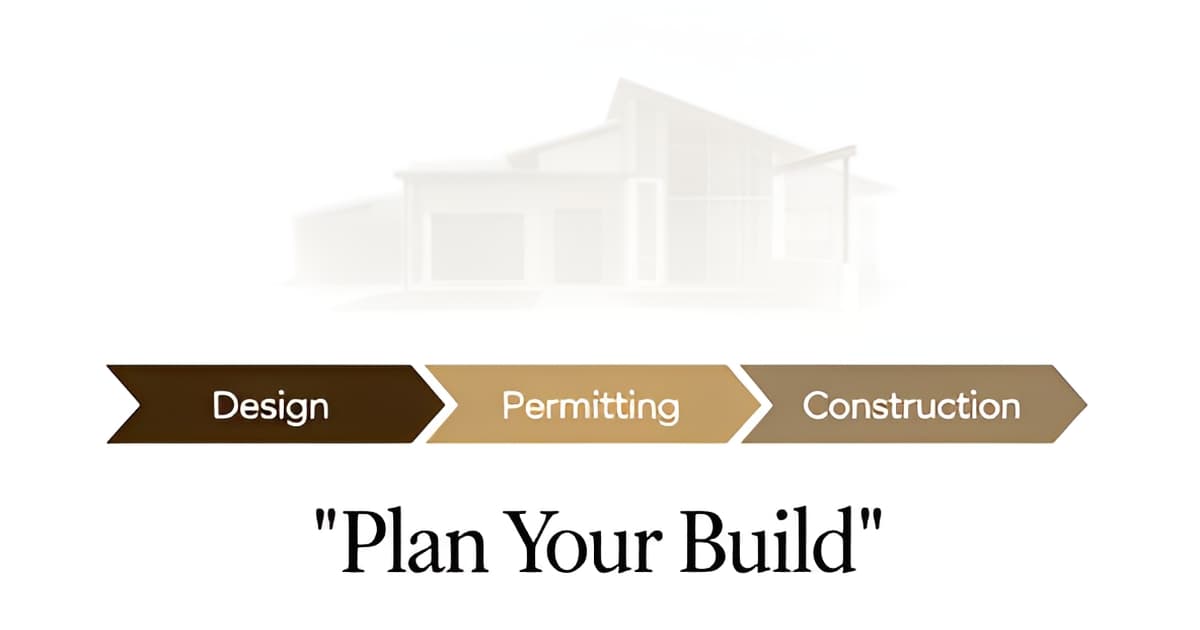
A typical California phase breakdown looks like this:
- Design and pre-construction: 3–6 months
- Permitting: 2–6+ months, longer in fire-hazard zones
- Construction: 8–14 months
- Final inspections and move-in: 1–2 months
Post-Eaton Fire conditions add further pressure. LA County has seen a 300% increase in land classified as "very high" wildfire hazard, and updated fire maps and wildfire regulations are explicit delay factors for hillside communities like Altadena. Recovery-area review departments are overloaded, and as one practitioner notes, "sometimes a permit is delayed simply because new rules apply mid-review."
Two important caveats. First, no public source provides Altadena-specific timeline data — every figure here is a California or LA-area regional benchmark, not a prediction for your project. Second, these ranges move: a complete first plan-check submittal, early geotechnical research, and ordering long-lead items (custom windows run 12–16 weeks; custom cabinetry 10–20 weeks) are the levers that keep a timeline at the shorter end of the range.
That's why Altadena Home Remodeling approaches every scoping conversation with the timeline picture on the table from day one — because the decisions that move the budget and schedule most are made in the first few months. Nothing in this article should be read as a guarantee of any particular timeline or permit outcome; your project's duration depends on your parcel, your plans, and County review conditions at the time you submit.
Phase by Phase: What Each Stage Actually Takes
Every month of a custom build in Altadena is spent somewhere specific — and knowing where the time actually goes is the difference between a realistic plan and a frustrating surprise. Here is how the typical 14–24+ month West Coast timeline breaks down, phase by phase, using regional benchmarks.
Design and pre-construction (3–6 months). Architectural design for a custom home typically runs 3–6 months, per California custom-home benchmarks. This is also where the leverage lives: as one LA-area builder puts it, the decisions that move the budget most are made in the first few months. Schematic design, engineering, geotech, and selections all happen here — before the construction clock ever starts.
Permitting (2–6+ months). Altadena is unincorporated LA County, so permits run through LA County Public Works, not LADBS. West Coast permit processing runs 16–32 weeks, and LA is named as a backlogged market with queues that "cannot be circumvented through applicant action." For wildfire rebuilds, LA County permits have averaged 186 calendar days from application to issuance, with medians beyond 150 days in some recovery areas, per Buildertrend's analysis of County data. A complete, coordinated first submittal is the single biggest time-saver.
Site preparation (1–2 months). Grading, utilities, and foundation work typically take one to two months. On hillside lots — common in Altadena — grading review alone can add 3–5 weeks at the county level.
Construction (8–14 months). The longest phase splits into sub-stages with their own durations:
- Site prep and foundation: 2–4 weeks
- Framing: 4–8 weeks
- Rough-in mechanicals (electrical, plumbing, HVAC): 4–6 weeks
- Insulation and drywall: 4–6 weeks
- Interior finishes: 6–10 weeks
Long-lead items can quietly stretch this phase — custom windows run 12–16 weeks and custom cabinetry 10–20 weeks, so ordering early matters. Mid-construction changes add 2–8 weeks each, often with 15–25% cost increases on the affected work.
Final inspections and move-in (1–2 months). Final inspections, punch-list work, and certificates of occupancy close out the project. This phase rewards a well-organized closeout: as Buildertrend notes, delays alone don't destroy a project — disorganization during them does.
These are California and LA-area benchmarks, not Altadena-specific guarantees; every lot, plan, and permit path differs. Altadena Home Remodeling helps homeowners scope whole-home renovations and rebuilds realistically from day one — including Eaton Fire rebuild work like that documented by JMB Builders LLC (CSLB #1103479) — so the biggest budget decisions get made deliberately, not under deadline pressure.
The Eaton Fire Factor and 2026 Code Changes
If you're rebuilding or renovating in Altadena right now, your timeline is shaped by two forces most other California homeowners never face: the aftermath of the Eaton Fire and a wave of new state building codes that took effect January 1, 2026. Together, they can add months to a project that, on paper, looks straightforward.
Start with the fire factor. LA County has seen a 300% increase in land classified as "very high" wildfire hazard, according to reporting on California permitting delays. Updated fire maps and expanded fire-hazard zones mean more properties now trigger additional reviews — wildfire regulations, hazard-zone checks, and hillside requirements are all cited as explicit permit delay factors in fire-prone areas like Altadena.
The review departments handling those reviews are also stretched thin. LA County wildfire rebuilding permits have averaged 186 calendar days from application to issuance, with some recovery areas showing medians beyond 150 days, per the same analysis. Recovery-area queues, one industry source notes, "cannot be circumvented through applicant action" — meaning even a flawless submittal waits its turn.
Then there's the code question. The 2026 California requirements now in force mandate heat-pump space heating, solar PV, battery-ready wiring, fire sprinklers, and EV-ready garage circuits on new residential construction. Each adds plan-check complexity: more sheets to coordinate, more energy calculations, more chances for a correction letter. And as permit consultants point out, sometimes a permit is delayed simply because new rules apply mid-review.
Here's the tension worth understanding: California's AB 253 sets a 30-day deadline for jurisdictions to review complete residential permit applications. On paper, that's fast. In practice, observed County timelines in recovery areas run several times longer. The lesson isn't that the law doesn't matter — it's that your application must be genuinely complete the day it lands, because the 30-day clock (and any realistic schedule) starts there.
What this means for Altadena homeowners planning a rebuild or major remodel:
- Budget 6+ months for permitting in a fire-recovery area, not the 2–4 months typical elsewhere in California — and treat any faster outcome as a bonus.
- Confirm your property's current fire-hazard designation before finalizing design, since updated maps can change the requirements mid-project.
- Design to the 2026 codes from day one — heat pumps, solar, battery-ready wiring, sprinklers, and EV circuits — so plan check doesn't bounce your plans back.
- Submit one complete, coordinated package rather than a fast, incomplete one; a single missing document can reset review timelines entirely.
No timeline or permit outcome can be guaranteed — especially not in a recovery zone. But at Altadena Home Remodeling, we've seen that homeowners who scope the full picture early, including fire-zone and 2026 code requirements, make sharper decisions when they matter most. Our free remodel-scoping consultation includes a before/after concept render, so you can see what's possible before you commit months to design and plan check. Featured builder JMB Builders LLC (CSLB #1103479), an Altadena-based licensed general contractor with documented Eaton Fire rebuild work, brings local recovery-area experience to projects we cover. Scope it, price it, do it once, do it right.
Where Timelines Break—and How to Protect Yours
Most Altadena build delays aren't caused by construction—they're caused by decisions, paperwork, and sequencing mistakes made months before the first nail goes in. The good news: nearly all of them are preventable with planning.
The single biggest time-saver, according to LA-area custom home builders, is a complete, coordinated first plan-check submittal. A single missing document or unclear plan can stall the review and reset the clock entirely. In a jurisdiction already handling wildfire-rebuild permits that averaged 186 calendar days from application to issuance in LA County, a resubmittal cycle is a delay you can't afford.
Front-load the research that plans depend on. Geotechnical and zoning investigations done during design prevent mid-review surprises, and since Altadena is unincorporated LA County, permits route through County Public Works rather than LADBS—a distinction that catches many homeowners off guard. Fire-hazard zone reviews and updated wildfire maps are explicit delay factors in hillside areas, so building extra buffer into your schedule for fire-zone review is simply realistic, not pessimistic.
Order long-lead items early. Custom windows alone take 12–16 weeks, cabinetry 10–20 weeks, and imported tile 12–24 weeks—and material shortages can add another 4–12 weeks to the schedule. Waiting until framing starts to select finishes puts your timeline at the mercy of suppliers.
Protect your schedule from the inside, too:
- Lock in finishes and selections during design, since delayed decisions during selection phases create downstream delays in every trade that follows.
- Avoid mid-construction changes, which add 2–8 weeks each and typically raise costs 15–25%.
- Consider renovation over demolition where feasible—a knockdown-rebuild adds roughly six months due to a second permit, the AQMD asbestos process, and neighbor notice requirements.
- Keep all project documentation organized, because disorganization during delays—not the delays themselves—is what destroys schedules and budgets.
That preserve-first approach is central to how we think about projects at Altadena Home Remodeling: renovating an existing structure often protects both your timeline and the character of your home. For Eaton Fire rebuilds and major remodels alike, working with an experienced local general contractor like JMB Builders LLC (CSLB #1103479) helps ensure submittals are complete and sequencing is right the first time.
No strategy eliminates every delay—permitting timelines in LA County can't be guaranteed, and new code requirements can apply mid-review. But the homeowners who finish fastest are almost always the ones who front-loaded the decisions. If you're planning a whole-home renovation or rebuild in Altadena, a free remodel-scoping consultation with a before/after concept render is the most efficient way to pressure-test your scope, budget, and schedule before committing. Scope it, price it, do it once, do it right.
Your Next Step: Scope It Before You Commit
Every month of a 14–24 month Altadena build is shaped before the first shovel hits the ground. The design and permitting phases — not construction — decide whether your project flows or stalls, which makes pre-construction the single biggest leverage zone in the entire timeline.
The research is blunt about why. Practitioners consistently note that the decisions that move the budget most are made in the first few months of a project, according to LA-area custom home builders. And on the schedule side, LA County wildfire rebuilding permits have averaged 186 calendar days from application to issuance, per industry reporting on California permitting delays. A single missing document can stall a review and reset the clock entirely.
Scoping early surfaces the problems that otherwise ambush your schedule mid-project:
- Permit pathway — Altadena is unincorporated LA County, so your plans run through County Public Works, not LADBS; knowing the department sequence (Planning, Fire, Building & Safety) sets realistic expectations.
- Fire-zone requirements — updated fire maps and wildfire regulations are explicit delay factors in hillside areas, with recovery departments stretched thin post-Eaton Fire.
- Long-lead items — custom windows run 12–16 weeks and custom cabinetry 10–20 weeks, per regional construction benchmarks; ordering early keeps these off your critical path.
- Code changes — new 2026 California requirements (heat-pump heating, solar PV, fire sprinklers) can extend plan check if your design doesn't account for them from day one.
This is why Altadena Home Remodeling approaches every project the same way: scope it, price it, do it once, do it right. A renovation that's properly scoped before commitments are made avoids the mid-construction changes that add 2–8 weeks per change and 15–25% to costs, according to the same benchmarks. It also means your first plan-check submittal is complete and coordinated — the biggest single time-saver cited by practitioners.
That philosophy is what our free remodel-scoping consultation is built around. You'll sit down with us, walk through your goals for your Altadena home — whether it's a whole-home renovation, a Craftsman restoration, or an addition — and leave with a before/after concept render plus a clear-eyed view of the permit, fire-zone, and long-lead realities your specific project will face. No timeline or permit guarantees, just honest scoping from people who know the terrain.
If you're planning a rebuild or major remodel with JMB Builders LLC (CSLB #1103477 — an Altadena-based licensed general contractor whose Eaton Fire rebuild work is documented on jmb-builders.com), that early scoping conversation is even more valuable. Bring your lot, your ideas, and your questions — the earlier you scope it, the fewer surprises your schedule has room for.
Frequently Asked Questions
How long does it really take to build a custom home in Altadena?
Why is permitting in Altadena different from the rest of Los Angeles?
How long does permitting take for an Eaton Fire rebuild?
What's the single biggest thing I can do to keep my build on schedule?
Do the new 2026 California building codes affect my Altadena project?
Should I renovate my existing home or tear it down and rebuild?
The Clock Starts Before the First Nail
Building in Altadena realistically means 14–24+ months from design to move-in — and the data is clear that permitting, not construction, is what stretches that window. With LA County wildfire rebuilding permits averaging 186 calendar days from application to issuance, the homeowners who finish fastest are the ones who front-load the work: a complete, coordinated first plan-check submittal routed through County Public Works (not LADBS), early geotech research, designs built to the 2026 codes, and long-lead items like windows and cabinetry ordered well before framing. These are California and LA-area benchmarks, not guarantees — but they paint an honest picture you can plan around. If you're weighing a whole-home renovation, addition, or Eaton Fire rebuild, the decisions that matter most happen in the first few months. That's exactly what Altadena Home Remodeling's free remodel-scoping consultation is for: you'll leave with a before/after concept render and a clear-eyed view of your project's real timeline. Scope it, price it, do it once, do it right.