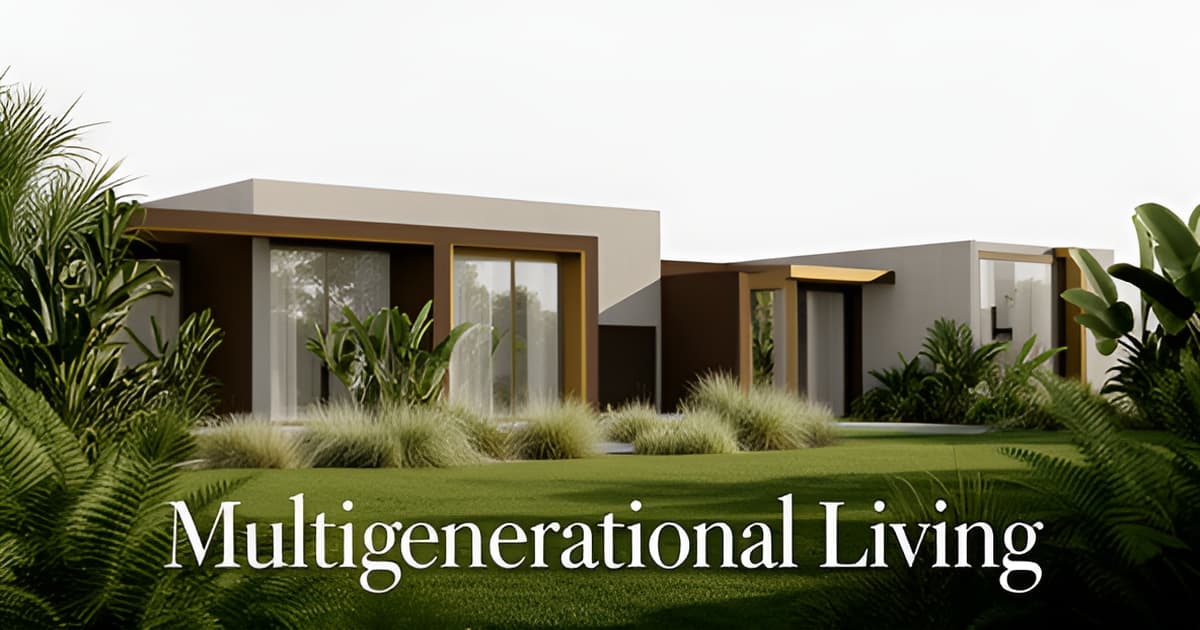
Home Addition for Multigenerational Living: Riverside to Altadena Costs
Key Facts
- Riverside ranks among America's top multigenerational metros at 10.9% of households, while LA leads the nation with nearly 24% of listings marketed as multigenerational-friendly according to Census-based analysis.
- With the median LA County home at $838,350 and only 18% of households able to afford one, over 80% of owners with sub-6% mortgages are choosing to stay and build per affordability data.
- Assisted living runs $6,200 monthly — over $74,000 a year — while an attached in-law suite can cost less than two years of it and stays in the family per caregiving cost research.
- A single cooktop decides the legal fate of your suite: wet bars read as bedroom amenities, but any cooking appliance crosses into JADU territory per permit-path guidance.
- LA-area in-law suites range from $60,000–$150,000 for a JADU to $350,000–$650,000+ for a full second story per contractor cost data.
- An analysis of roughly 90,000 LA County sales found a typical ADU added about 24% to a home's sale price per resale-value research.
- The CalHFA $40,000 ADU grant has been fully allocated since December 2023 — anyone claiming access today is running a scam CalHFA itself warns about per state housing agency notices.
Why So Many Riverside-to-Altadena Families Are Building In-Law Suites Now
If you live anywhere between Riverside and Altadena, you've probably noticed more garages turning into suites and more second stories rising over single-story ranch homes. That's not a coincidence — this corridor is now one of the nation's densest markets for multigenerational living, and the numbers behind it explain why so many families are choosing to build rather than move.
According to Realtor.com's analysis of Census data, Riverside ranks among the top U.S. metros for multigenerational households at 10.9%, with 14.9% of active listings marketed as multigenerational-friendly. Los Angeles leads every metro in the country at nearly 24% of listings. California metros hold the five highest shares nationally — a clear signal that three-generation households have gone mainstream here, not niche.
The economics are driving it. The median single-family home in LA County now costs $838,350, and only about 18% of households in the LA metro can afford a median-priced home. Meanwhile, more than 80% of homeowners hold mortgages below 6%, making the math brutal: selling means trading a cheap loan for an expensive house. The result is a "stay and build" pattern — families adding space to the homes they already own rather than buying their way into more room.
Then there's the family squeeze from both ends of the generations:
- Aging parents want to stay home — 75% of adults over 50 want to age in place, yet assisted living runs a national median of $6,200 per month.
- Adult children can't afford to launch — with affordability near historic lows, moving out often isn't realistic.
- Caregiving costs compound — non-medical in-home care runs about $35 per hour, making a built-in suite the cheaper long-term answer.
Run the numbers and an in-law suite starts to look less like a luxury and more like a financial strategy. At $6,200 a month, assisted living costs $74,000+ per year — a full attached suite addition in the LA area can cost less than two years of it, and it stays in the family. Small wonder that 17% of all home buyers purchased a multigenerational home in NAR's 2025 report, up from 14% the year before.
For Altadena families specifically, much of this plays out in older homes — Craftsman-era houses on generous lots that have room to grow, if the floor-area math works. That's where a preserve-first approach matters: renovating and extending the home you have, rather than demolishing and starting over. Altadena Home Remodeling helps families scope exactly that kind of whole-home renovation — figuring out what your lot allows, what an in-law suite should include, and what it will realistically cost before you commit.
If you're weighing an in-law suite or second story for your Altadena home, book a free remodel-scoping consultation with a before/after concept render — scope it, price it, and do it right the first time.
The Five Ways to Build a Multigenerational Suite — and What Each Costs
Before you pick a floor plan, you face a fork in the road that has nothing to do with square footage — it's whether you want rental income or more house. As one LA design-build guide puts it, nothing else in the decision matters as much as that single question, because it determines whether you build an addition or a dwelling unit, and each path carries a different permit process and price tag.
There are five practical ways to add a multigenerational suite, plus a sixth for families who need major space. Here are the LA-area budgeting ranges for each:
- Junior ADU (JADU): $60,000–$150,000 for up to 500 sq ft — the lowest-cost path, capped at one per single-family lot under California Government Code.
- Bedroom or office bump-out: $75,000–$150,000 for 200–350 sq ft of ground-floor space.
- Garage conversion: $100,000–$200,000, with no replacement parking required under state ADU law.
- Primary suite with bathroom: $130,000–$250,000 for 350–500 sq ft.
- Detached ADU: $180,000–$260,000 at 500 sq ft, climbing to $300,000–$450,000+ at roughly 1,000 sq ft.
For families needing substantially more room, a partial second story runs $200,000–$350,000 (400–600 sq ft), while a full second story runs $350,000–$650,000+ for 800–1,200 sq ft.
Ground-floor additions in the LA area typically land at $300–$500 per square foot all-in, while second stories run $400–$650 per square foot — a premium of $100–$150 per square foot, according to LA-area cost data. That premium reflects structural work, staircases, and the disruption of living in the house during construction.
One caveat matters here: these are LA-area budgeting ranges, not quotes. No published source provides Riverside- or Altadena-specific construction costs, and Altadena's unincorporated LA County permit context, hillside lots, and older Craftsman housing stock can all move the number in either direction. A realistic budget requires a contractor who can evaluate your actual lot, floor-area ratio, and existing structure.
Budget may not even be the binding constraint. In the City of LA, R1 lots cap residential floor area at 45% of lot size, so a 6,000 sq ft lot supports roughly 2,700 sq ft total — and that ceiling, as practitioners note, is often what kills a second story before pricing does. State law gives ADUs approval protections that additions don't receive, so on a tight lot the ADU is frequently the only thing that can legally be built.
Altadena Home Remodeling approaches these projects with a preserve-first mindset — working within the existing structure and lot constraints rather than defaulting to teardown-scale solutions. If you're weighing which configuration your Altadena property can actually support, a free remodel-scoping consultation with a before/after concept render can show you the realistic options before you commit to a budget.
The Kitchen Test: The Legal Line Between a Bedroom Suite and a Second Dwelling
The single most consequential design decision in a multigenerational suite isn't the floor plan or the finishes — it's whether you put a cooktop in the room. That one appliance determines whether you're building a bedroom addition or a regulated second dwelling.
Under California's ADU framework, the legal test is "complete independent living facilities," not square footage. A 600-square-foot suite with a full bath and no kitchen is still just a bedroom suite, while a compact 400-square-foot room with a cooking appliance crosses into JADU territory. Per practitioner guidance on in-law suite additions, a wet bar with a sink and small refrigerator reads as a bedroom amenity — add even a compact induction cooktop and you've built a dwelling unit.
Entrances matter just as much. A code-compliant JADU requires both an interior entrance from the main home and an independent exterior entrance. A suite connected only by an interior door stays on the simple-addition side of the line, which is why families should decide which side they want before design work begins, not after plans are drawn.
The JADU route comes with a hard cap of 500 square feet under California Government Code Section 66323, and only one JADU is allowed per single-family lot. In exchange, you get a simpler permit path and no owner-occupancy tie — but the unit can never be sold separately from the primary dwelling. A full ADU opens more doors: future flexibility for caregivers, adult children, or tenants.
State law also gives ADUs approval protections that a conventional addition never receives, according to LA-area addition cost research:
- Up to 800 sq ft of detached ADU allowed by right on nearly any residential lot, with no minimum lot size
- A 60-day approval clock, with a 15-business-day completeness determination — though LA-area permits commonly take 4–6 months in practice despite the statutory deadlines
- No replacement parking required when converting an existing garage or carport (Gov. Code 66314(d)(11))
- ADUs under 750 sq ft are exempt from impact fees
On a tight Altadena lot, those protections can make the ADU the only buildable option — the 45% residential floor-area cap that limits conventional additions doesn't constrain an ADU the same way. As one contractor bluntly puts it, "Do you want rental income, or more house? Rental income means an ADU or JADU. More house means an addition."
Decide the answer before the first sketch. Altadena Home Remodeling helps families scope exactly this question — kitchen or no kitchen, JADU or addition — in a free remodel-scoping consultation that includes a before/after concept render, so the suite you build matches the household you actually have.
Your Lot Decides Before Your Budget Does: FAR Limits and Permit Realities
Before you fall in love with a second story or a sprawling suite, your lot gets a vote — and it votes first. Floor-area-ratio limits cap how much house a lot can legally hold, and that number kills more addition dreams than any budget spreadsheet ever will.
In the City of LA, R1 zones cap Residential Floor Area at 45% of lot size under LAMC Section 12.08 C.5, so a 6,000-square-foot lot supports roughly 2,700 square feet of total floor area — a useful benchmark for unincorporated LA County neighborhoods like Altadena, where many older homes already sit near that ceiling. As one contractor analysis puts it, FAR is "the invisible ceiling... the number that most often kills a second story."
This is why state ADU law matters so much on tight lots. ADUs sit outside the normal FAR math and carry approval protections a standard addition simply doesn't get — no minimum lot size, up to 800 square feet on nearly any residential lot, 4-foot setbacks, and a 60-day approval clock. On a lot with no remaining floor area, the ADU is frequently the only thing that can be built at all, per the same analysis.
Altadena families should also plan around permit realities, not internet folklore:
- Timelines: A realistic all-in addition runs 9–14 months — design 6–12 weeks, plan check 2–4 months, construction 4–7 months, per LA-area permitting data. ADU permits in the LA area commonly take 4–6 months despite statutory deadlines.
- The "$500 permit exemption" is a myth. There is no permit exemption for additions; the widely repeated figure is false.
- The CalHFA $40,000 ADU grant is exhausted. It has been fully allocated since December 28, 2023, with no new funding — anyone claiming access today is running a scam CalHFA itself warns about.
- Property taxes stay manageable. Under Prop 13, only the addition's value is reassessed — a $200,000 ADU on a $1M home adds roughly $2,500 per year, not a full reassessment.
Altadena Home Remodeling approaches these feasibility questions before any design work begins, because unincorporated LA County's rules and your lot's remaining floor area determine what's buildable — not what you wish were buildable. A scoping conversation that starts with your lot, not your Pinterest board, is the cheapest hour of the entire project.
Designing for Fifteen Years, Not Two: Aging-in-Place and the Do-It-Once Payoff
Most multigenerational suites are designed for the family moving in next month — not the family living there in 2038. If aging parents are part of your plan, practitioners advise building for the next fifteen years, not the next two, because the features that keep a suite livable through a decade of change cost a fraction when built in during construction rather than retrofitted later (contractor guidance on LA-area multigenerational homes).
The economics are hard to argue with. Assisted living runs a national median of $6,200 per month, while 75% of adults over 50 say they want to age in place (suite-addition cost research). A suite designed for aging in place keeps that monthly outlay inside the family. The core features are simple and inexpensive at the framing stage:
- No-step entry and 32–36" doorways, sized for mobility aids from day one
- Curbless showers and reinforced wall blocking for future grab bars
- Sound separation — standard interior walls hit roughly STC 33, while adding batt insulation moves that to STC 39, a meaningful difference between suites
- Separate HVAC zones, so two generations stop fighting over one thermostat
Then there is the feature practitioners call the single biggest peace-preserving element in any shared household: the kitchenette. As one multigenerational design guide puts it, a second kitchen "does more for household peace than any other" single feature — a parent who can make coffee at 6 a.m. without entering the main kitchen, and an adult child who isn't hosting every meal, is an arrangement that lasts. Just remember the legal line: a wet bar with a sink and small refrigerator reads as a bedroom amenity, while any cooking appliance — even a compact induction cooktop — pushes the suite into JADU territory (permit-path analysis).
The resale math also rewards doing it once. An analysis of roughly 90,000 LA County sales found a typical ADU added about 24% to a home's sale price, and detached ADUs in high-cost markets have appraised as high as 1.5x their build cost (resale-value research). Experts still split on whether additions or ADUs return more — one builder argues additions win on resale, while a Southern California agent counters that buyers pay "much more" for a property with an ADU — but both sides agree that a well-built, flexible suite is the asset that holds value either way.
That is the case for scoping the whole fifteen-year picture before a single wall opens: the aging-in-place features, the sound separation, the kitchenette decision, the HVAC zoning. Altadena Home Remodeling offers a free remodel-scoping consultation that ends with a before/after concept render of your suite — so you can see the do-it-once version of your house before you commit to building it.
Frequently Asked Questions
How much does an in-law suite addition actually cost in the Riverside to Altadena area?
Does adding a kitchenette to my suite turn it into a legally regulated ADU?
Is it really cheaper to build an in-law suite than pay for assisted living?
My lot is small — can I even legally add a second story or suite in Altadena?
Will building an ADU or addition spike my property taxes or take forever to permit?
I heard there's a $500 permit exemption and a $40,000 CalHFA grant for ADUs — are those real?
Build Once, Live Together for Years
The math behind the Riverside-to-Altadena building boom is hard to ignore: with assisted living running $6,200 a month nationally and a typical ADU adding about 24% to a home's sale price in an analysis of roughly 90,000 LA County sales, a well-planned suite is both a family solution and a financial asset. But the numbers only work if the decisions come in the right order — rental income or more house, kitchen or no kitchen, what your lot's floor area actually allows, and which aging-in-place features belong in the framing rather than a costly retrofit a decade from now. For Altadena homeowners, especially those in older Craftsman homes, a preserve-first approach that works with the house you already own beats a teardown every time. Altadena Home Remodeling helps families answer exactly these questions in a free remodel-scoping consultation — your lot, your budget range, your realistic options — complete with a before/after concept render so you can see the finished suite before committing to anything. Scope it, price it, and do it once, do it right.