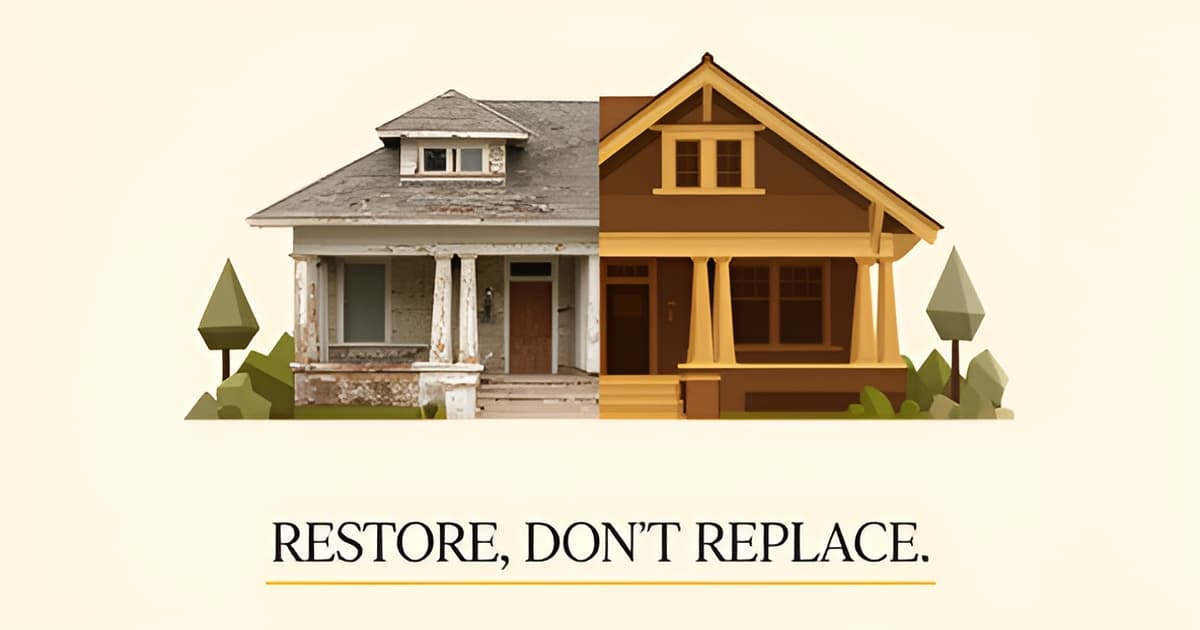
Historic Home Restoration
Key Facts
- 54% of U.S. homeowners renovated in 2025, with 90th percentile spend climbing 7% to $150,000, per Houzz's 20,000-homeowner study.
- 37% of renovating homeowners exceeded their budgets in 2025 — mostly from higher-than-expected costs (52%), Houzz research shows.
- Preservationists recommend a 10–20% contingency reserve for historic renovations, per House Beautiful's expert guidance.
- The California Historical Building Code lets qualified historic homes meet 'reasonable levels of safety' instead of full new-construction standards, LA City Planning explains.
- The 20% federal rehabilitation tax credit applies only to income-producing properties — not owner-occupied homes, per LA City Planning.
- Historic district rules can require board approval even for paint colors, roofing, or landscaping — research before signing a contract, NAR advises.
- 91% of renovating homeowners hire at least one professional, according to Houzz's 2026 study.
Why Your Craftsman Deserves Rehabilitate-Over-Demolish Thinking
If your Altadena Craftsman has crossed the fifty-year mark, you own something increasingly rare: a house built with materials and detailing that simply aren't produced anymore. The question isn't whether it needs work — nearly every home of that vintage does — but whether that work erases character or builds on it.
The National Trust for Historic Preservation draws a distinction that matters for every owner weighing a major remodel. As the Trust explains, restoration returns a house to a single moment in time, while rehabilitation makes it "useful and functional for contemporary living while preserving important historic and architectural features." Strict restorations are rare in practice — most owners keep modern plumbing and sympathetically designed additions. There's no wrong answer between the two paths; the key, in the Trust's words, is how well a rehabilitation accommodates modern living.
Preservation experts are blunt about what this philosophy is not. "Historic homes aren't meant to be trapped in amber," as preservationists interviewed by House Beautiful put it. Gabrielle Begue of MacRostie Historic Advisors frames the work as stewardship: "I see us as stewards of these historic homes—they had lives before us, they'll have lives after us." Or as designer Victoria Sass says, your renovation is simply your chapter in the house's story.
The numbers back this rehabilitate-over-demolish instinct. According to the Houzz & Home study of more than 20,000 homeowners, 54% of U.S. homeowners renovated in 2025, and high-end projects are growing — 90th percentile spend climbed 7% to $150,000. That reflects what Houzz researchers call "a clear shift toward investing in forever homes rather than moving."
Altadena's period housing stock rewards this thinking in concrete ways:
- Original materials like heart pine, oak, and cypress are durable enough to repair rather than replace — one intact window sash can guide replication of all the others.
- Exact replication of details such as plaster moldings can conceal modern HVAC and wiring while preserving the original aesthetic.
- The California Historical Building Code allows qualified historic properties to meet "reasonable levels of safety" rather than full new-construction standards.
The guiding rule, per preservation practitioners: restore wherever possible and replace only if necessity demands it. That's the philosophy behind Altadena Home Remodeling's preserve-first approach to whole-home renovation — treating your Craftsman as a working home to steward, not a museum piece to freeze — and it's the smartest starting point before any wall comes down.
The Rules Come First: Approvals, Permits, and What You Can Actually Change
The most expensive design decisions in a historic renovation are often the ones you can't make at all. Before you fall in love with black steel windows or a rear addition, the rules come first — and in a designated historic district, they can override nearly everything on your wish list.
If your home sits in a historic district or carries an HPOZ-style designation, expect special approvals for exterior changes — sometimes even for paint colors, roofing, or landscaping. Boards commonly require sign-off before you replace windows, repaint a facade, install solar panels, or add square footage. Some ordinances reach interior architectural details, too, so verify your property's status before sketching plans.
The National Association of Realtors advises researching these requirements early — ideally before you sign a contract, or during your contingency period. Waiting until after closing to discover that your dream kitchen addition needs board approval can derail both budget and timeline.
What preservation boards actually want is documentation. According to restoration practitioners, expect to submit:
- Photographs of existing conditions, inside and out
- Material samples matching or complementing the originals
- Historical research establishing the home's period and character-defining features
- Detailed drawings showing proposed changes in context
The good news: interior modernization usually proceeds without preservation review. NAR notes that HVAC upgrades, smart thermostats, and efficient lighting can typically be added without issue — it's the exterior envelope that draws scrutiny.
For Altadena owners, one honest caveat: Altadena sits in unincorporated Los Angeles County, so the well-documented City of LA HPOZ programs and Mills Act incentives don't map directly onto your jurisdiction. LA County permit research is a separate process, and no source we reviewed provides reliable timelines for it. Anyone promising you a guaranteed approval date is guessing.
That's why Altadena Home Remodeling treats permit and designation research as the first phase of every historic project — before design, before pricing, before promises. Scope it, price it, do it once, do it right.
Modern Living Without Visual Damage: The Preservation-First Toolkit
The best historic renovations share a quiet secret: nearly everything modern can go in without anything historic coming out. Preservationists put it plainly — "historic homes aren't meant to be trapped in amber" — and the National Trust frames quality rehabilitation as how well a house "accommodates modern technologies and living styles" rather than how faithfully it freezes a moment in time (National Trust guidance).
The toolkit starts with the envelope. Instead of ripping out original wood windows — which preservation boards often require approval to replace anyway (per NAR's consumer guidance) — insulated window inserts deliver efficiency gains while the historic sash stays in place, and wall insulation can be added discreetly without damaging original plaster (preservation-minded remodelers note).
Mechanical systems follow the same logic. The goal is integration with minimal visual impact: concealed ducts, carefully routed wiring, and wireless options where feasible, keeping every change "minimal and reversible where possible" (restoration specialists advise). When modern equipment must live behind millwork, replication does the hiding — one intact window sash or molding profile can guide exact copies, so a replicated plaster cornice can quietly house an air duct while preserving the original aesthetic (House Beautiful reports).
The durable modernization trends practitioners expect to outlast the hype map neatly onto older homes (Byggmeister's trend analysis):
- Electrification — heat pumps and induction cooktops replacing aging gas systems
- Blower-door-guided air sealing and insulation upgrades
- Solar with battery storage, sited to respect rooflines and district rules
- Aging-in-place features like curbless showers and first-floor primary suites
Critically, California gives historic properties room to do this. The California Historical Building Code allows qualified historic buildings to use alternative methods to achieve "reasonable levels of safety" rather than full new-construction compliance (LA City Planning explains) — flexibility that makes sympathetic electrification and system upgrades far more achievable than owners often assume.
At Altadena Home Remodeling, we build whole-home scopes around exactly this preservation-first toolkit, and our featured builder, JMB Builders LLC (CSLB #1103479), works to that standard on Altadena's Craftsman-era homes. Curious what invisible modernization looks like in your house? Book a free remodel-scoping consultation and see a before/after concept render before committing to anything.
Budgeting for What's Behind the Walls: Incentives, Reserves, and Hidden Conditions
The most expensive part of a historic restoration is rarely on the estimate — it's what the plaster and lath are hiding. Budgeting honestly for what's behind the walls is the difference between a project that finishes strong and one that stalls at drywall.
The numbers back this up. According to Houzz's 2026 U.S. Houzz & Home Study, 37% of renovating homeowners exceeded their budgets in 2025, driven mostly by higher-than-expected costs (52%) and upgrades to pricier materials than planned (35%). That's why experts consistently recommend holding a 10–20% contingency reserve on top of your project budget — money you expect to spend, not hope to save.
Older homes make that reserve especially wise. Common hidden conditions in pre-1960s houses include:
- Knob-and-tube wiring and outdated electrical panels that need full replacement
- Lead paint and asbestos, which require licensed abatement before work can proceed
- Aging foundations, older plumbing, and inadequate insulation
- Structural or termite damage revealed only after demolition begins
The National Association of Realtors flags these inspection issues as routine in older properties, not exceptions. Some discoveries cut the other way — original hardwood under vinyl, for instance — but a sound budget plans for the worst, not the lucky find.
On the incentives side, know what actually applies to you. The Mills Act offers meaningful property tax reductions for qualifying historic properties in Los Angeles, including Historic-Cultural Monuments and contributing structures in preservation zones, per LA City Planning. But be clear-eyed about the federal side: the 20% federal rehabilitation tax credit applies only to income-producing properties, not owner-occupied homes. If a contractor implies otherwise, that's a red flag. Some local incentives also come with strings attached, restricting how extensive your renovation can be — factor that into scope decisions before you commit.
For Altadena homeowners weighing a whole-home restoration, the practical move is a condition-first scoping conversation before any numbers feel final. Altadena Home Remodeling's free remodel-scoping consultation pairs a realistic look at what your walls may be hiding with a before/after concept render, so you budget for the house you actually have — not the one you hope you have.
Your Restoration Roadmap: Research, Team, and Scoping the Project Right
Every historic home has a story, but the successful restorations belong to owners who research that story before swinging a hammer. A 1920s Craftsman in Altadena may look like a straightforward remodel, yet its original windows, siding, and site history shape what you can — and should — do.
Experts consistently recommend beginning with research into your home's history through municipal archives, historical societies, and online databases. Original building permits, Sanborn maps, and period photographs reveal character-defining features worth preserving — and document what previous owners already changed.
This research also clarifies your regulatory position. The National Association of Realtors advises researching any historic-district requirements early, ideally before entering a contract, since designations can require approval for exterior changes like windows, paint, roofing, or additions. In LA County's unincorporated areas, permit requirements differ from the city of LA's HPOZ process — verify locally rather than assuming either applies.
Houzz's 2026 study found that 91% of renovating homeowners hire at least one professional, and choosing the wrong contractor can mean cost overruns, delays, and substandard results. For historic work, vet specifically for restoration experience:
- Ask about past historic or period projects, and request references from owners of older homes
- Confirm active licensure — in California, verify any contractor through the CSLB, such as JMB Builders LLC, CSLB #1103479, an Altadena-based licensed general contractor (a paid placement)
- Test familiarity with preservation standards, period-appropriate materials, and reversible modification techniques
- Get a written scope that distinguishes repair of original fabric from replacement
A sound roadmap prioritizes the bones: foundation, electrical, plumbing, and waterproofing before cosmetic work. NAR notes that older homes commonly hide outdated wiring, aging plumbing, and possible lead paint or asbestos. With 37% of renovators exceeding budgets in 2025, experts recommend a 10–20% cash reserve for surprises — original wood floors are a delight, termite damage is not.
That's where scoping the project correctly matters more than scoping it ambitiously. Altadena Home Remodeling offers a free remodel-scoping consultation that includes a before/after concept render — a low-risk way to see how modern systems and layout changes can integrate with your home's historic character before committing to a design.
Renovate over demolish is the philosophy that guides well-executed restorations: scope it, price it, and do it once, do it right.
Frequently Asked Questions
How old does a house have to be to count as "historic"?
Do I have to restore my historic home exactly to its original condition?
Can I add modern systems like HVAC, insulation, or solar without ruining my home's character?
Will a historic designation stop me from changing my windows, paint, or adding an addition?
How much should I budget for surprises in an older home renovation?
Are there tax breaks for restoring a historic home in the Altadena area?
Your Craftsman's Next Chapter Starts With a Scoping Conversation
Your Altadena Craftsman doesn't need to be frozen in amber — it needs a thoughtful plan that honors what's original while making room for how you actually live. The path we've walked through here comes down to a sequence: research your home's history and regulatory position first, budget honestly with a 10–20% reserve for what the walls are hiding, prioritize the bones over the finishes, and choose contractors with real preservation experience. Done well, a rehabilitate-over-demolish renovation gives you modern comfort inside a house whose character-defining details — the heart pine, the sash windows, the plaster moldings — remain to tell its story long after your chapter ends. If you're ready to move from reading to planning, Altadena Home Remodeling offers a free remodel-scoping consultation that includes a before/after concept render, so you can see how invisible modernization could work in your specific home before committing to anything. With 37% of renovators exceeding their budgets in 2025, starting with an honest scope is the smartest investment you can make. Scope it, price it, do it once, do it right.