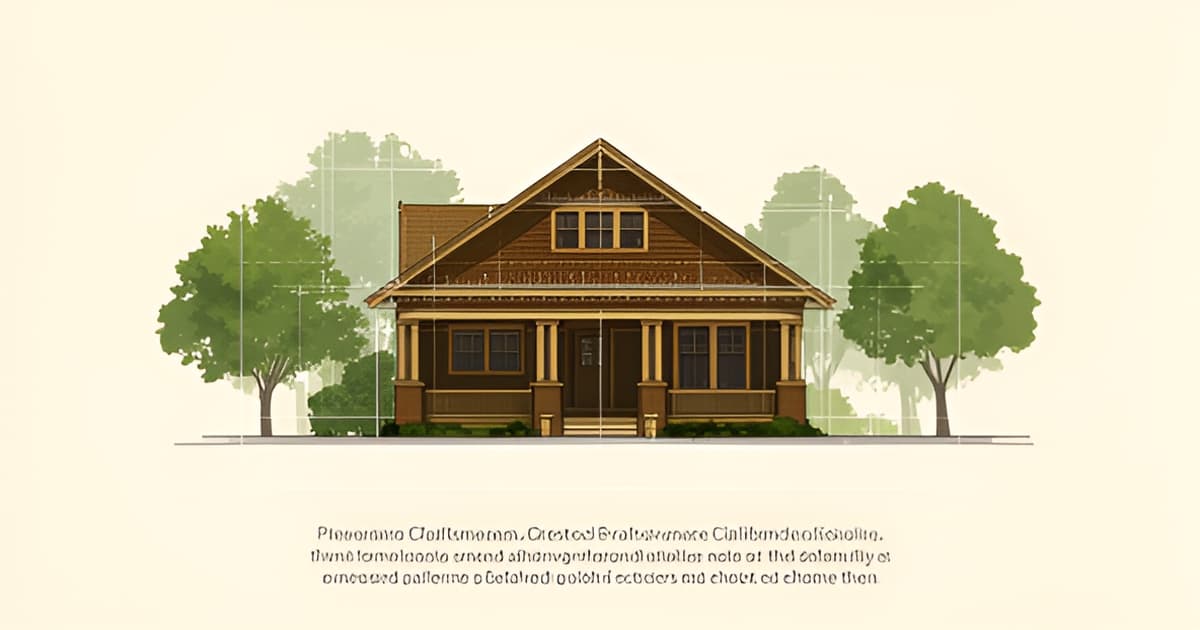
Historic District Constraints in Altadena
Key Facts
- Altadena's Historic Highlands district — the first-ever historic district in unincorporated L.A. County — covers 77 parcels effective July 9, 2026, per the Supervisor's office.
- More than 50% of affected owners supported the designation, which protects homes built between 1905 and 1959, the Pasadena Star-News reports.
- The district caps density at no less than 1 dwelling unit per acre and bars wholesale facade changes diverging from its architectural styles, per county reporting.
- District owners can receive tax breaks for restoration work, and the Mills Act offers property tax relief for maintained historic homes, according to LA County Planning.
- Altering or rebuilding a landmarked Altadena property requires a Certificate of Appropriateness under County code 22.124.140.B.4, per LA County Planning.
- Relocating a historic home can cost less than half the price of building new — one family's project totals about $550,000, per CD13.
- A historic-home relocation program has a 180-person waiting list and a roughly 9–12 month timeline after permits, NBC Los Angeles reports.
Altadena's First Historic District Changes the Remodeling Rules
For the first time in its history, unincorporated Los Angeles County has a historic district — and it's in Altadena. If you own one of the 77 parcels in the new Historic Highlands Historic District, the rules for changing your home just changed with it.
On June 9, 2026, the L.A. County Board of Supervisors finalized the designation through an ordinance amending Title 22 of the County Code, following recommendations from the Historical Landmarks and Records Commission and Regional Planning Commission. The district takes effect July 9, 2026, when it enters the County Register and affected owners receive formal notification, per coverage of the designation.
The district runs along New York Drive from about Lake Avenue to Hill Avenue, with a wider area south between Catalina Avenue and Mar Vista Avenue to Washington Boulevard — sitting just north of Pasadena's own Historic Highlands district, dedicated in 2008. Its primary homes were built between 1905 and 1959, spanning Craftsman, American Foursquare, Tudor Revival, Spanish Colonial Revival, and Ranch styles. More than 50% of affected owners supported the move, according to Supervisor Kathryn Barger's office.
What the designation actually restricts comes down to two things:
- Density is capped at no less than 1 dwelling unit per acre, consistent with the Altadena Community Plan's low-density designation.
- The designation "does not allow wholesale changes to the outside or facade of properties that diverge from the architectural style," as Altadena historian Michele Zack puts it.
- Altering or rebuilding a landmarked property requires a Certificate of Appropriateness under County code 22.124.140.B.4.
The timing makes all of this feel more urgent than a typical zoning change. The Eaton Fire destroyed thousands of Altadena structures in January 2025, and while the Historic Highlands district itself was not fire-impacted, the County is still determining fire impacts on historic resources elsewhere in the community, per LA County Planning. For owners of fire-damaged landmark or Mills Act properties, specific code sections govern amendment of designation, unsafe conditions, and contract cancellation.
The constraints are real, but so are the offsets. District property owners can receive tax breaks for restoration work, and the broader Mills Act program provides property tax relief to owners who restore and maintain historic homes. County guidelines are explicitly designed to protect defining architectural features "while allowing appropriate property improvements and continued community growth" — renovation, not demolition, is the compliant path.
That's the framing Altadena Home Remodeling brings to every project inside these boundaries: scope the work to respect the district's character, price it accurately, and design it once. If your home falls within the new district — or you're unsure whether it does — a free remodel-scoping consultation with a before/after concept render is the place to start, with no timeline or permit guarantees implied.
What the District Actually Restricts — and What It Doesn't
The good news for Historic Highlands homeowners: the district's rules are narrower than many owners fear. Density is capped at no less than one dwelling unit per acre, consistent with the Altadena Community Plan's low-density designation. Beyond that, the primary restriction concerns the outside of the house, not the inside.
Altadena historian Michele Zack puts it plainly: the designation "does not allow wholesale changes to the outside or facade of properties that diverge from the architectural style." In practice, that means a remodel can proceed — kitchens, bathrooms, systems, additions — so long as exterior changes remain consistent with the district's period character. The 77-parcel district encompasses homes built between 1905 and 1959 in styles including:
- Craftsman and American Foursquare
- Tudor Revival and English Cottage Revival
- Spanish Colonial Revival and Spanish Eclectic
- Neoclassical Revival and American Colonial Revival
- Minimal Traditional and Ranch
The County's own framing reinforces that renovation is the compliant path. According to official guidance, the design standards are "designed to protect defining architectural features while allowing appropriate property improvements and continued community growth." That is a preserve-and-improve framework, not a prohibition on work.
For owners planning a whole-home remodel or a gut renovation, the practical implications are straightforward. Interior work proceeds under standard County permitting for unincorporated Altadena. Exterior changes that alter defining features — facades, rooflines, primary materials — deserve early design review against the district's architectural character. And if a property is individually landmarked or holds a Mills Act contract, altering or rebuilding requires a Certificate of Appropriateness under Section 22.124.140.B.4 of the County Code, per LA County Planning.
There is also a financial upside worth noting. Property owners within the district can receive tax breaks for restoration work, and the County's Mills Act program provides property tax relief to owners who restore and maintain historic properties. For restoration-minded owners, the constraint and the incentive point in the same direction: renovate rather than replace.
That aligns with how we approach projects at Altadena Home Remodeling. A free remodel-scoping consultation — including a before/after concept render — helps owners see how a Craftsman, Tudor Revival, or Spanish Colonial Revival home can gain modern function while keeping the exterior character the district protects. Featured builder JMB Builders LLC (CSLB #1103479), an Altadena-based licensed general contractor, brings relevant experience in whole-home remodels and period-sensitive restoration work. No timeline or permit outcomes can be guaranteed, but understanding the constraints early is what keeps a historic-district remodel moving smoothly.
The Hidden Upside: Tax Breaks and the Mills Act
For Altadena homeowners inside the Historic Highlands district, the designation's constraints come with a financial silver lining: tax breaks for restoration work. According to county reporting, property owners within the district can receive tax incentives specifically tied to restoring their historic homes — turning what looks like a regulatory burden into a genuine offset for renovation costs.
The broader mechanism is the Mills Act Historical Property Contract Program. As LA County Planning describes it, the program "provides property tax relief to owners of historic properties who are willing to restore and maintain their properties." In practical terms, owners who commit to preservation-oriented stewardship can see meaningful reductions in their property tax obligations.
This reframes the renovation math entirely. Instead of viewing district rules as a penalty, restoration-minded owners can treat compliant work as an investment the County actively rewards. The guidelines are designed to "protect defining architectural features while allowing appropriate property improvements and continued community growth," according to county officials — meaning thoughtful remodels remain squarely on the table.
For owners considering a restoration-focused remodel, the financially smart path typically includes:
- Prioritizing exterior work that preserves defining architectural features, which satisfies design review and supports incentive eligibility
- Exploring the Mills Act contract program with LA County Planning to understand potential property tax relief before committing to a project scope
- Confirming whether a Certificate of Appropriateness is required for planned alterations, especially for landmarked or Mills Act properties
- Documenting original materials and period details — valuable for both review approval and restoration tax treatment
At Altadena Home Remodeling, we approach these projects with a preserve-first mindset: renovate rather than demolish, restore defining features rather than replace them. That philosophy aligns naturally with both the district's rules and its incentives. Our featured builder, JMB Builders LLC (CSLB #1103479), brings documented experience in whole-home remodels and period-sensitive restoration work throughout Altadena.
The takeaway for owners of the district's roughly 77 parcels — homes largely built between 1905 and 1959 in styles ranging from Craftsman to Spanish Colonial Revival — is that compliance and financial benefit can point in the same direction. A restoration-driven remodel satisfies review requirements, preserves neighborhood character, and may qualify for tax relief that offsets project costs.
Before scoping any work, verify your property's historic status and current incentive programs directly with LA County Planning, which continues to update resources for historic property owners affected by the Eaton Fire. Rules and program details can change, and no timeline or outcome is guaranteed — but for homeowners willing to restore rather than replace, the district's financial upside is real. If you'd like help scoping a restoration-minded remodel with a before/after concept render, request a free remodel-scoping consultation to see what's possible within your home's historic framework.
The Certificate of Appropriateness: Your First Permit Step
If your Altadena home carries historic status, your first permit conversation isn't about floor plans — it's about the Certificate of Appropriateness. Altering or rebuilding a landmarked property requires this approval under County code section 22.124.140.B.4, and it applies before exterior work moves forward.
For owners of Eaton Fire-damaged properties, LA County Planning has identified the specific code pathways that govern landmarks and Mills Act contract properties. These include provisions for amending or rescinding a designation (22.124.110), addressing unsafe or dangerous conditions (22.124.220), and cancelling an historical property contract (22.168.120.A.2). The County is still determining fire impacts on historic resources, so owners should confirm their property's status directly with Planning before scoping any rebuild.
What does the Certificate of Appropriateness actually review? The research doesn't detail the full application procedure, fees, or review timelines — so treat any general guidance with caution. What's clear is the underlying standard: for properties in the new Historic Highlands Historic District, the designation "does not allow wholesale changes to the outside or facade of properties that diverge from the architectural style," as Altadena historian Michele Zack explains. The County frames this as protection, not prohibition — guidelines are designed to protect defining architectural features while allowing appropriate improvements.
For fire-rebuild clients, one alternative deserves early attention: historic home relocation. A program led by architecture firm Omgivning moves historic homes slated for demolition onto fire-cleared Altadena lots, purchasing donor homes for a dollar and handling permitting for new foundations and renovations. Participant estimates put a relocation project around $550,000 — potentially less than half the cost of building new — with a roughly 9–12 month timeline after permits and inspections. A 180-person waiting list signals how competitive this path has become.
At Altadena Home Remodeling, we treat historic status as a first-step due-diligence item in every scoping consultation, alongside a before/after concept render. Our featured builder, JMB Builders LLC (CSLB #1103479), handles whole-home remodels and Eaton Fire rebuilds throughout unincorporated LA County — though no timeline or permit outcome can ever be guaranteed in a review process the County controls.
- Confirm whether your parcel is landmarked, under a Mills Act contract, or within the district boundary before design work begins.
- Flag exterior changes early — facade-altering work is where historic review has the most bite.
- Weigh relocation against new construction if your historic home was destroyed in the fire.
- Contact LA County Planning ([email protected]) for current guidance on fire-damaged historic properties.
The Certificate of Appropriateness adds a procedural layer, but it rewards owners who plan restoration-first rather than fighting the review after the fact.
How to Scope a Historic-Compliant Remodel in Altadena
Scoping a remodel inside Altadena's new historic framework is less about what you can't do and more about sequencing what you can. The Historic Highlands Historic District — covering 77 parcels of homes built largely between 1905 and 1959 — takes effect July 9, 2026, so the smartest move is confirming your property's status before you spend a dollar on design.
Start with due diligence. Check whether your parcel falls inside district boundaries along New York Drive between Lake and Hill Avenues, or in the wider area south toward Washington Boulevard, per the County's final designation action. LA County Planning is still determining fire impacts on historic resources, and you can reach the department directly at [email protected].
Next, build the Certificate of Appropriateness into your project sequence — not around it. Altering or rebuilding a landmarked property requires one under County code section 22.124.140.B.4, and the County has identified additional code pathways (22.124.110, 22.124.220, 22.168.120.A.2) for Eaton Fire-damaged landmark and Mills Act properties, per LA County Planning's historic preservation guidance. Designing first and seeking approval later is how projects stall.
When planning your scope, keep these priorities front of mind:
- Preserve character-defining exteriors — the district restricts wholesale facade changes that diverge from its architectural styles, which include Craftsman, Spanish Colonial Revival, Tudor Revival, and Ranch.
- Respect the density floor of one dwelling unit per acre when planning additions or second stories.
- Investigate incentives early: district owners can receive tax breaks for restoration work, and the Mills Act offers property tax relief for qualifying historic properties.
- Design improvements, not overhauls — County guidelines are written to protect defining architectural features while allowing appropriate improvements and community growth.
This is where a preserve-first, scope-it-once approach pays off. A renovation that works with the home's original character is the compliant path by definition — and it's usually the financially smarter one, since restoration work inside the district can qualify for tax relief. Altadena Home Remodeling's whole-home renovation guidance is built around this principle: renovate over demolish, and get the scope right the first time.
Because procedural details like review timelines, fees, and design guidelines aren't yet fully published, no one can promise you a permit schedule. What you can control is the quality of your initial scope. Book a free remodel-scoping consultation with Altadena Home Remodeling and receive a before/after concept render that shows how your addition or remodel can honor your home's period character — before you commit to plans, permits, or contractors.
Frequently Asked Questions
Can I still remodel my home if it's in Altadena's new Historic Highlands district?
When does Altadena's historic district take effect, and which homes does it cover?
Do I need a special permit to change the outside of my house in the district?
Are there any financial benefits to owning a home in a historic district?
My historic Altadena home was damaged in the Eaton Fire — can I rebuild, or should I consider relocating a historic home onto my lot?
Did Altadena homeowners actually want this historic district designation?
Your Historic Home's Next Chapter Starts With the Right Scope
Altadena's first historic district doesn't end remodeling in the Historic Highlands — it redirects it. For the owners of the 77 parcels between New York Drive and Washington Boulevard, the rules are now clear: density is capped, wholesale facade changes are off the table, and landmarked properties require a Certificate of Appropriateness before exterior work begins. But the incentives point the same direction as the constraints — restoration work can qualify for tax breaks, and the Mills Act offers property tax relief to owners who restore and maintain their historic homes. That's the real story here: for a Craftsman or Spanish Colonial Revival built between 1905 and 1959, the compliant path is usually the financially smarter one too. Your next steps are simple — confirm your property's status with LA County Planning ([email protected]) before spending on design, flag exterior changes early, and scope the project once, correctly, with preservation built in. If you'd like to see what a period-sensitive remodel could look like in your home, request a free remodel-scoping consultation with a before/after concept render — no timelines or permit outcomes guaranteed, just a clear-eyed starting point.