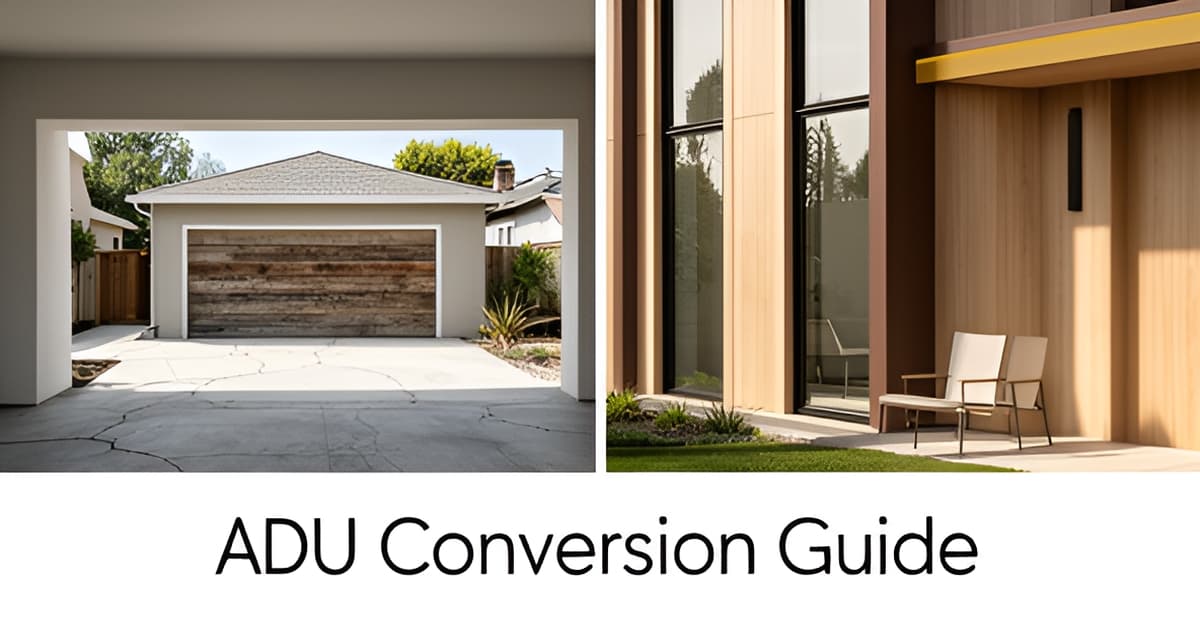
Garage Conversion to ADU in Los Angeles: Cost and Permit Guide
Key Facts
- A standard two-car garage-to-ADU conversion in LA costs $125,000–$190,000, per LA contractor estimates.
- Utility upgrades are the single biggest cost variable, with plumbing alone running $8,000–$25,000 according to statewide cost data.
- Choosing a JADU that shares the main home's systems saves $15,000–$35,000 or more versus a full ADU, statewide analysis shows.
- California law doesn't require replacing lost parking, and cities must approve compliant ADU applications within 60 days under AB 2221 and SB 897.
- Low ceilings requiring excavation or a roof raise can add $10,000–$30,000 to older-garage conversions, per cost research.
- Experts recommend an 8–12% contingency reserve — $12,000–$18,000 on a $150,000 project — per LA cost analysis.
- Typical LA conversions take 6–12 months total, with design and permitting alone consuming 8–14 weeks, contractors report.
Why Garage Conversions Are LA's Most Affordable ADU Path — and What They Really Cost
Ask three contractors what a garage-to-ADU conversion costs in Los Angeles and you'll get three different numbers — sometimes tens of thousands of dollars apart. Published estimates range from $80,000 on the low end to well over $200,000 for premium builds, and the confusion is enough to stall a project before it starts.
Here's the honest picture. Garage conversions remain the most affordable ADU path because the structure already exists: you skip the foundation, framing, and roofing expenses that make a new detached ADU in LA start around $150,000, with statewide new builds running $250,000–$500,000 or more, according to California ADU cost research. For a standard two-car conversion, most LA estimates cluster between $125,000 and $190,000, with simpler scopes dipping toward $100,000–$115,000 and high-end builds — structural upgrades, vaulted ceilings, separate meters — exceeding $200,000.
What drives that spread? Utility upgrades are the single biggest cost variable. A full ADU needs independent plumbing ($8,000–$25,000 statewide), an electrical subpanel with a possible 100A-to-200A panel increase, HVAC ($4,000–$12,000), and a kitchen and bathroom buildout. Choosing a junior ADU that shares the main home's systems can save $15,000–$35,000 or more, while a separate utility meter adds $2,000–$5,000.
Older garages also hide surprises that inflate budgets:
- Slab cracks or missing footings requiring reinforcement: +$5,000–$15,000
- Utility lines located far from the garage: +$5,000–$20,000
- Low ceilings needing excavation or a roof raise: +$10,000–$30,000
- Seismic retrofits, moisture barriers, and Title 24-compliant windows and insulation
Beyond construction, plan for permitting and city fees of roughly $4,000–$10,000 in Los Angeles, design and planning at 8–12% of the total budget, and — critically — a contingency reserve of 8–12%, as recommended in LA conversion cost analysis. On a $150,000 project, that's $12,000–$18,000 you should not spend on finishes.
One more trade-off worth naming: California law (AB 2221 and SB 897) does not require you to replace the parking lost to a conversion, but covered parking is a valuable commodity in LA, and losing it may modestly reduce resale value — partially offsetting the habitable square footage you gain.
For Altadena homeowners, the smartest first step is scoping before committing to a number. At Altadena Home Remodeling, our free remodel-scoping consultation includes a before/after concept render so you can see what your garage conversion actually looks like — and budget from a real plan, not a guess. Work is performed by JMB Builders LLC (CSLB #1103479), a licensed Altadena general contractor experienced in ADUs and whole-home remodels.
The Biggest Cost Driver: Utility Upgrades and the Full ADU vs. JADU Decision
The line between a $30,000 garage remodel and a $150,000 ADU isn't drywall or flooring — it's what happens when the city considers your garage a home. Once a structure becomes a dwelling unit, it needs to live and breathe like one: independent plumbing, its own electrical capacity, heat, and hot water. Industry cost analysis identifies utility connections as the single biggest factor separating a garage-to-ADU conversion from a standard garage remodel, because a full ADU requires its own subpanel, water heater, and HVAC, while a simpler conversion can lean on the main house (Custom Home's California cost breakdown).
The electrical work alone can reshape a budget. LA contractors note that many older homes need a panel upgrade from 100 amps to 200 amps before the ADU's subpanel can even be installed, and if you want the unit billed separately from the main house, a dedicated meter adds another $2,000–$5,000 (Ground Up Builders' LA cost guide). Where the utility connections sit relative to the garage matters too — distance from the existing sewer lateral and gas lines can swing costs by $5,000–$20,000.
Here's where the decision tree forks. A Junior ADU (JADU) — capped at 500 sq ft in Los Angeles — can share the main home's electrical, plumbing, and water heating systems. That single choice saves $15,000–$35,000 or more compared to building a fully independent unit, and statewide estimates put the total JADU savings at $20,000–$50,000+ (statewide component cost data). The trade-off is real, though: shared systems mean shared capacity, and a full ADU appraises as a separate housing unit while a JADU does not (Level Up Contractor's comparison).
If you go the full-ADU route, here's how the independent-system costs stack up:
- Plumbing: $8,000–$25,000, driven largely by distance to the sewer connection
- Electrical (subpanel, wiring): $6,000–$18,000, plus $2,000–$5,000 for a separate meter
- HVAC: $4,000–$12,000, with a ductless mini-split landing at the lower end ($4,000–$8,000 installed)
- Kitchen buildout: $10,000–$30,000, required for a full ADU but optional-scale for a JADU
- Gas line extension: $1,500–$5,000 if you're not going all-electric
For Altadena homeowners weighing this decision, the numbers only tell half the story — panel capacity, sewer proximity, and lot layout vary house by house, especially on older Craftsman-era properties. Altadena Home Remodeling's approach is to scope the utility picture before anyone commits to a full ADU or a shared-system JADU, since that assessment is what turns a vague $125,000–$190,000 range into a real number for your property.
Permits, Parking, and Code Requirements: What LA Homeowners Must Know
Good news first: California law actually makes this easier than most homeowners expect. Under state legislation, cities cannot require you to replace the parking spaces lost when your garage becomes living space, and Los Angeles must approve compliant ADU applications within a statutory 60-day window.
The parking question is the one that surprises people most. Under AB 2221 and SB 897, garage conversions are entitled to streamlined approval, and in most cases the city cannot demand replacement parking — a rule that applies statewide to both attached and detached garages, though HOA rules and specific zoning conditions may still apply. That said, one trade-off deserves honest consideration: in Los Angeles, where covered parking is a valuable commodity, losing a two-car garage may reduce resale value and deter some future buyers.
Permits themselves are non-negotiable. Any conversion creating livable space must be permitted through the Los Angeles Department of Building and Safety (LADBS), which adopted ADU Ordinance 186,481 and maintains a Standard Plan Program with pre-approved plans that shorten plan-check review. Skipping the permit is a costly gamble: unpermitted conversions create problems at sale or refinancing, and the city can require the work be reversed. LADBS also references a streamlined legalization path under AB 2533 for previously unpermitted units, but starting permitted is far cheaper than legalizing after the fact.
Structural realities drive much of the permit scope, because most LA garages were never built for habitation. Common requirements include:
- Slab reinforcement or moisture barriers where older slabs crack or lack proper footings
- Seismic retrofits — anchor bolts, shear panels, and hold-downs
- Title 24 energy compliance, required for all new ADUs and most conversions, including compliant windows and insulation
- Utility upgrades such as an electrical panel increase (often 100A to 200A) and independent plumbing
One planning advantage: if you keep the existing garage footprint, the conversion may be exempt from standard setback requirements. Budget $4,000–$10,000 for LA permitting and city fees, including plan check and building, electrical, plumbing, and mechanical permits — school fees are sometimes exempt for conversions, depending on the case. Plan-check corrections over mismatched setbacks, missing utility details, or inadequate foundation drawings can delay applications by weeks or months, so complete drawings matter.
For Altadena homeowners, note that unincorporated LA County properties follow the county's permit process rather than LADBS, so confirm jurisdiction early. At Altadena Home Remodeling, we advise homeowners to engage a builder before permit submission — value engineering on wall openings, utility routing, and finish selections routinely saves tens of thousands, and no one can guarantee timelines or approvals, but thorough preparation keeps the statutory 60-day clock working in your favor.
Planning a garage conversion on your Altadena property? Request a free remodel-scoping consultation with a before/after concept render, and work with our featured licensed builder, JMB Builders LLC (CSLB #1103479), to scope it right the first time.
Budget Smart: Timeline Expectations, Cost Escalators, and Value Engineering
Even the most carefully budgeted garage conversion can blow past its estimate if you don't plan for the variables that quietly add five figures. Knowing where costs balloon — and where they don't have to — is the difference between a smooth project and a painful one.
Set realistic timeline expectations first. For a typical LA conversion, expect a total timeline of 6–12 months, with design and permitting taking 8–14 weeks and construction running 4–5 months, according to LA contractor estimates. Larger or more complex projects can stretch further, with some sources reporting 9–12 months from start to finish. Build that reality into your rental or family plans before demolition begins.
Then pressure-test your budget against the three most common cost escalators:
- Slab or foundation work: older garages often lack proper footings or have cracked slabs, adding $5,000–$15,000 for reinforcement and moisture barriers.
- Utility distance: the farther plumbing, electrical, and gas lines must travel from the main house, the more you pay — typically an extra $5,000–$20,000.
- Low ceilings: raising the roof or excavating the slab to meet habitable-space standards can add $10,000–$30,000.
Utility upgrades deserve special attention, since they're the single biggest factor separating a true ADU from a simple garage remodel. Deciding early between a full ADU with independent systems or a junior ADU sharing the main home's plumbing and electrical can save $15,000–$35,000 or more, per statewide cost analysis.
Contractors also recommend a handful of value-engineering tactics that consistently trim budgets without cutting quality. Preserve existing wall openings rather than reframing, bundle utility upgrades with other rough-in trades to avoid redundant mobilization, and choose mid-range durable finishes — especially for rental units — instead of premium materials that push costs from $200 to $400+ per square foot. Engaging a builder early, before permit submission, lets you catch expensive design decisions while they're still on paper rather than in framing.
One trade-off deserves honest weight in your decision: resale value. California law under AB 2221 and SB 897 does not require you to replace the parking your conversion eliminates, but losing covered parking may reduce your home's value in a market where it's a genuinely valuable commodity. In most cases the added habitable square footage more than offsets that loss, but it's worth discussing with your design team — particularly in Altadena, where many homes serve multigenerational households with multiple vehicles.
At Altadena Home Remodeling, we help homeowners scope these trade-offs upfront with a free remodel-scoping consultation, including a before/after concept render so you can see the finished space before committing to a budget. No timeline or permit outcomes can be guaranteed — but a clear-eyed plan beats a hopeful one every time.
Your Next Step: Scoping Your Altadena Garage Conversion the Right Way
A garage conversion in Altadena can add habitable square footage at a fraction of new-construction cost, but the difference between a $125,000 build and a $200,000+ one often comes down to decisions made before anyone files a permit. Scoping the project properly is the step that protects your budget.
One Altadena-specific point matters here: unlike most of Los Angeles City, Altadena is an unincorporated LA County community, so permits run through LA County channels rather than LADBS. The state rules are the same — under California law, homeowners generally aren't required to replace parking lost to a conversion, and compliant ADU applications must be approved within 60 days — but the permitting office, plan-check process, and fee schedule differ, so it pays to work with a team that knows the county's process.
Contractors consistently recommend bringing a builder in before permit submission for value engineering. Early engagement lets you make cost-shaping decisions while plans are still on paper rather than mid-construction, when changes are expensive.
- Preserve existing wall openings where possible instead of reframing
- Bundle utility upgrades — panel, plumbing, HVAC — with rough-in trades
- Assess the electrical panel early; a 100A-to-200A upgrade is a common requirement
- Decide upfront between a full ADU and a JADU sharing the main home's systems, which can save $15,000–$35,000 or more
- Choose mid-range durable finishes if the unit will be a rental
The scope conversation should also cover structural realities. Many older garages were never built for habitation — slab cracks, missing footings, and low ceilings can add $10,000–$30,000 if excavation or a roof raise is needed, according to statewide cost research. A professional assessment surfaces these issues before they become change orders, and it should also address the resale trade-off: while conversions typically add more value than they cost, losing covered parking in LA can partially offset that gain.
This is where a proper scoping assessment earns its keep. At Altadena Home Remodeling, we recommend starting with a free remodel-scoping consultation: you walk through your goals, budget range, and the garage's condition, and you receive a before/after concept render so you can see the converted space before committing to design fees. The consultation is informational — no timeline or permit guarantees are made, because county plan-check outcomes and construction schedules vary.
For homeowners who want a licensed builder involved from day one, we feature JMB Builders LLC (CSLB #1103479), an Altadena-based general contractor experienced in custom ADUs and whole-home remodels, including Eaton Fire rebuilds; its work is documented at jmb-builders.com. This is a disclosed paid placement, and we encourage you to verify licensing and references independently.
Whether your garage becomes a rental, a home office, or space for family, scope it, price it, and do it once, do it right. A 90-minute scoping conversation now can save tens of thousands later — and it costs nothing to start.
Frequently Asked Questions
How much does a garage conversion to an ADU actually cost in Los Angeles?
Do I have to replace the parking I lose when converting my garage?
What's the difference between a full ADU and a JADU, and which is cheaper?
Do I need a permit to convert my garage into living space in LA?
What hidden costs should I budget for when converting an older garage?
How long does a garage-to-ADU conversion take from start to finish?
From Parking Space to Living Space: Your Garage's Second Act Starts With a Real Number
The math is clear: a garage conversion remains LA's most affordable ADU path, with most two-car conversions landing between $125,000 and $190,000 — but the spread between a $100,000 build and a $200,000+ one comes down to decisions made before the first permit is filed. Scope your utilities first, since electrical panel upgrades and plumbing distance drive more cost variance than any finish selection, and decide early whether a full ADU or a shared-system JADU fits your goals — that choice alone can save $15,000–$35,000. Remember that Altadena permits run through LA County, not LADBS, so confirm jurisdiction before drawing anything. Budget an 8–12% contingency, weigh the parking trade-off honestly, and engage a builder while plans are still on paper. Ready to turn your garage into a real number instead of a guess? Request Altadena Home Remodeling's free remodel-scoping consultation with a before/after concept render — scope it, price it, and do it once, do it right.