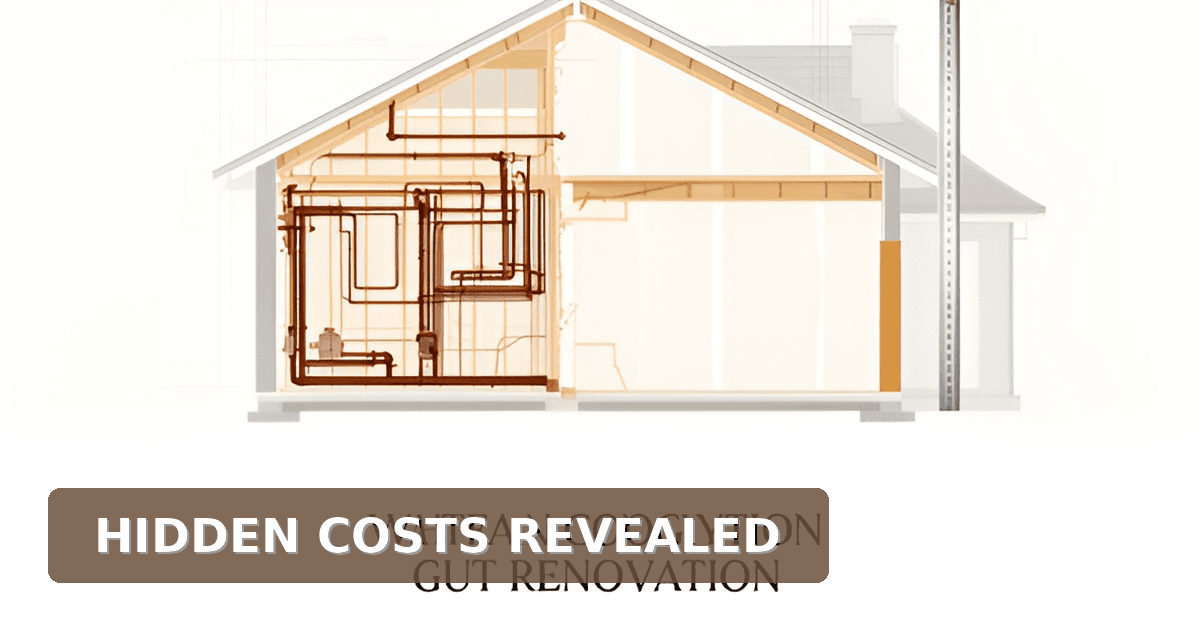
Full Gut Renovation Cost: Line Items Most Estimates Miss
Key Facts
- Gut renovation estimates run $100–$250 per square foot, yet the priciest line items hide behind intact walls until demo day, per R3 Homes' guide.
- One documented project ballooned from an $80,000 budget to $115,000 — a 44% overrun — after walls revealed 1970s wiring and a cracked beam, Build with Inspiration reports.
- LA guidance recommends 25–35% contingency for pre-1940 historic homes — where most Altadena Craftsmans land — not the standard 10%, per Keystone Connect.
- Knob-and-tube wiring common in Craftsman-era homes costs $15,000–$40,000 to replace once walls open, LA cost research shows.
- Spending $2,000–$5,000 on pre-construction investigation before a $150,000 renovation is one of the highest-ROI decisions a homeowner can make, LA-specific guidance notes.
- Under standard fixed-price contracts, hidden mold, asbestos, and structural damage are the homeowner's financial responsibility, not the contractor's, Keystone Connect warns.
- A gut remodel costs 20–50% less than teardown and rebuild — but only if foundation and systems test out first, NerdWallet finds.
Why Gut Renovation Estimates Fall Short in Older Altadena Homes
Ask ten contractors for a gut renovation estimate and you'll get numbers that all look reasonable — and all underestimate what your house will actually cost. Baseline gut-to-studs work runs $100–$250 per square foot, with typical whole-house remodels landing between $100,000 and $300,000, according to NerdWallet's renovation cost analysis.
The problem isn't the baseline. It's everything the baseline can't see. The most expensive line items in any gut renovation — hidden structural damage, outdated systems, and hazardous material abatement — are unknowable until walls come down. Practitioners are blunt about this: some factors are inherently not knowable until full demolition is complete, including prior inferior workmanship, code violations, hidden piping, and damaged structure, per an architect-authored gut renovation guide.
Altadena's housing stock makes this worse, not better. Much of the town's signature Craftsman and pre-1980 inventory predates modern electrical, plumbing, and seismic codes — and predates the 1978 lead paint and asbestos era. In these homes, opening walls routinely reveals knob-and-tube wiring ($15,000–$40,000 to replace), failed galvanized or cast iron plumbing ($3,000–$25,000), or dry rot and termite damage in original framing ($1,500–$20,000). None of it shows up in a per-square-foot estimate.
That's why we treat per-square-foot figures as sanity checks, not budgets. Averages blend a near-zero-cost bedroom with a kitchen that costs more per square foot than anything else in the house, as cost research from RealCostIQ points out. They capture finish materials — not plumbing, electrical, structural work, or discovery costs.
The contingency math tells the real story. The standard advice of 10% reserve simply doesn't hold for older Los Angeles-area homes. LA-specific guidance recommends:
- 18–30% contingency for pre-1960 homes
- 25–35% for historic, pre-1940 homes — the tier where most Craftsman-era Altadena properties land
- An additional 5–10% for hillside properties
Under standard fixed-price contracts, hidden conditions — mold, asbestos, structural damage — fall to the homeowner financially, not the contractor. That's the contractual reality, and it's why we built Altadena Home Remodeling's scoping process around pre-construction investigation: asbestos surveys, sewer scopes, and structural inspections that together cost $2,000–$5,000, which LA-focused analysis calls one of the highest-ROI decisions a homeowner can make before a six-figure renovation.
If you're weighing a gut renovation on an older Altadena home, start with a free remodel-scoping consultation — including a before/after concept render — so the budget reflects what your house actually holds, not what an average house costs. Our featured builder, JMB Builders LLC (CSLB #1103479), handles whole-home remodels and Eaton Fire rebuilds across the area. Scope it honestly, price it once, and do it right.
The Hidden-Cost Taxonomy: Six Line Items Estimates Routinely Skip
The most expensive line items in a gut renovation are the ones no estimator can see until the walls come down. Practitioners are blunt about this: as one architect-authored guide puts it, some costs are inherently not knowable until full demolition is complete — and under standard fixed-price contracts, those discoveries land on the homeowner, not the contractor.
1. Asbestos and lead abatement — legally mandatory, not optional. In California, disturbing asbestos-containing materials in a pre-1980 home without testing and a licensed abatement contractor is illegal. Pre-1978 homes additionally require EPA Lead-Safe Certified contractors under the RRP Rule, which carries a 10–20% pricing premium over standard renovation work. LA-specific figures show how fast this compounds: popcorn ceiling removal alone runs $3,500–$8,000, floor tile mastic $2,000–$5,000, and a full home asbestos survey $500–$1,500.
2. Structural surprises. Termites, dry rot, and undersized shear walls hide behind intact plaster. LA-focused cost research puts termite damage at $2,000–$20,000, missing shear walls at $5,000–$30,000, and a horizontal foundation crack at $15,000–$80,000 or more.
3. Systems upgrades. Knob-and-tube wiring — common in Altadena's Craftsman-era housing — costs $15,000–$40,000 to rewire. Galvanized pipe replacement runs $8,000–$25,000, and a failed cast iron drain line adds $3,000–$15,000.
4. Permit-triggered upgrades. Pulling a permit for one scope item can legally require seismic retrofitting, Title 24 energy compliance across the entire envelope, and updated smoke/CO detection — a real consideration for older homes in LA County's unincorporated permit context and seismic zone.
5. Non-construction items. These are the quietest budget killers:
- Temporary housing: $2,000–$10,000, since gutted homes are unsafe to occupy
- Permits and inspections: $500–$2,500
- Engineering fees for any structural change
- Dumpster rentals and debris removal
The case studies are sobering. One documented project started with an $80,000 budget and finished at $115,000 after walls revealed 1970s wiring, a cracked beam, and moisture-damaged subfloor. That's a 44% overrun — precisely why LA-specific guidance recommends holding 25–35% contingency for pre-1940 historic homes, not the standard 10%.
This is why Altadena Home Remodeling treats pre-construction investigation — asbestos surveys, sewer scopes, structural inspections — as the highest-ROI spend in any renovation, typically $2,000–$5,000 against a six-figure project. Discovery is the second-biggest cost driver after labor, and it belongs in your budget before the first wall opens.
Size Your Contingency by Home Age — Not the Standard 10%
The most expensive words in renovation budgeting are "just budget 10%." That generic rule of thumb, repeated across contractor blogs and renovation guides, quietly assumes a house built after modern codes — and most of Altadena's housing stock was not.
LA-specific guidance puts it bluntly: "The standard contractor advice is 'budget 10% contingency.' For Los Angeles homes, that's often insufficient" (Keystone Connect's contingency analysis). The reason is age. What's hiding inside walls — knob-and-tube wiring, failed cast iron drains, non-code framing — is unknowable until demolition, and older homes hide far more of it (practitioners report). One mid-project abatement or boiler replacement alone can run $7,500–$20,000.
Size your contingency to your home's age, not a national average:
- 1980s–1990s homes: 12–18%
- 1960s–1970s homes: 15–22%
- Pre-1960 homes: 18–30%
- Historic, pre-1940 homes: 25–35%
- Hillside lots: add another 5–10% on top
For Altadena, this matters more than almost anywhere in LA County. Much of the community's Craftsman-era and pre-1940 stock falls into that top tier, and hillside parcels are common. A $250,000 gut renovation on a 1920s bungalow with a slope may warrant $75,000+ in reserve — nearly triple the "standard" advice.
How you hold that money matters as much as how much. Contingency is your reserve, held by you — not a line in the contractor's bid. Keep it in a separate account, untouched by day-to-day project spending, so it's still there in month six when the walls come open.
Release it only through written change orders tied to documented hidden conditions — photos, inspection notes, test results. Under standard fixed-price contracts, mold, asbestos, and structural damage are contractually the homeowner's financial responsibility, so papering every draw protects you. Design changes and upgrades don't qualify; those need separate change orders and shouldn't quietly drain your discovery reserve.
The worst outcome is running out of funds mid-project — a half-finished renovation is typically worse than no renovation at all. At Altadena Home Remodeling, we'd rather see a 30% contingency go unspent than a 10% buffer fail a pre-1940 home. Scope it honestly, hold the reserve yourself, and spend it only on what the walls actually reveal.
Pre-Construction Investigation: The Highest-ROI $2,000–$5,000 You'll Spend
Before a single wall comes down, spend a fraction of your budget finding out what's actually behind them. Spending $2,000–$5,000 on pre-construction investigation before a $150,000-plus renovation is, according to LA-specific renovation guidance, one of the highest-ROI decisions a homeowner can make.
The math is simple. Investigation costs roughly 1–3% of a major gut renovation, yet the problems it surfaces — knob-and-tube wiring, failed cast iron drains, hidden asbestos — routinely add tens of thousands of dollars when discovered mid-demo. One documented project saw an $80,000 budget climb to $115,000 after opening walls revealed 1970s wiring, a cracked beam, and a moisture-damaged subfloor (Build with Inspiration).
The itemized testing menu looks like this:
- Asbestos survey: $500–$1,500 — legally required in California before disturbing materials in a pre-1980 home
- Lead paint testing: $300–$800 (surface samples run $25–$50 each) for pre-1978 homes under the EPA RRP Rule
- Sewer scope: $150–$400, catching root intrusion or collapsed lines that cost $4,000–$20,000 to fix
- Structural inspection: $500–$1,500, flagging undersized shear walls ($5,000–$30,000) or foundation cracks ($15,000–$80,000+)
- Electrical inspection: $200–$500, identifying panel upgrades or full rewires ($8,000–$20,000)
Why does this matter so much for budgeting? Because under standard fixed-price contracts, hidden conditions like mold, asbestos, and structural damage are the homeowner's financial responsibility, not the contractor's. Every finding from an investigation converts an unknown into a priced line item you can negotiate and plan for before signing anything.
This is also where the renovate-over-demolish decision gets made honestly. A gut remodel can run 20–50% less than tearing down and rebuilding, per NerdWallet — but only if the foundation, structure, and major systems test out. Investigation tells you which path your house actually supports, rather than which path you're hoping for.
For Altadena's Craftsman-era housing stock, this step carries extra weight. Homes built before 1940 typically warrant 25–35% contingency per LA guidance, and a testing report lets you size that reserve to evidence instead of guesswork. At Altadena Home Remodeling, we treat scoping as the first phase of the project, not an afterthought — and a free remodel-scoping consultation with a before/after concept render is the natural starting point. JMB Builders LLC (CSLB #1103479), our featured licensed contractor, approaches whole-home gut renovations the same way: scope it, price it, and do it once, with the house's real condition on the table from day one.
How to Scope Your Gut Renovation So You Budget Once, and Right
Every hidden-cost category in this article shares one trait: it's cheaper to find on paper than inside an opened wall. The homeowners who budget once are the ones who force discovery assumptions into writing before a single permit is pulled.
Start with pre-construction investigation. Spending $2,000–$5,000 on testing before a $150,000 renovation is, per LA-specific contingency guidance, one of the highest-ROI decisions a homeowner can make. That means an asbestos survey ($500–$1,500), lead paint testing ($300–$800), a sewer scope ($150–$400), and a structural inspection ($500–$1,500) — all before bids go out.
Then make every bid address what testing found. Ask each contractor to state, in writing, what the estimate assumes about subfloor condition, wiring, and drain lines. As one cost guide puts it, get the subfloor condition into the quote in writing rather than as an assumption. Vague assumptions become your bill later, because standard hidden-conditions clauses make mold, asbestos, and structural damage the homeowner's financial responsibility.
Your written scope should cover at minimum:
- Documented subfloor and framing conditions, with unit pricing for remediation beyond stated assumptions
- Abatement scope — California requires licensed asbestos contractors for ACM disturbance, and pre-1978 homes need Lead-Safe Certified crews
- Permit-triggered upgrades: seismic retrofitting, T-24 energy compliance, smoke/CO detectors
- A contingency sized to your home's age, not a generic 10% — 25–35% for pre-1940 homes like most Altadena Craftsmans
On design, hold the line where it counts most. Keeping the sink, range, and refrigerator in place is the single biggest cost control available in a gut renovation — moving a drain or gas line pushes the project into a different budget tier entirely. Preserve-first isn't just a philosophy for Craftsman-era homes; it's economics.
Finally, keep contingency as your own reserve. Hold it in a separate account and release funds only for documented hidden conditions via written change orders — never as a slush fund for design changes mid-project.
Altadena Home Remodeling exists to surface these categories before demo day, not after. A free remodel-scoping consultation with a before/after concept render maps your home's likely hidden-cost categories — abatement, structural, systems, permit-triggered upgrades — against its actual age and construction, so your first budget can be your real one. Scope it, price it, do it once, do it right.
Frequently Asked Questions
How much does a full gut renovation actually cost?
Why do gut renovation estimates always seem to go over budget?
How much contingency should I budget for renovating an older Altadena home?
Is pre-construction testing like asbestos surveys and sewer scopes really worth the money?
Do I have to pay for hidden problems like asbestos or structural damage, or does the contractor?
Should I renovate my older home or tear it down and rebuild?
Budget for What Your Walls Are Hiding, Not What an Average House Costs
The numbers in this article tell one consistent story: a gut renovation budget built on per-square-foot averages will fail the moment your walls reveal what's actually inside them. For Altadena's Craftsman-era and pre-1980 homes, that means sizing contingency by your home's age — 25–35% for most pre-1940 properties — and spending $2,000–$5,000 on pre-construction investigation before bids go out, which LA-specific guidance calls one of the highest-ROI decisions a homeowner can make. Get subfloor, wiring, and drain-line assumptions in writing. Hold your contingency yourself, in a separate account, and release it only against documented hidden conditions. And keep the sink, range, and refrigerator where they are — preserve-first isn't just philosophy for a Craftsman bungalow; it's the single biggest cost control available. This is exactly how Altadena Home Remodeling approaches scoping: investigation first, honest budgets second, demo last. If you're weighing a gut renovation on an older Altadena home, start with a free remodel-scoping consultation — including a before/after concept render — and let JMB Builders LLC (CSLB #1103479) price your house as it actually is. Scope it honestly, price it once, and do it right.