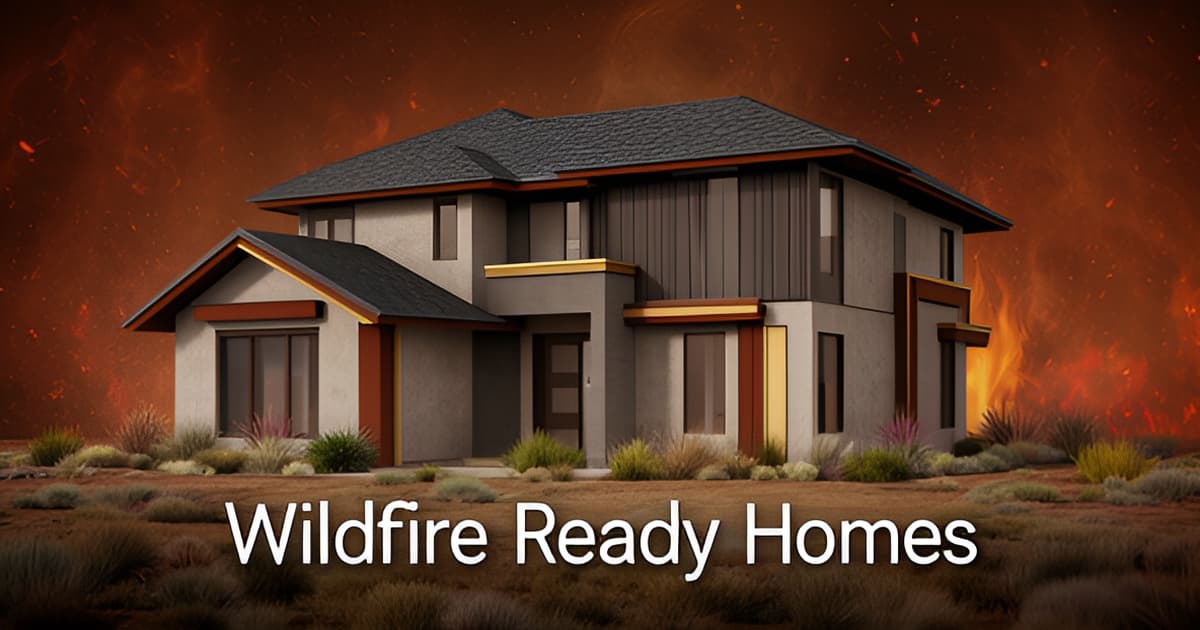
Fire-Resistant Home Building in Altadena: WUI Code Requirements
Key Facts
- Homes built to California's wildfire code are 40% more likely to survive a wildfire, reporting shows.
- An estimated 60 to 90 percent of home ignitions start with wind-blown embers entering vents and gutters, per CAL FIRE.
- Building to wildfire-resistant codes adds only a few thousand dollars, with negligible cost differences versus typical construction.
- Premium features like metal roofing can add up to 13% to construction costs, but remain optional upgrades.
- More than 7,800 burned Altadena buildings fall outside state hazard zones, making code compliance voluntary for many rebuilders.
- FEMA analysis projects California's wildfire codes could save $24 billion in single-family home damages over 75 years, according to FEMA analysis.
- Updated hazard maps add 1.4 million acres statewide, pulling 500+ Eaton Fire footprint homes under the code, with roughly 1,000 more in 2026.
The WUI Code Gap: Why Your Altadena Rebuild May Not Require Fire-Resistant Materials (And Why You Should Build Them Anyway)
Here is the paradox facing thousands of Eaton Fire survivors: the state's wildfire building code may not actually apply to your rebuild. California's Chapter 7A standards only bind properties inside state-designated hazard zones, yet thousands of burned Altadena structures fall outside those zones — more than 7,800 buildings, by one count.
That gap surprised even county officials. LA County Fire deputy chief Albert Yanagisawa expected the very-high severity zones to "reach deep, deep down into Altadena, and they haven't." The maps calculate hazard from wildland fire spread but don't account for house-to-house ignition — the very mechanism that leveled entire Altadena blocks.
The zones are expanding, though. California's updated hazard maps add 1.4 million acres statewide, pulling 500+ Eaton Fire footprint homes under the code once LA County adopts the maps, and roughly 1,000 more properties come under the code beginning 2026 as "high" hazard zones take effect. County regional planning director Amy Bodek puts the local position plainly: "Even if they're not going to have to comply, we're going to be strongly encouraging it for future resiliency."
For homeowners already stretched thin, that raises a real tension. Altadena homeowner Patrick Fong voices what many feel: "With fireproof construction, how much more is that going to be and how much can we really afford? Because we're already maxing out our policy." Insurance may cover code-upgrade costs, but only if the policy specifies it — and not all do.
The cost anxiety, however, is largely misplaced. Research from IBHS and Headwaters Economics finds the added cost of building to wildfire-resistant codes is negligible — typically a few thousand dollars — because compliant materials are ordinary market products: asphalt roofing, fiber-cement siding, tempered dual-pane glazing. Only premium upgrades like metal roofing push costs up, and then only to about 13%.
The payoff is hard to argue with:
- Homes built to California's wildfire code are 40% more likely to survive a wildfire.
- FEMA analysis projects the codes could save $24 billion in single-family home damages over 75 years.
- 60–90% of home ignitions come from embers entering through vents, gutters, and small openings — exactly what the code's ten regulated components address.
Headwaters researcher Kimiko Barrett's warning applies to every Altadena lot, mapped or not: "History repeats itself. This will not be the only time that L.A. experiences a catastrophic wildfire." Building to the code now means doing the work once, before the map — or the next fire — makes the decision for you.
At Altadena Home Remodeling, we help Eaton Fire rebuilders scope exactly this decision: which hardening measures fit your lot, your budget, and LA County's unincorporated permit process. A free remodel-scoping consultation, with a before/after concept render, lets you price the fire-resilient version of your rebuild before you commit to a plan.
What Ignition-Resistant Construction Actually Requires: The 10 Components of CWUI Section 504
Why does a wildfire code care so much about your gutters? Because an estimated 60 to 90 percent of home ignitions start with embers — small, wind-blown burning fragments that slip through vents, lodge in gutter debris, and find any weak point in a home's envelope. Section 504 of the California Wildland-Urban-Interface Code is written almost entirely around defeating that threat.
The code regulates ten specific building components, each with its own construction standard. For Altadena homeowners planning a rebuild or major renovation, this list effectively defines the scope of ignition-resistant construction:
- Roofing and gutters — the most common ember entry points, where debris ignition starts
- Eaves, vents, and underfloor enclosures — the openings embers exploit to reach attics and crawl spaces
- Exterior walls, glazing, and exterior doors — surfaces exposed to radiant heat in dense neighborhoods
- Decks, projections, and accessory structures — combustible elements that often hasten house-to-house spread
That last point matters especially in Altadena, where radiant heat from one burning home can ignite the next. The code also treats vegetation management as a condition of final permit approval, meaning defensible space isn't optional paperwork — it's part of closing out your permit.
Verification is straightforward if you know where to look. The State Fire Marshal's Building Materials Listing Program maintains an official WUI Approved Products directory covering decking, exterior windows, siding and sheathings, doors, and under-eave products. Any product your contractor specifies should carry a listing in one of those categories.
The good news for budget-wary homeowners: these requirements don't demand exotic materials. Research from IBHS and Headwaters Economics found "negligible cost differences" between typical and wildfire-resistant new construction, with compliance adding only a few thousand dollars on average. Asphalt shingle roofs and fiber cement siding — both fully code-compliant — are among the most common, affordable products on the market. Premium upgrades like metal roofing can push costs up to 13%, but that's a choice, not a requirement.
At Altadena Home Remodeling, we walk homeowners through each Section 504 component during the scoping process, whether the rebuild falls inside a mandatory hazard zone or not. LA County is strongly encouraging voluntary compliance even where it isn't required — and given that homes built to the wildfire code are 40% more likely to survive, hardening a rebuild makes sense regardless of what the maps say. If you're weighing these choices for your own project, a free remodel-scoping consultation with a before/after concept render is a practical first step; our featured builder, JMB Builders LLC (CSLB #1103479), brings documented Eaton Fire rebuild experience to the table.
The Real Cost of Building to Wildfire Code: A Few Thousand Dollars, Not a Fortune
"How much more is fireproof construction going to cost — and how much can we really afford?" That question, voiced by Altadena homeowner Patrick Fong after the Eaton Fire, captures the budget anxiety nearly every rebuilding family carries. The reassuring answer from the research: far less than most people fear.
A joint study by IBHS and Headwaters Economics found "negligible cost differences" between typical new construction and homes built to wildfire-resistant codes — typically a few thousand dollars on a whole-home build. Dr. Steve Quarles, IBHS's Chief Scientist for Wildfire and Durability, put it plainly: "Our study found little difference in the cost of a new home constructed to wildfire-resistant building codes, as compared to a typical home."
The reason is that compliant materials aren't exotic. Headwaters researcher Kimiko Barrett notes that fire-resistant products "are often materials commonly used on the market, widely available... Things like asphalt roofs. Things like Hardie plank fiber cement siding." Class-A asphalt shingles and fiber cement siding — already standard choices for Altadena's Craftsman-era homes — meet code requirements without a premium price tag.
Where costs do climb is with premium upgrades. Reporting on the Eaton Fire rebuild found that features like metal roofing can add up to 13% to overall construction cost. That's a real number worth discussing with your contractor — but it's an optional upgrade, not a code requirement.
Weigh those figures against what the modest investment buys:
- Homes built to California's wildfire code are 40% more likely to survive a wildfire.
- FEMA analysis projects California's codes could save $24 billion in single-family residence damages over 75 years.
- Insurance may cover code-upgrade costs if your policy specifies it — though not all policies do, so check before you rebuild.
- LA County is exploring grants, with Supervisor Kathryn Barger committed to "looking at grant opportunities... to offset the cost" of hardening.
For Altadena homeowners navigating LA County's unincorporated permit process, the math reframes the decision entirely. A few thousand dollars for a dramatically better survival outlook — and potentially grant or insurance offsets — makes code-level hardening less of a burden and more of a value decision, even where the state doesn't mandate it.
That's the same lens Altadena Home Remodeling brings to every remodel and rebuild conversation: scope it, price it, and do it once, do it right. Whether you're restoring a fire-damaged Craftsman or planning a full rebuild, a clear-eyed cost breakdown — including which fire-resistant upgrades are worth the premium and which aren't — is the first step.
ctaText: Planning a whole-home remodel or Eaton Fire rebuild? Get a free remodel-scoping consultation with a before/after concept render — we'll map your WUI code requirements, price your options, and help you do it once, do it right.
socialProofText: Altadena Home Remodeling is an independent guide to whole-home renovations, kitchen and bath remodels, and historic Craftsman restoration in Altadena. Our featured builder, JMB Builders LLC (CSLB #1103479), is an Altadena-based licensed general contractor building custom homes, ADUs, and whole-home remodels, including Eaton Fire rebuilds — a paid placement, disclosed here so you know exactly who you're talking to.
Building Your Altadena Rebuild Plan: Steps to Scope a Fire-Hardened Renovation
Turning your rebuild into a fire-hardened renovation starts with one question most Altadena homeowners skip: does your parcel actually fall under the mandatory code? Thousands of burned structures sit outside state-designated hazard zones, and the answer changes both your permit requirements and your budget.
Before finalizing plans, take these steps:
- Confirm your hazard zone status — updated maps add 500+ Eaton Fire footprint buildings to code zones, with roughly 1,000 more coming under the code in 2026 when "high" hazard properties are included.
- Consult LA County building officials on local amendments to the California Wildland-Urban-Interface Code, since jurisdictions can modify the state standard.
- Source materials from the State Fire Marshal's BML listing, which covers decking, windows, siding, doors, and under-eave products.
- Check your insurance policy for code-upgrade provisions — coverage applies only if your policy specifies it.
The cost question worries most rebuilders, and rightly so given that only about 1% of destroyed Eaton Fire homes were fully rebuilt roughly 18 months post-fire. But the research is reassuring: an IBHS and Headwaters Economics study found "negligible cost differences" between wildfire-resistant and typical new construction — typically a few thousand dollars — with premium features like metal roofing adding up to 13%. Against a 40% higher survival likelihood for code-built homes, that math favors hardening even where it's voluntary.
LA County officials are encouraging exactly that. Regional planning director Amy Bodek put it plainly: "Even if they're not going to have to comply, we're going to be strongly encouraging it for future resiliency," and the county is exploring grants to offset hardening costs.
When you're ready to scope the work, work with a licensed contractor experienced in Eaton Fire rebuilds. For this guide, our featured builder is JMB Builders LLC (CSLB #1103479), an Altadena-based general contractor building custom homes, ADUs, and whole-home remodels including fire rebuilds; its work is documented at jmb-builders.com. This is a disclosed paid placement.
At Altadena Home Remodeling, our advice is consistent: renovate over demolish where the structure allows, and build fire resilience into whatever scope you choose. If you're weighing a fire-hardened renovation, request a free remodel-scoping consultation — you'll receive a before/after concept render showing how ignition-resistant materials fit your home's character, whether that's a Craftsman restoration or a gut renovation. Scope it, price it, and do it once, do it right.
Frequently Asked Questions
Does my Altadena rebuild legally have to meet California's wildfire building code?
How much does fire-resistant construction actually cost?
Is building to the wildfire code really worth it if it's voluntary for my lot?
What parts of my house does the WUI code regulate?
How do I know if a fire-resistant product is actually code-approved?
Will my insurance or any grants help pay for fire-hardening my rebuild?
Build Once, Build for the Fire That's Coming
The takeaway from Altadena's rebuild moment is simple: the map may not require fire-resistant construction on your lot, but the fire won't check the map first. With 7,800+ burned buildings sitting outside state hazard zones, thousands of homeowners face a voluntary decision — and the research makes it an easy one. Building to the wildfire code typically adds only a few thousand dollars, uses ordinary materials like asphalt roofing and fiber-cement siding, and makes homes 40% more likely to survive the next wildfire. Meanwhile, expanded hazard maps will pull hundreds more Eaton Fire footprint properties under the code by 2026, so the work you skip now may become mandatory later. The smart move is to scope it once: confirm your zone status, check your insurance for code-upgrade coverage, and price the hardened version of your rebuild before plans are finalized. Altadena Home Remodeling helps homeowners do exactly that — weighing renovate-over-demolish options, WUI requirements, and costs in one clear picture. Request a free remodel-scoping consultation with a before/after concept render, and see what a fire-resilient rebuild looks like for your home before you commit to anything.