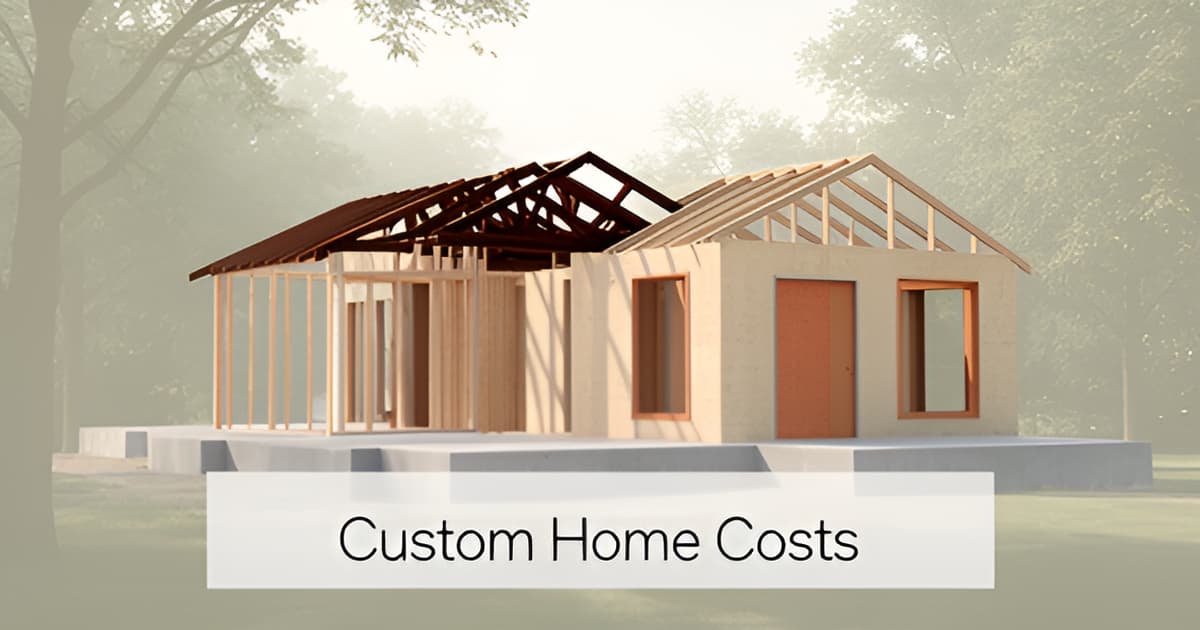
Custom Home Building Costs
Key Facts
- Custom homes in California average $500+ per square foot — a gap of $150–$200 over tract-home pricing, per California build-cost research.
- Land, permits, architecture, and carrying costs routinely add 40–60% or more on top of hard construction costs, per custom-build cost analysis.
- Interior finishes run 20–30% of total construction cost — $250,000–$500,000+ high-end on a 2,500 sq ft home — and are the top source of budget creep, according to design-build cost breakdowns.
- Wildfire-resistant Chapter 7A construction adds only about 2–3% to total cost — roughly $13,000 on a $500K build, per a Headwaters Economics/IBHS study.
- Post-fire rebuild demand has pushed Altadena new-build estimates to $450–$650 per square foot, per local reporting on the Eaton Fire rebuild market.
- California construction costs rose 36.5% over four years amid a 439,000-worker labor shortage, per 2026 trend analysis.
- Relocating an existing home costs about $350 per square foot — roughly half the price and time of building new — with 250 people already on a waiting list, per Spectrum News.
Why Custom Builds Cost More Than You Expect
Most custom-home budgets fail before the first nail is driven — not because of surprises during construction, but because the budget was anchored to the wrong number from day one. The single most common budgeting mistake, per custom-build cost analysis, is fixating on one per-square-foot figure while ignoring soft costs, permits, and site conditions.
Here's the trap in action. A homeowner hears that a tract home in their area costs $300–$350 per square foot and assumes their custom build will land nearby. It won't. Custom homes in California average $500+ per square foot — a gap of $150 to $200 or more on every square foot of the house, according to California build-cost research. Confusing tract-builder pricing with true custom pricing is one of the most common budgeting errors homeowners make.
Even using the right hard-cost number isn't enough. Hard construction costs — framing, foundation, roofing, systems — are only part of the picture. Land, site prep, architecture, engineering, permits, and carrying costs routinely add 40–60% or more on top of hard costs. Architect fees alone run 5–20% of the final build cost, general contractor fees add 10–20%, and permitting in California can take six to twelve months — meaning you're paying rent or a mortgage the entire time you wait.
What that premium actually buys:
- Land acquisition and site prep, including grading and excavation
- Architecture and structural engineering ($8,750–$44,000 for engineering alone)
- Permits and plan checks — statutory fees helped drive a 36.5% construction cost increase over four years
- Carrying costs: interest, insurance, and housing while you wait
In Altadena, the post-fire market compounds every one of these pressures. Rebuild demand from the Eaton Fire, a statewide shortage of 439,000 construction workers, and rising insurance premiums in fire-prone areas have pushed new-build estimates to $450–$650 per square foot, with some Eaton-area owners estimating as high as $570 per square foot, per local reporting on the Altadena rebuild market.
That's why Altadena Home Remodeling approaches every project from total project cost, not a per-square-foot shortcut. For homeowners weighing a full rebuild against a gut renovation, the honest math matters: sometimes preserving and renovating an existing structure — or relocating a home at roughly $350 per square foot — delivers more house for the money than starting from scratch. Scope it, price it, and do it once, do it right.
The Real Cost Drivers: Finishes, Codes, and Complexity
When a $600-per-square-foot estimate balloons into $900, the culprit is rarely the lumber. It's almost always the finish schedule, the geometry of the floor plan, and the code requirements nobody budgets for until the plans land at the building department.
Finishes are the single biggest cost driver — and the only line item with no ceiling. Per cost breakdowns from design-build firms, interior finishes on a 2,500-square-foot home run $80,000–$150,000 at mid-grade and $250,000–$500,000+ at high-end, representing 20–30% of total construction cost. Finishes are also the most common area of budget creep, which is why we encourage Altadena homeowners to lock finish decisions early rather than choosing tile during framing.
Design complexity matters more than size. A simple, efficient single-story footprint often costs less per square foot than a smaller home with architectural complexity — a surprise to many first-time custom builders. Complex rooflines, cantilevers, and irregular footprints all add framing labor, engineering hours, and waste.
Then there's seismic engineering. California's seismic requirements can make basements cost-prohibitive and may require metal framing for open-concept layouts, which adds a considerable amount to the cost of the building. That airy, wall-free great room you've pinned on Houzz likely needs shear walls or moment frames to satisfy code — real structural steel, real money.
The good news for fire-zone rebuilds:
- Chapter 7A wildfire hardening adds only ~2–3% to total construction cost, per a Headwaters Economics/IBHS study
- On a $500K base build, Chapter 7A hardening runs roughly $13,000
- IBHS Base-level wildfire construction adds about $9,000; the enhanced IBHS Plus tier, about $15,000
That figure should reassure Eaton Fire-area homeowners weighing a rebuild: building to wildfire-resistant standards is a rounding error compared to the finish upgrades most people make anyway. In other words, fire hardening is not what breaks the budget — indecision on finishes and structural complexity is.
If you're scoping an Altadena rebuild or whole-home renovation and want a realistic picture of where your money will actually go, a free remodel-scoping consultation with a before/after concept render can put real numbers behind each of these categories before you commit.
Budgeting for 2026: Contingency, Permitting, and Market Pressures
If you're budgeting a custom build for 2026, the single most dangerous number you can anchor to is a per-square-foot figure. California construction costs have climbed 36.5% over the past four years — partly driven by statutory permit fees — and the forces pushing prices up haven't slowed heading into the new year.
The labor picture alone justifies caution. The industry faces a shortage of roughly 439,000 construction workers, and current trend analysis shows labor prices rising faster than material costs in most California regions, compounded by an aging workforce and shifting immigration policy. Material prices rose 3.5% over the last year, with 2026 inflation forecast at 2%–4% amid tariff volatility.
Insurance adds another layer of financial pressure, particularly in fire-prone areas like Los Angeles, where rising premiums are making it harder to finance new rebuilds. About 13% of California Realtors reported canceled transactions in 2024 due to unavailable or unaffordable insurance, up from 6.9% a year earlier.
Given this environment, a 10–15% contingency on total project cost is the baseline recommendation, not a luxury. Industry sources also describe a "perfect storm" of high rates, tariffs, and labor scarcity — and conclude that a conservative financial approach is necessary to navigate the coming year.
Your timeline matters as much as your dollar figure. California permitting can take 6–12 months, requiring grading, electrical, mechanical, and plumbing permits plus extensive documentation — and you'll be paying rent or a mortgage the entire time. Factor those carrying costs into your total budget from day one.
Before committing to a number, pressure-test your plan against these realities:
- Budget beyond hard construction costs — land, site prep, architecture, engineering, permits, and carrying costs routinely add 40–60% or more on top
- Lock finish selections early; finishes run 20–30% of construction cost and are the most common source of budget creep
- Favor simpler footprints — a simple, efficient single-story design often costs less per square foot than a smaller but architecturally complex home
- Budget for seismic engineering and WUI fire-hardening, which adds only about 2–3% to total construction cost
For Altadena homeowners, these pressures are sharpened by post-fire rebuild demand, with new custom builds currently estimated at $450–$650 per square foot. At Altadena Home Remodeling, we take a preserve-first approach — renovating over demolishing whenever the structure allows — and we don't offer timeline or permit guarantees, because in this market, anyone who does isn't being straight with you.
The right first step is scoping your project honestly against current numbers. Request a free remodel-scoping consultation with Altadena Home Remodeling and receive a before/after concept render, so you can see what's achievable on your property before you commit to a budget built on wishful thinking.
Your Action Plan: From Budget to Build in Altadena
A custom home budget that looks solid on paper can fall apart the moment soft costs, finish upgrades, and permit delays enter the picture. The homeowners who come out ahead in Altadena are the ones who plan for the full project cost from day one — not just the construction number.
Start by benchmarking realistically. New custom builds in the Altadena area currently run an estimated $450–$650 per square foot, so a 2,000-square-foot home represents roughly $900,000 to $1.3 million in hard construction costs alone. Then budget beyond that figure: land, site prep, architecture, engineering, permits, and carrying costs routinely add 40–60% or more on top of hard costs. Set a contingency of 10–15% of the total project, especially given that California construction costs have risen 36.5% over four years and material inflation is forecast at 2%–4% for 2026.
Next, control the two biggest levers you actually own:
- Lock finish selections early. Finishes account for 20–30% of total construction cost, have no practical ceiling, and are the most common source of budget creep.
- Favor a simpler footprint. A straightforward single-story design often costs less per square foot than a smaller home with architectural complexity, and it reduces the seismic engineering — shear walls and moment frames — that open-concept plans require.
- Build the permit runway into your plan. Expect a 6–12 month permitting timeline and budget for rent or mortgage payments during the wait.
Fire-hardening is one cost worth accepting rather than avoiding: wildfire-resistant construction adds only about 2–3% to total cost, a small premium for peace of mind in a fire zone.
Finally, weigh alternatives before committing to a full rebuild. Home relocation runs approximately $350 per square foot and takes roughly half the time of new construction — one reason roughly 250 people are on a waiting list for the service locally. For homeowners who want to preserve an existing structure, a whole-home remodel can also deliver a like-new result without demolition.
Whichever path you choose, start with a clear scope. Altadena Home Remodeling offers a free remodel-scoping consultation that includes a before/after concept render, so you can see the design and understand the cost drivers before committing. If a rebuild or gut renovation is the route, JMB Builders LLC (CSLB #1103479), an Altadena-based licensed general contractor featured on this site, handles custom homes, whole-home remodels, and Eaton Fire rebuilds. Scope it, price it, and do it once, do it right.
Frequently Asked Questions
How much does it actually cost to build a custom home in California in 2026?
Why is my custom home budget so much higher than the per-square-foot number I was quoted?
What's the biggest thing that drives custom home budgets over their estimate?
Does wildfire-resistant construction really add much to the cost of a rebuild?
How much contingency should I set aside for a 2026 custom build or rebuild?
Is it cheaper to rebuild, relocate a house, or renovate my existing home in Altadena?
Build on Real Numbers, Not Wishful Ones
The gap between a custom home budget that works and one that collapses usually comes down to what you counted on day one. Anchor to total project cost — not a per-square-foot shortcut — because soft costs, permits, and site conditions routinely add 40–60% or more on top of hard construction costs. Set a 10–15% contingency, lock finish selections early, favor a simpler footprint, and build the 6–12 month permitting runway into your plan. And before committing to a full rebuild, weigh the alternatives: home relocation runs approximately $350 per square foot and takes roughly half the time of new construction, while a preserve-first remodel can deliver a like-new result without demolition. That's the approach we take at Altadena Home Remodeling — honest scoping, realistic numbers, and a recommendation to do it once and do it right. If you're weighing a rebuild, gut renovation, or whole-home remodel in Altadena, request a free remodel-scoping consultation with a before/after concept render, and see what's actually achievable on your property before you commit to a budget.