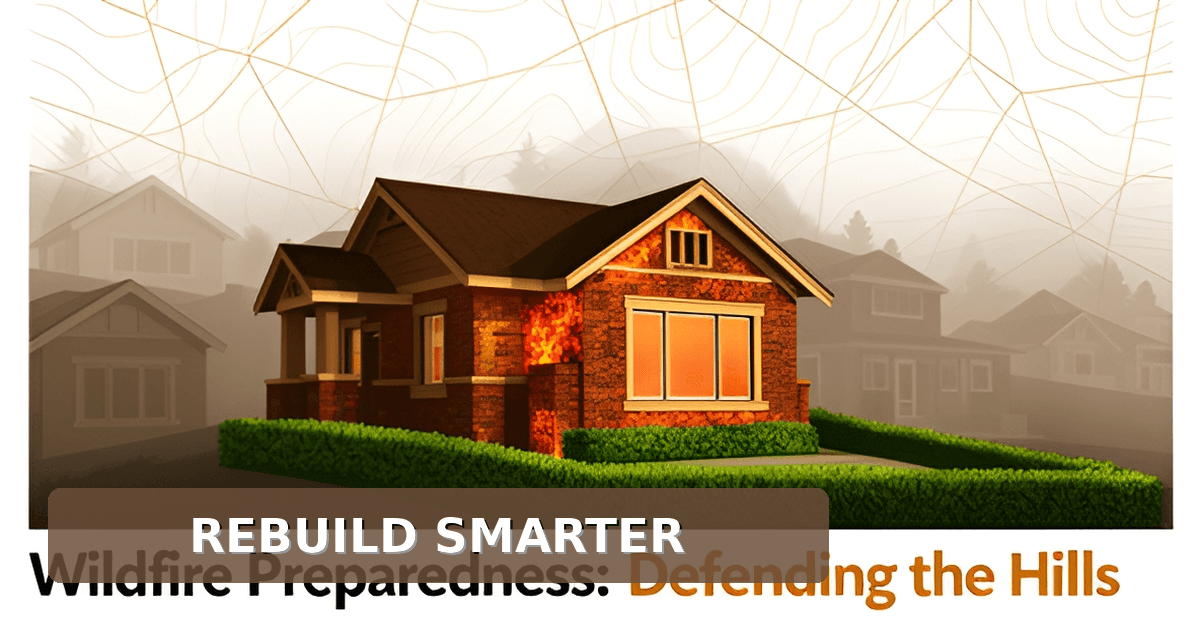
Altadena WUI Requirements: Rebuild Codes After the Fire
Key Facts
- More than 7,800 buildings burned in the Eaton Fire sit outside hazard zones that legally require fire-resistant construction, per NPR's analysis.
- Homes built under California's wildfire codes are 40% more likely to survive a fire, according to one study.
- FEMA projects California's wildfire codes could save $24 billion in single-family home damages over 75 years, per its analysis.
- Fire hardening typically adds only a few thousand dollars to a rebuild, though premium metal roofing can add up to 13%, per a Headwaters Economics/IBHS study.
- Altadena rebuilds can expand floor area by up to 10% or 200 square feet — whichever is greater — and still qualify as like-for-like, per LA County Planning.
- The median permit journey runs 155 days, but only about 32 are county review — the rest is applicant response time, per an LA Times analysis.
- Executive Order N-29-25 suspends rooftop solar and battery requirements for Eaton Fire rebuilds, per LA County's recovery hub.
The WUI Code Gap: Why Your Altadena Lot May Not Require Fire Hardening (But Should)
Here's the uncomfortable math of rebuilding in Altadena: more than 7,800 buildings burned in the Eaton Fire sit outside the very hazard zones that would legally require fire-resistant construction, according to NPR's analysis of the new Cal Fire maps.
That's because California's wildfire building code — Chapter 7A — only applies in state-designated wildfire hazard zones. Those zones are calculated from fire spreading through wildland, not from house-to-house fire spread, which is exactly how the Eaton Fire destroyed entire neighborhoods. The contrast with Pacific Palisades is stark: wildfire codes apply to the 6,800+ buildings destroyed there, because Palisades was already mapped as high-risk.
The timing creates a trap for homeowners deciding what to rebuild. LA County must adopt the new hazard maps by July 22, and residents in newly expanded zones whose permits are approved after adoption must follow wildfire building codes. In 2026, requirements expand again to roughly 1,000 additional properties in the Eaton Fire area under the "high" hazard category. Altadena Town Council member Nic Arnzen has watched some residents rush to lock in rebuild decisions before the map lands — a choice that can mean paying for fire hardening later as a retrofit instead of building it in from the start.
Here's what the code gap means in practice:
- Homes outside the designated zones can legally rebuild without ember-resistant vents, tempered glazing, ignition-resistant siding, or Class A roofing.
- Even like-for-like rebuilds that skip zoning requirements must still meet current building, fire, and health/safety codes — including Chapter 7A where the zone applies.
- The County is strongly encouraging voluntary compliance even where codes don't apply. "Even if they're not going to have to comply, we're going to be strongly encouraging it for future resiliency," says regional planning director Amy Bodek.
- The cost case favors building it in now: hardening typically adds only a few thousand dollars, though premium options like metal roofing can add up to 13% to construction cost.
The evidence for going beyond the minimum is compelling. One study found homes built under California's wildfire codes are 40% more likely to survive, and a FEMA analysis projects the codes could save $24 billion in damages to single-family residences over 75 years. As Headwaters Economics researcher Kimiko Barrett puts it: "History repeats itself. This will not be the only time that L.A. experiences a catastrophic wildfire."
At Altadena Home Remodeling, we treat Chapter 7A-level fire hardening as a design baseline rather than an option — the materials are common and affordable, and our scoping consultations with before/after concept renders let you see exactly how hardened details fit your home before construction dollars are committed. Featured builder JMB Builders LLC (CSLB #1103479) brings the same fire-conscious approach to Eaton Fire rebuilds.
The map gap may spare you a legal requirement. It doesn't change what the next fire will ask of your home.
Chapter 7A Explained: The Fire-Hardening Standards That Apply to Every Rebuild
The Eaton Fire made one thing clear: embers, not flames, destroy most homes. That's why California's Chapter 7A fire-hardening standards sit at the heart of every Altadena rebuild conversation — and why skipping them is rarely an option, even when you're rebuilding exactly what you had.
Here's the critical point for Altadena homeowners: a like-for-like rebuild lets you bypass current zoning rules, but it does not exempt you from current building, fire, and health/safety codes. Per rebuild permitting guidance, Chapter 7A compliance and interior sprinklers apply across the Very High Fire Hazard Severity Zone regardless of which rebuild track you choose.
The standards break down into six core components:
- Ember-resistant vents that block wind-driven embers from entering attics and crawlspaces
- Ignition-resistant siding — fiber cement products like Hardie plank are widely available and affordable
- Tempered dual-pane glazing for windows and doors
- Class A roofing, the highest fire-resistance rating
- Enclosed roof eaves that eliminate exposed rafter tails
- Interior fire sprinklers, required alongside Chapter 7A standards
The payoff is measurable. According to NPR's reporting, one study found homes built under California's wildfire codes are 40% more likely to survive a fire. A FEMA analysis projects the codes could save $24 billion in damages to single-family residences over 75 years.
Cost, meanwhile, is less daunting than most homeowners expect. The same reporting cites a Headwaters Economics / IBHS study putting the typical added cost at just a few thousand dollars — though premium choices like metal roofing can add up to 13% to construction costs. As wildfire researcher Kimiko Barrett notes, hardening materials are "commonly used on the market, widely available... very, very common, very affordable."
One complication deserves attention: 7,800+ buildings burned in the Eaton Fire fall outside the newly designated hazard zones and won't be legally required to meet wildfire codes. LA County is strongly encouraging voluntary compliance anyway, and requirements expand to roughly 1,000 more Eaton Fire area properties in 2026 under the "high" hazard category. Timing matters — permits approved after the County adopts the new maps may face requirements that earlier approvals escaped.
At Altadena Home Remodeling, we treat fire hardening as a design baseline in every rebuild scoping conversation, not an add-on decided later. Because the like-for-like fork, hazard-zone status, and Chapter 7A materials all interact, mapping them together up front — ideally before design dollars are spent — is the surest way to scope it once and do it right.
Like-for-Like vs. Non-Like-for-Like: The Decision That Shapes Your Whole Permit Path
Before you pick a single finish or floor plan, one number quietly decides your entire permit path in Altadena: how your rebuild compares in size to the home you lost. Get this fork wrong at the scoping stage, and you can burn months — and design dollars — on a zoning process you never needed to enter.
According to LA County Planning, a like-for-like replacement must be the same size, in the same location, and for the same use as the legally established destroyed structure. In the Eaton Fire area, you can increase floor area, footprint, or height by up to 10% or 200 square feet, whichever is greater, and still qualify, per permit guidance for Altadena rebuilds.
Cross that line and everything changes. Non-like-for-like rebuilds face full compliance with current Title 22 development standards, including the Altadena Community Standards District, a minimum 20-foot front yard setback, and potentially a public hearing. Like-for-like projects skip zoning review entirely — with initial review targeted within 10 business days — but they must still meet current building, fire, and health/safety codes, including WUI Chapter 7A and interior sprinklers.
Executive Order N-29-25 provides real relief: it suspends the 2025 Building Standards Code and rooftop solar/battery requirements for Eaton Fire structures. But several site conditions can still surprise you:
- Septic and cesspools: like-for-like rebuilds may keep existing cesspools only if wastewater load doesn't increase; expansions require septic upgrades, and public sewer within 200 linear feet triggers conversion approval.
- EPA hazmat clearance: no permit issues until the lot passes a mandatory EPA hazardous material inspection covering asbestos, lead, and toxic debris — and it cannot be expedited.
- Climate Zone 9: Altadena zip codes 91001 and 91003 fall under Climate Zone 9 energy standards, which set your envelope and fenestration efficiency targets.
This is why Altadena Home Remodeling scopes the zoning fork before design begins. A preserve-first approach — staying within the existing footprint where possible — limits wastewater, setback, and geotechnical triggers at their source. A free remodel-scoping consultation with a before/after concept render maps your project against the 10% threshold before you spend money on plans that force a hearing you didn't budget for.
Your Rebuild Roadmap: Permits, Expedited Pathways, and How to Avoid the 122-Day Delay Trap
Rebuilding in Altadena runs through a six-stage County pipeline, and the homeowners who move fastest are the ones who understand it before they draw a single plan. The process moves from certified debris removal — Phase 1 hazardous and Phase 2 structural — through the One-Stop Permit Center at 464 W Woodbury Rd, zoning clearance, parallel building and Fire plan review, construction, and finally the certificate of occupancy, per detailed permit guidance.
One gate cannot be expedited: permit approval will not issue until your lot passes the mandatory EPA hazardous material inspection for asbestos, lead, and toxic debris, according to the Altadena rebuild guide. Fire-related plans, however, are reviewed concurrently by Planning, Building & Safety, and the Fire Department, so the agencies aren't waiting on each other.
The County has also built real accelerators:
- Self-certification — since May 2025, registered California architects and engineers can certify their own plans, subject to random audits.
- eCheck AI plan review — fully launched October 2025, it analyzes plans for zoning and code compliance and uses aerial imagery to verify pre-fire dimensions.
- Pre-approved plans and fee waivers for owner-occupants, plus the RISE Homes incentive for all-electric construction, per rebuild updates.
- Like-for-like fast-tracking, with initial zoning review targeted within 10 business days and Fire plan review at 10 business days.
Here's the uncomfortable truth about delay. A Los Angeles Times analysis found the median journey from application to permit runs 155 days — but only about 32 of those days are county review. The remaining ~122 days are applicant response time to correction comments. The County isn't the bottleneck; incomplete plans are.
That makes preparation your single biggest lever. Every correction cycle adds weeks, and over 300 plan sets were returned to homeowners with comments at one point in the recovery, per Pasadena Now's coverage. A complete, code-aware plan set — WUI Chapter 7A materials, septic triggers, setback math — moves through in a fraction of the time.
Note also that building permits lapse after 12 months if construction hasn't begun, so timing your application to your contractor's readiness matters. Altadena Home Remodeling helps homeowners scope projects against these exact thresholds before design dollars are spent — mapping your project to the like-for-like fork and flagging the site conditions that trigger extra review. A free scoping consultation with a before/after concept render shows you exactly where your rebuild sits in this pipeline, and JMB Builders LLC (CSLB #1103479), an Altadena-based licensed general contractor experienced in Eaton Fire rebuilds, can carry the plan through construction.
Thorough preparation isn't glamorous, but in a process where you control 122 of the 155 days, it's the difference between moving in next year and waiting two.
Build It Right the First Time: Scoping a Fire-Hardened Altadena Rebuild
Fire-hardening your Altadena rebuild isn't a menu option — it's the smartest default you can choose. Homes built under California's wildfire codes are 40% more likely to survive a wildfire, according to one study cited by NPR, and FEMA analysis suggests the codes could save $24 billion in single-family home damages over 75 years.
Here's the tension: more than 7,800 buildings burned in the Eaton Fire fall outside the new state hazard zones, meaning wildfire codes won't be required for those rebuilds. But LA County is strongly encouraging voluntary compliance anyway — and timing matters. Permits approved after the County adopts the new maps in newly expanded zones must follow wildfire codes, and roughly 1,000 more Eaton Fire area properties enter requirements in 2026.
The good news is cost. Meeting wildfire codes typically adds a few thousand dollars to a build, per a Headwaters Economics / IBHS study — and researcher Kimiko Barrett notes the materials are "commonly used on the market, widely available... very affordable." Only premium choices like metal roofing push costs up, by as much as 13%.
So before you spend a dollar on design, map your project against three decisions:
- Treat Chapter 7A as your baseline — ember-resistant vents, ignition-resistant siding, tempered glazing, Class A roofing, and interior sprinklers — regardless of whether your parcel sits inside a mapped hazard zone.
- Run the like-for-like math early. Staying within 10% or 200 square feet of your original structure (whichever is greater) lets you skip current zoning; exceed it and you trigger full Title 22 compliance, the Altadena Community Standards District, and a 20-foot front setback, per LA County Planning.
- Watch the site layers that surprise rebuilders — added bedrooms or square footage can force septic upgrades, and permit approval waits on mandatory EPA hazardous-material clearance, per the Altadena rebuild guide from Ataman Studio.
Preparation pays: the median journey from application to permit runs 155 days, but only about 32 of those are county review — the rest is applicant response time to corrections, per a 2026 LA Times analysis. A thorough, correctly scoped plan is the fastest plan.
That's why working with a licensed local contractor who knows LA County's rebuild process matters. JMB Builders LLC (CSLB #1103479, paid placement), an Altadena-based general contractor building custom homes and whole-home remodels — including Eaton Fire rebuilds — works within this exact permitting landscape daily; its work is documented at jmb-builders.com. Altadena Home Remodeling's philosophy is simple: scope it once, build it right the first time.
Ready to see what your rebuild could look like? Book a free remodel-scoping consultation and get a before/after concept render of your home — fire-hardened, permit-aware, and true to Altadena.
Frequently Asked Questions
Do I legally have to build fire-resistant materials if my Altadena lot isn't in a designated hazard zone?
What exactly does Chapter 7A fire hardening include?
How much does it cost to fire-harden my rebuild?
What's the difference between a like-for-like and non-like-for-like rebuild?
Why does permit timing matter with the new hazard maps?
How can I avoid delays getting my rebuild permit approved?
The Map Doesn't Decide Your Home's Future — You Do
Rebuilding in Altadena means navigating a maze of overlapping rules: hazard-zone maps that may or may not require Chapter 7A fire hardening, a like-for-like fork that hinges on staying within 10% or 200 square feet of your original home, septic triggers, EPA clearance, and a permit pipeline where you — not the County — control most of the timeline. The through-line of everything we've covered is preparation. Homes built to California's wildfire codes are 40% more likely to survive a fire, and the hardening that delivers that margin typically costs only a few thousand dollars when it's designed in from day one rather than retrofitted later. Whether your parcel sits inside a mapped hazard zone or in the gap, the next fire won't check the map before testing your eaves and vents. Your next step: map your project against the like-for-like threshold, treat fire hardening as your baseline, and scope it once. Altadena Home Remodeling offers a free remodel-scoping consultation with a before/after concept render so you can see your fire-hardened, permit-ready rebuild before committing construction dollars — and JMB Builders LLC (CSLB #1103479), an Altadena-based licensed general contractor, can carry the plan through construction.