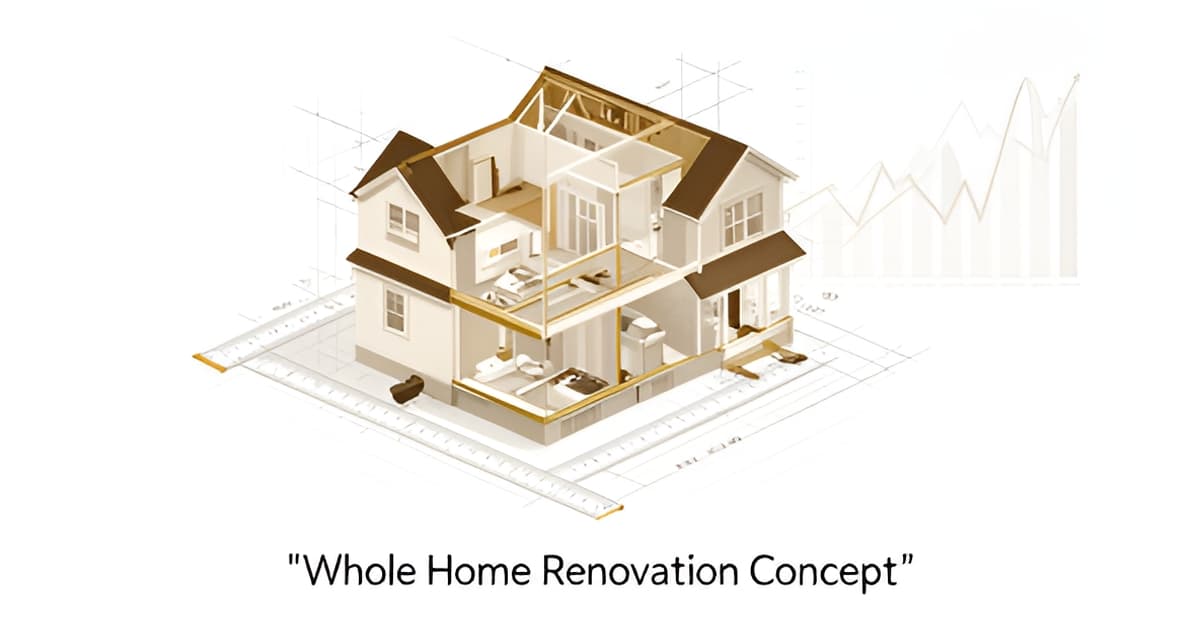
Renovate
Key Facts
- U.S. renovation and repair spending is projected to hit a record $524 billion in early 2026, per Harvard's Joint Center for Housing Studies.
- Owners of pre-1940 homes spend 50% more on renovations than average, national spending data shows.
- 39% of homeowners exceed their renovation budgets, and 24% start with no budget at all, according to Houzz research.
- A minor kitchen remodel averages $28,458 and delivers 113% ROI — up 17% year over year — per 2025 Cost vs. Value data.
- 91% of homeowners hire professionals for remodeling projects, industry statistics confirm.
- The median U.S. owner-occupied home is now over 40 years old, NAHB data shows.
- 54% of homeowners finance renovations through HELOCs or home equity loans to preserve low first-mortgage rates, per NAR survey data.
Why Altadena Homeowners Are Renovating Instead of Moving
Across America, homeowners have quietly made a decision: they're staying put and transforming the houses they already own. As one industry analysis put it, "Aging homes, high equity, mortgage lock-in, and housing constraints have made renovating the new moving." Altadena fits that pattern almost perfectly.
Three forces are driving the shift. First, mortgage rate lock-in: owners who locked in low rates in 2020–2021 face steep payment increases if they sell, so they're borrowing against equity instead — often through HELOCs and home equity loans that preserve their first mortgage. Second, the housing stock itself is old. The median U.S. owner-occupied home is now over 40 years old, according to NAHB data, and Altadena's inventory of century-old bungalows and mid-century homes skews even older. Third, the money is flowing: renovation and repair spending is projected to hit a record $524 billion in early 2026 per Harvard's Joint Center for Housing Studies.
Older homes change the math, though. Research shows owners of pre-1940 homes spend 50% more on renovations than average — a figure that should make any Altadena homeowner pause before opening walls in a 1920s craftsman. As Ace Hardware home expert Lou Manfredini warns, "Remodeling is one surprise after another... especially if you are doing work in an older home, say 50 years or older."
That reality is reshaping how people renovate, not just whether they do. The piecemeal, room-by-room approach — a bathroom this year, a kitchen in three years — is giving way to coordinated whole-home master plans. In 2025, homeowners increasingly bundled kitchen, bathroom, and interior work into single projects, with bathrooms often serving as the entry point that expanded into larger remodels. The logic is straightforward:
- One scoping process surfaces hidden issues — outdated wiring, plumbing, code gaps — before they become mid-project surprises
- One budget with a built-in contingency beats the 39% of homeowners who exceed budget and the 24% who start with none
- One team, one contract, and one timeline eliminate the scheduling conflicts and finger-pointing of pieced-together projects
- Efficiency upgrades like HVAC and insulation cost less when walls are already open
The planning-first approach also solves the older-home problem. "Rushing into a project without a master plan leads to cost overruns, scheduling conflicts, and unmet expectations," cautions one design-build team. And with 91% of homeowners hiring professionals for remodeling work, the do-it-once mindset has become the norm rather than the exception.
For Altadena homeowners sitting on character-rich, equity-rich, aging houses, the takeaway is simple: scope the whole project, price it realistically, and do it right — once. That's the approach Altadena Home Remodeling brings to every whole-home renovation we plan in this community.
The Real Cost of a Whole-Home Remodel (And Why Budgets Fail)
Most whole-home remodels don't fail during construction — they fail in the budget phase, before the first wall comes down. The numbers behind renovation budgets explain why so many projects spiral.
Start with the benchmarks. According to the 2025 Cost vs. Value data, a minor kitchen remodel averages $28,458, while a major renovation runs $82,793. A midrange bathroom remodel sits around $26,138. Across whole-home projects, expect $15–$60 per square foot on average, with some renovations reaching $150 per square foot.
Now the failure point. Houzz research shows 39% of homeowners exceed their renovation budgets, and 24% start with no budget at all. That's not carelessness — it's usually the gap between an online estimate and what actually lives inside the walls.
Older homes make that gap wider. Owners of pre-1940 homes spend 50% more on renovations than average, per national spending data — and much of Altadena's housing stock fits that profile. As Ace Hardware home expert Lou Manfredini puts it, remodeling an older home is "one surprise after another," because methods, codes, and age all play a role.
Common hidden costs in older homes include:
- Outdated wiring and plumbing that must be brought to code once walls open
- Unpermitted or non-standard work from previous renovations
- Structural surprises — settling, termite damage, or unconventional framing
- Material price fluctuations, especially on imported cabinets and vanities affected by recent tariffs
This is where online calculators fall short. As renovation cost guides note, a calculator can produce a ballpark but cannot account for hidden damage, local labor rates, or custom features. A professional estimate usually proves more accurate because it's grounded in the actual house.
That's why Altadena Home Remodeling begins every whole-home project with scoping, not quoting. Walking the property, opening up assumptions about what's behind the drywall, and building a 15–20% contingency into the plan — as design-build experts recommend — is what separates a budget from a wish. The goal is simple: scope it, price it, do it once, do it right.
The Master-Plan Approach: One Team, One Scope, One Contract
Rushing into a renovation without a master plan is one of the most expensive mistakes a homeowner can make. As the design-build team at My House Design/Build puts it, rushing leads directly to cost overruns, scheduling conflicts, and unmet expectations — the three failures that derail most piecemeal projects.
The data backs this up. Roughly 39% of homeowners exceed their renovation budget, and 24% start with no budget at all, according to Houzz Research cited by U.S. News. A master plan attacks both problems before demolition begins.
Budget with a real contingency. Whole-home renovations should carry a 15–20% contingency buffer to absorb the surprises hiding inside walls, and a common rule of thumb caps total renovation spending at 30% of your home's value, per AmeriSave's cost guide. In older Altadena housing stock, that buffer isn't optional — owners of pre-1940 homes spend 50% more on renovations than average, and homes 50+ years old routinely reveal outdated wiring, plumbing, and code issues once work starts.
Bundle the work instead of staging it piecemeal. This is where the industry is heading anyway: 2025 saw homeowners increasingly combine kitchen, bathroom, and interior remodels into one coordinated master plan rather than renovating rooms in isolation, according to Realm's 2026 trend report. Bundling means one mobilization, one permit process, and one team accountable for the whole outcome instead of three contractors blaming each other's schedules.
Do the invisible work while the walls are open. This is where a master plan pays for itself:
- HVAC upgrades are often more cost-effective when walls and ceilings are already open, rather than revisiting them later.
- Insulation improvements can be completed room by room during a gut remodel instead of as a separate future project.
- Window replacements coordinate with framing and exterior work, avoiding repeated patching and finishing costs.
- Layout changes, aging-in-place features, and mechanical rough-ins get sequenced once, in the right order.
This is the model we follow at Altadena Home Remodeling: scope the whole house, price it honestly with contingency built in, and execute under a single contract. Design-build keeps design decisions and construction costs in conversation from day one, so the plan you approve is the plan that gets built. Expect the full process — planning, permitting, and construction — to run six to eighteen months for a whole-home renovation, and plan your finances and living arrangements accordingly.
The alternative — a bathroom here, a kitchen there, each treated as its own emergency — guarantees you pay demo and rebuild costs twice and live through construction multiple times. One team, one scope, one contract gets it done once, and gets it done right.
Your Whole-House Renovation Roadmap: From Scope to Done
A whole-house renovation isn't a weekend project — it's a 6-to-18-month commitment that includes planning, permitting, and construction, and the homeowners who treat it that way are the ones who finish on budget. Rushing in without a master plan, as design-build professionals warn, leads to cost overruns, scheduling conflicts, and unmet expectations.
Set a realistic budget — with a cushion. According to Houzz research, 39% of homeowners exceed their renovation budgets, and 24% start with no budget at all. Build in a 15–20% contingency, and remember that Altadena's older housing stock carries extra risk: national data shows owners of pre-1940 homes spend 50% more on renovations than average.
Permits are non-negotiable. Skipping them can result in fines, delays, or even forced demolition of unpermitted work. Factor permit timelines into your schedule from day one, not as an afterthought.
On financing, most homeowners now avoid cash-out refinancing and turn instead to HELOCs and home equity loans to preserve their low first-mortgage rates — 54% of homeowners finance renovations this way, according to NAR survey data. The average mortgage holder has roughly $212,000 in tappable equity, giving Altadena homeowners real flexibility to fund a whole-home project without touching a 3% mortgage.
Where should that money go? ROI-smart choices matter:
- Minor kitchen remodels — 113% ROI, up 17% year over year, at a fraction of a major remodel's cost ($28,458 vs. $82,793)
- Aging-in-place upgrades — curbless showers and wider doorways are among 2026's fastest-growing priorities
- Efficiency work — bundle HVAC, insulation, and window upgrades while walls are already open
- Skip the showpiece additions — upscale primary suite additions and major upscale kitchen remodels are actually losing value
Online calculators can ballpark your costs, but they can't account for hidden damage, local labor rates, or custom features — a professional estimate is almost always more accurate. That's why 91% of homeowners hire professionals for remodeling projects.
The bottom line: scope it, price it, do it once, do it right. A professional whole-home estimate for your Altadena house — like the ones we provide at Altadena Home Remodeling — is the first step toward a renovation that finishes on time, on budget, and built to last.
Frequently Asked Questions
How much does a whole-home remodel cost?
Why do renovation budgets go over so often?
Are older homes more expensive to renovate?
Should I renovate room by room or do a whole-home master plan?
How do I finance a whole-home renovation without losing my low mortgage rate?
How long does a whole-house renovation take?
Your House Is Worth It: Renovate Once, Renovate Right
Altadena homeowners don't need to move to love where they live. With mortgage lock-in keeping owners in place, renovation spending projected to hit a record $524 billion in early 2026 per Harvard's Joint Center for Housing Studies, and equity sitting ready to fund the work, the smartest move may be the one you're already in. But the data is equally clear about what separates successful renovations from costly ones: a whole-home master plan instead of piecemeal projects, a realistic budget with a 15–20% contingency instead of an online calculator's guess, and one accountable team instead of a patchwork of contractors — especially in Altadena's older homes, where pre-1940 owners spend 50% more than average once walls open. It's no surprise that 91% of homeowners hire professionals for remodeling work. At Altadena Home Remodeling, every whole-home project starts the same way: we scope the entire house, price it honestly, and execute under a single contract. Ready to scope it, price it, and do it right — once? Request a whole-home renovation estimate for your Altadena house and take the first step toward a renovation that finishes on time, on budget, and built to last.