ADU Permit Fees in California: What You'll Actually Pay
Key Facts
- LA ADU permit fees typically run $1,400–$8,000, with one documented garage conversion totaling just $1,496.21 per published permit receipts.
- A 1,200-square-foot detached ADU cost $7,479.26 in permits — roughly five times the garage-conversion total from the same practitioner.
- Missing the SB 13 exemption for ADUs under 750 square feet can add $10,000 or more in impact fees per Southern California fee analysis.
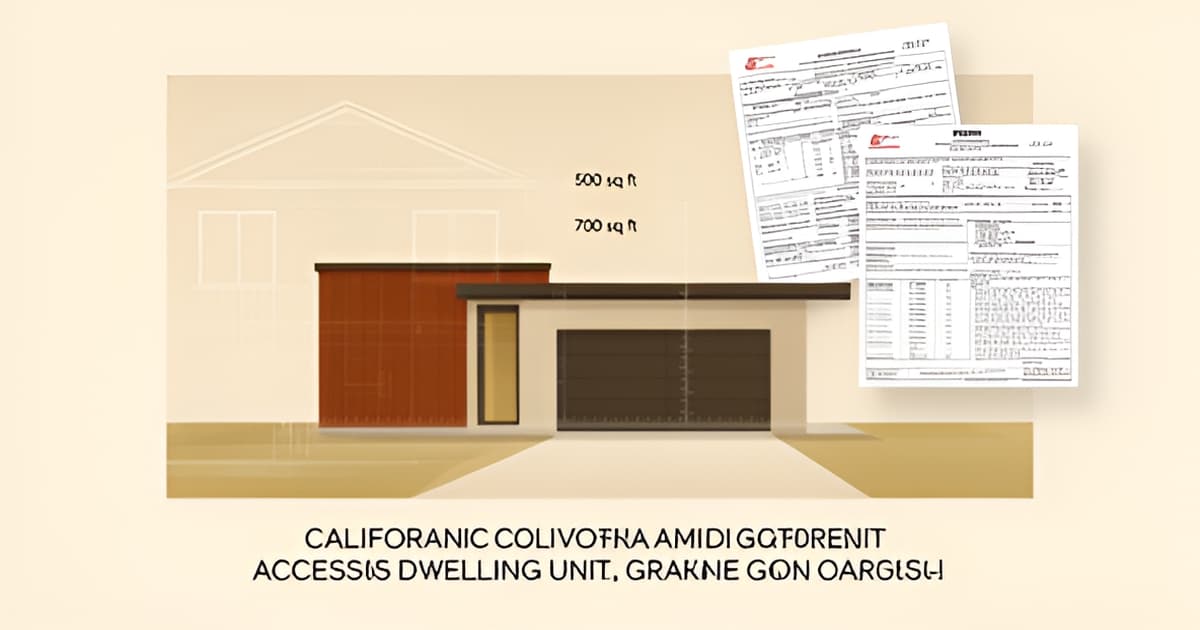
- As of January 1, 2026, SB 543 exempts ADUs of 500 square feet or less from school impact fees — even when detached according to legal analysis.
- SB 1117 eliminates the 'fee cliff,' so units over 750 square feet pay impact fees only on space above the threshold per California YIMBY.
- Garage conversions run $1,500–$2,500 in permits versus $5,000–$8,000+ for detached ADUs over 500 square feet per LA cost breakdowns.
- State law mandates a 60-day permit decision, but real-world LA timelines run 4–6 months once plan corrections are factored in according to LA-area analysis.
Why ADU Permit Costs Are So Hard to Pin Down
Search "ADU permit cost in California" and you'll find figures anywhere from $1,400 to $21,000 — a fifteen-fold spread that makes budgeting nearly impossible. Part of the problem, as one rigorously sourced realty analysis notes, is that "a lot of what circulates online about 'typical' ADU fees comes from contractor marketing rather than the cities themselves."
The honest picture is narrower than the headlines suggest. For Los Angeles projects, permit fees typically run $1,400 to $8,000, with documented real-world examples landing at $1,496.21 for a garage conversion and $7,479.26 for a 1,200-square-foot detached unit, according to one practitioner's published permit totals. The wider $2,000–$21,000 Southern California range reflects larger units and stacked fees in costlier jurisdictions — not a typical LA outcome.
Project type drives cost more than anything else:
- Garage conversions (no added square footage): roughly $1,500–$2,500 in permits
- New detached ADUs over 500 sq ft: $5,000–$8,000 or more
- Conversions that reuse existing utilities: cut utility connection costs by roughly half
- Large units that miss state exemptions: can add $10,000+ in impact fees
For Altadena homeowners, there's an added layer of complexity. Altadena sits in unincorporated Los Angeles County, which means your permit doesn't follow a single city fee schedule — applications route through multiple county departments, and properties in hillside or geologic hazard zones may require soil reports that can add thousands of dollars to the permit total. Add the fire-rebuild realities many Altadena properties now face, and a generic online fee estimate becomes nearly useless.
The good news is that state law keeps shifting in homeowners' favor. ADUs under 750 square feet are exempt from most local impact fees under SB 13, and as of January 1, 2026, units of 500 square feet or less are exempt from school impact fees entirely under SB 543, even when detached. A newer law, SB 1117, eliminates the "fee cliff" so larger units pay impact fees only on square footage above 750 sq ft for the first two ADUs on a property — a change California YIMBY expects will save homeowners thousands.
The takeaway: treat any single online number as a starting point, not an answer. Your actual total depends on unit size, project type, and — especially in unincorporated LA County — your specific parcel. At Altadena Home Remodeling, we help homeowners scope ADU and renovation projects against real site conditions before anyone commits to a budget, starting with a free scoping consultation and a before/after concept render.
Get a free remodel-scoping consultation for your Altadena property — including a before/after concept render — so your ADU budget reflects your actual site, not a generic online average.
The Two Size Thresholds That Decide Your Fee Bill: 500 and 750 Square Feet
If you're planning an ADU in California, two numbers on your floor plan — 500 and 750 square feet — will do more to determine your permit bill than any other design decision. Cross either threshold and you can owe thousands in fees that a slightly smaller unit would never trigger.
The first threshold comes from SB 13, the 2019 law that explicitly exempts any ADU under 750 square feet of interior livable space from local impact fees. Miss that line and the cost is real: homeowners who overlook the exemption can add $10K or more in impact fees to their project, according to Southern California fee analysis. SB 543, effective January 1, 2026, also refined how the 750-square-foot exemption is measured — it now counts interior livable space rather than total footprint, per legal analysis of the statute.
The second threshold governs school fees specifically. As of January 1, 2026, SB 543 exempts ADUs and JADUs of 500 square feet or less from school district impact fees entirely — even when the unit is detached. School districts can still charge fees on ADUs over 500 square feet, because the Legislature did not extend the 750-square-foot exemption to school districts. For homeowners, that makes staying at or under 500 square feet one of the most reliable money-saving strategies available.
What about units that exceed 750 square feet? Until recently, they faced what critics called a "fee cliff": a 751-square-foot ADU paid full impact fees on the entire unit, including the first 750 square feet. SB 1117, signed by Governor Newsom, eliminates that cliff. Local governments can now charge impact fees only proportionally on the square footage above 750 square feet, and the relief applies to the first two ADUs on a property. California YIMBY expects homeowners to save thousands as a result.
For Altadena homeowners, the practical takeaway is to design with these thresholds in mind:
- Keep interior livable space under 750 square feet to capture the SB 13 exemption from local impact fees.
- Stay at or under 500 square feet — including detached units — to avoid school impact fees under SB 543.
- If you need more than 750 square feet, know that SB 1117 means you now pay fees only on the space above the threshold, for your first two ADUs.
- Remember that garage conversions under 500 square feet sidestep both thresholds entirely, which is one reason they run roughly $1,500–$2,500 in permits versus $5,000–$8,000+ for larger detached ADUs.
At Altadena Home Remodeling, we've seen how a few square feet of design adjustment — trimming a closet, rethinking a bathroom layout — can move a project back under an exemption line and change the fee math entirely. During a free scoping consultation with a before/after concept render, sizing decisions like these are worth settling before plans ever reach the permit counter.
What You'll Actually Pay by Project Type (With Real Numbers)
Forget the averages you see in contractor ads — the real permit bill depends almost entirely on what kind of ADU you're building. The cheapest route is a garage conversion; the most expensive is a large detached unit. One practitioner documented both ends of that spectrum with actual receipts.
A documented permit total for a garage conversion came in at just $1,496.21 on a declared project value of $75,000 — consistent with the broader $1,500–$2,500 range for converting an existing 400-square-foot garage. Because conversions add no new square footage and reuse existing utilities, they sidestep most impact fees entirely. Conversions can also cut utility connection costs roughly in half by tapping the existing service lines.
Detached ADUs are a different story. The same practitioner paid $7,479.26 in permits for a 1,200-square-foot detached ADU on a $150,000 declared value, and LA-area cost breakdowns put detached units over 500 square feet at $5,000–$8,000+. That jump isn't arbitrary — it's driven by the size thresholds in state law.
- ADUs at or under 500 sq ft are exempt from school impact fees as of January 1, 2026, under SB 543 — even if detached.
- ADUs under 750 sq ft of interior livable space are exempt from most local impact fees under SB 13; missing this exemption can add $10,000 or more.
- Units over 750 sq ft now pay impact fees only on the square footage above 750, thanks to SB 1117's elimination of the "fee cliff" for the first two ADUs on a property.
One quirk trips up nearly every first-time applicant: the city calculates fees using its own standardized valuation tables, not your actual construction budget. Plan checkers reject artificially low declared values — the same practitioner found that $75,000 was the minimum a plan checker would accept for a garage conversion. Declare too little and you'll resubmit; declare honestly and you may still pay more than expected.
Then there are the add-ons that rarely make it into advertised figures. New utility connections run $4,000–$8,000 (sharing existing systems saves roughly 70%). Plan revisions cost $1,000 or more each round, and properties in historic districts can trigger review add-ons of $1,000+. Unincorporated LA County properties — which includes Altadena — often route through multiple county departments, and hillside or geologically sensitive lots may require soil reports that add thousands.
For homeowners in Altadena's Craftsman and historic housing stock, those historic-district and preserve-first considerations are worth flagging early rather than at plan check. At Altadena Home Remodeling, we recommend budgeting permits at 10–15% of your total project cost, then verifying every figure against your city's official fee schedule — because a lot of what circulates online about "typical" ADU fees comes from contractor marketing rather than the cities themselves.
Want a realistic permit and construction budget for your specific property? Our free remodel-scoping consultation includes a before/after concept render so you can see what's possible before committing to anything.
How to Legally Minimize Your ADU Permit Costs
Permit fees aren't fixed costs — they're design decisions made months before you file. The size of your ADU, the type of project, and the programs you tap can swing your permit total from roughly $1,500 to more than $8,000.
Design under 750 square feet of interior livable space. State law under SB 13 exempts ADUs below this threshold from most local impact fees, and cost analyses estimate that missing this exemption can add $10,000 or more. Note that SB 543, effective January 1, 2026, changed the measurement to interior livable space rather than total footprint — so a unit with a covered patio or thick walls has more room to work with than under the old rule, per a legal analysis from Lozano Smith.
Stay at or under 500 square feet and you clear a second bar: SB 543 exempts ADUs of 500 square feet or less from school impact fees entirely, even when detached. School districts can still charge fees on units above that size, so those extra fifty square feet can cost far more than they're worth.
Consider a garage conversion instead of new construction. Conversions run roughly $1,500–$2,500 in permits versus $5,000–$8,000+ for detached ADUs over 500 square feet, and one documented project came in at just $1,496.21. Reusing existing utility connections can cut those costs by about half — an approach that fits well with Altadena's stock of detached garages on larger Craftsman-era lots.
Before you apply, check what your jurisdiction already offers:
- Pre-approved plan programs — LA, San Jose, and Fresno all offer them, with LA including one free city-owned plan.
- Fee waivers for deed-restricted units — both the City of LA and LA County occasionally waive fees if you rent to low-to-moderate-income tenants for a set period.
- Free plan review — Fresno waives standard plan review entirely.
For budgeting, plan on 10–15% of total project cost for permits, then verify against your city's official fee schedule. As one realty analysis warns, much of what circulates online about "typical" ADU fees comes from contractor marketing rather than the cities themselves — and in unincorporated LA County, where Altadena properties route through multiple departments, official fee documents are the only numbers worth trusting.
If you're weighing a garage conversion versus a detached unit on an Altadena property, Altadena Home Remodeling offers a free remodel-scoping consultation with a before/after concept render — a concrete way to see which configuration fits your lot before you spend a dollar on permits.
Scoping Your Altadena ADU: From Fee Estimate to Groundbreaking
By the time drawings are finalized, the biggest fee decisions are already locked in. That's why the smartest Altadena move is scoping your ADU's size and permit path before a single sheet goes to the county.
Since Altadena sits in unincorporated LA County, your permit routes through the county's multi-department review process rather than LADBS — and unincorporated properties can face added costs from special zoning conditions like hillside or geologic-hazard soil reports. Verify early which departments will touch your submittal and whether any local fee-waiver programs, including deed-restriction options for affordable-rent ADUs, apply to your parcel.
On timeline, keep expectations calibrated. State law mandates a 60-day decision window from complete submittal, but real-world Los Angeles timelines run 4–6 months once plan corrections are factored in. Budget for the longer reality, and remember the county has 15 business days just to deem your application complete under Gov. Code § 66317.
The most consequential scoping decision is square footage, because two thresholds drive your fee bill:
- At or under 500 sq ft of interior livable space — school impact fees are fully exempt under SB 543, even for detached units, as of January 1, 2026.
- Under 750 sq ft — most local impact fees are waived under SB 13; missing this exemption can add $10K+ in fees.
- Over 750 sq ft — SB 1117 now charges impact fees only proportionally on square footage above 750, eliminating the old "fee cliff."
- Garage conversion — the cheapest route at roughly $1,500–$2,500 in permits, versus $5,000–$8,000+ for a detached ADU over 500 sq ft.
Note that the 750 sq ft threshold now measures interior livable space, not total footprint — a distinction that matters when a covered porch or storage area pushes your footprint past the line. A legal analysis of SB 543 confirms both the 500 sq ft school-fee exemption and the interior-space measurement change.
This is where a professional scoping session earns its keep. Before drawings are finalized, Altadena Home Remodeling helps you size the unit against these thresholds, weigh a conversion against new construction, and map the county review path — so you scope it, price it, and do it once, do it right. Book a free remodel-scoping consultation and receive a before/after concept render of your property with the ADU in place. Our featured builder, JMB Builders LLC (CSLB #1103479, disclosed paid placement), is an Altadena-based licensed general contractor building ADUs and whole-home remodels, with work documented at jmb-builders.com.
Frequently Asked Questions
How much does an ADU permit actually cost in Los Angeles?
Is a garage conversion really cheaper to permit than a new detached ADU?
What size ADU avoids impact fees in California?
If my ADU is over 750 square feet, do I pay impact fees on the whole unit?
Why do online ADU permit cost estimates vary so wildly?
Are ADU permits more complicated in unincorporated areas like Altadena?
The Bottom Line: Design Your Fees Before You Design Your ADU
The gap between a $1,496 permit total and a $21,000 one isn't luck — it's decisions made at the drafting table. Keep your interior livable space under 750 square feet to capture the SB 13 impact fee exemption, stay at or under 500 square feet to avoid school fees entirely under SB 543, and weigh a garage conversion (~$1,500–$2,500 in permits) against a detached unit ($5,000–$8,000+) before committing to plans. For Altadena homeowners, the added wrinkle of unincorporated LA County review makes parcel-specific scoping even more important — hillside or geologic conditions can add thousands of dollars that no online average will predict. The next step is simple: settle your unit's size, project type, and county review path before drawings are finalized, and verify every figure against official fee schedules rather than contractor marketing. Altadena Home Remodeling offers a free remodel-scoping consultation with a before/after concept render, so your ADU budget reflects your actual site — scope it, price it, and do it once, do it right.